
GL4 vs GL5 Gear Oil
Understanding the complete difference between GL-4 and GL-5 gear oil is crucial. Make the wrong choice, and you could destroy your transmission.
The Short Answer: API GL-4 or GL-5 Gear Oil?
The main difference between GL-4 and GL-5 gear oils comes down to the level of extreme pressure (EP) additives. API GL-4 has about half the EP additives of GL-5 and is typically used in manual transmissions where yellow metals (like brass synchronizers) are present. API GL-5 has highly concentrated EP additives and is designed for high-load hypoid gears, differentials, and axles.
Warning: Unless specified by the manufacturer, you should never use GL-5 gear oil instead of recommended GL-4 in a manual transmission, as it can cause rapid wear of brass components.
GL-4 vs GL-5 Gear Oil Difference Chart
A side-by-side technical comparison.
| Feature / Specification | API GL-4 | API GL-5 |
|---|---|---|
| Primary Application | Manual Transmissions & Transaxles | Differentials & Hypoid Gears |
| Extreme Pressure (EP) Additives | Moderate (~4.0%) | High (~6.5% or more) |
| Active Sulfur / Phosphorus Content | Low-to-Moderate (protects against brass dezincification) | High (crucial for extreme shock-load protection) |
| Copper Strip Corrosion (ASTM D130) | 1a or 1b (slight tarnish, safe) | 3 or 4 (dark tarnish, corrosive) |
| Yellow Metal Compatibility (Brass, Copper) | Excellent / Safe | Corrosive at high temps |
| Friction Modifiers | Allow synchronizers to grip and shift smoothly | Too slick for synchronizers; can cause grinding shifts |
| Hypoid Gear Protection | Fair (not recommended for high offset) | Excellent (designed for this) |
Visual Performance Comparison
| Feature / Specification | API GL-4 | API GL-5 |
|---|---|---|
| Extreme Pressure (EP) Additives | ~4.0% | ~6.5%+ |
| Yellow Metal / Brass Synchronizer Safety | Excellent Safety | Highly Corrosive at Temp |
| Hypoid Gear Protection under High Shock Load | Low | Optimal Protection |
The Chemistry: Why GL-5 Damages GL-4 Transmissions
Sulfur-Phosphorus Additive Pack
Modern gear oils rely on sulfur and phosphorus compounds for Extreme Pressure (EP) protection. Under high pressure and temperature, these additives react with the metal surface to form a sacrificial compound layer (iron sulfide and iron phosphide) that shears away under stress, preventing metal-to-metal welding, scoring, and galling. To meet API GL-5 for high-offset hypoid gears, the oil typically contains roughly 2x to 3x the active sulfur content of API GL-4 oils.
The "Dezincification" Problem
Manual transmission synchronizer rings are commonly made from brass or bronze — alloys that contain copper. Above 250°F (121°C), the high concentration of active sulfur in GL-5 becomes highly reactive and aggressively attacks the copper (dezincification), dissolving the synchronizer rings over thousands of shifts and leaving gold-colored metallic shavings in the fluid.
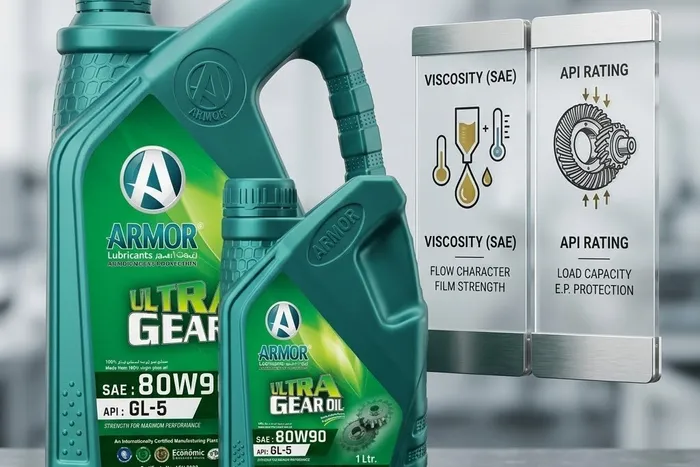
Viscosity vs. API Ratings
API ratings (GL-4 and GL-5) indicate the additive package and performance standard, while numbers like 80W-90 or 75W-90 indicate the kinematic viscosity (thickness) measured in centistokes (cSt) at 100°C.
An 80W-90 GL-4 vs GL-5 comparison means two oils of the exact same thickness (usually 13.5–24.0 cSt at 100°C) but completely different chemical properties and extreme-pressure limits.
Heavy marine outboard applications often require strict adherence to GL-5 due to extreme moisture, lower operating RPMs, and heavy propeller shock-load conditions.
Frequently Asked Questions
Can you use GL-5 gear oil instead of GL-4?
Generally, no. If your manufacturer specifies GL-4 (common in manual transmissions), using GL-5 can cause catastrophic damage to yellow-metal synchronizers (brass).
GL-5 is often "too slippery" due to extreme-pressure additives, which prevents synchronizers from generating the friction needed to shift smoothly.
Can you mix GL-4 and GL-5 gear oil?
Mixing GL-4 and GL-5 is highly discouraged. You dilute the EP additives needed for GL-5 applications and introduce aggressive sulfur/phosphorus compounds into GL-4 environments, risking corrosion of brass parts. Always drain and fill with the correct specified fluid.
Is GL-4 or GL-5 better?
Neither is inherently better; they serve different mechanical purposes. GL-5 is better for high-shear, extreme-pressure environments like rear differentials. GL-4 is better for manual transmissions where synchronizer engagement and yellow-metal safety are required.
Hypoid gear oil GL-4 or GL-5?
For hypoid gears you almost always need API GL-5. Hypoid gears have a sliding action that creates immense extreme pressure and friction, and GL-5’s high EP additive concentration is engineered to prevent metal-to-metal contact under load.
What happens if I used GL-5 gear oil instead of GL-4?
You will likely notice stiff, "crunchy," or difficult shifting almost immediately. Over time the sulfur additives chemically attack and dissolve the brass synchronizer rings, eventually leading to transmission failure. Drain it immediately and flush with the correct fluid.
What is the difference between GL-4 and GL-5 differential oil?
A differential using hypoid gears requires GL-5 to manage the extreme sliding friction. Some lighter-duty transaxle differentials may call for GL-4, but standard rear-wheel-drive axles require the heavy-duty EP additive package found only in GL-5.
Need the Right Gear Oil?
Armor Lubricants formulates premium gear oils meeting precise API GL-4 and API GL-5 specifications for maximum protection and performance.