
Selecting the correct oil viscosity for your engine determines overall mechanical longevity. Many drivers face the choice of 5w-20 vs 5w-30 when standing in front of the oil container display. Choosing between these grades directly impacts how your motor oil flows.
Engine oil acts as the primary defense against friction and severe heat. Using the right motor oil ensures moving metal components glide smoothly without premature wear. The viscosity when the engine runs dictates how effectively this liquid shield operates.
When reviewing oil grades explained on a product label, the numbers mean the oil is tested under specific thermal conditions. Oil viscosity represents the fluid's resistance to flow. Thicker oil like 5w30 moves through channels differently than thinner oil like 5w20.
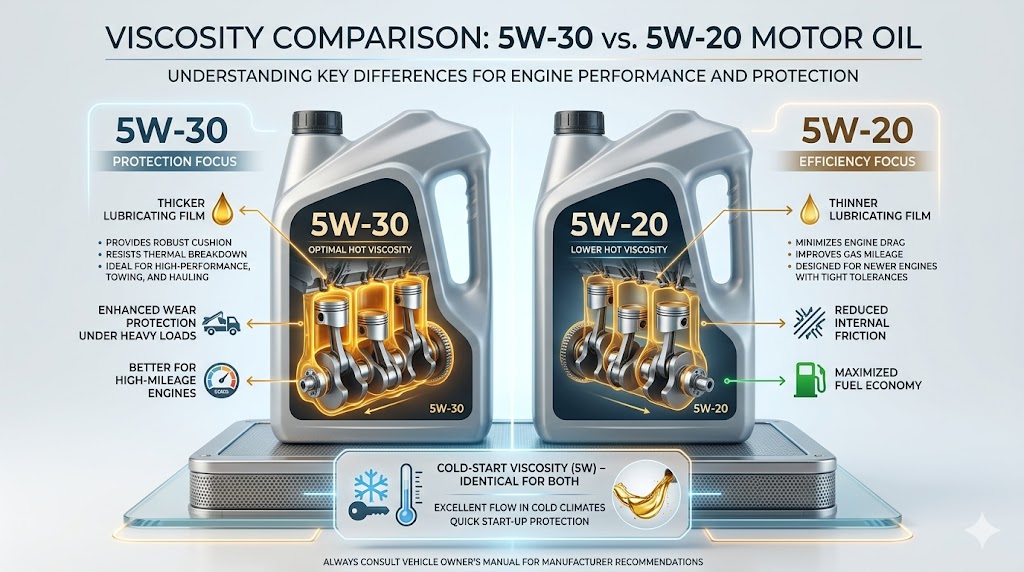
Both 5w20 and 5w30 are multi-grade engine oils designed for fluctuating climates. They perform identically in freezing conditions but separate in their capabilities as engine temperatures rise. Selecting the right oil for your vehicle depends entirely on specific manufacturer tolerances.
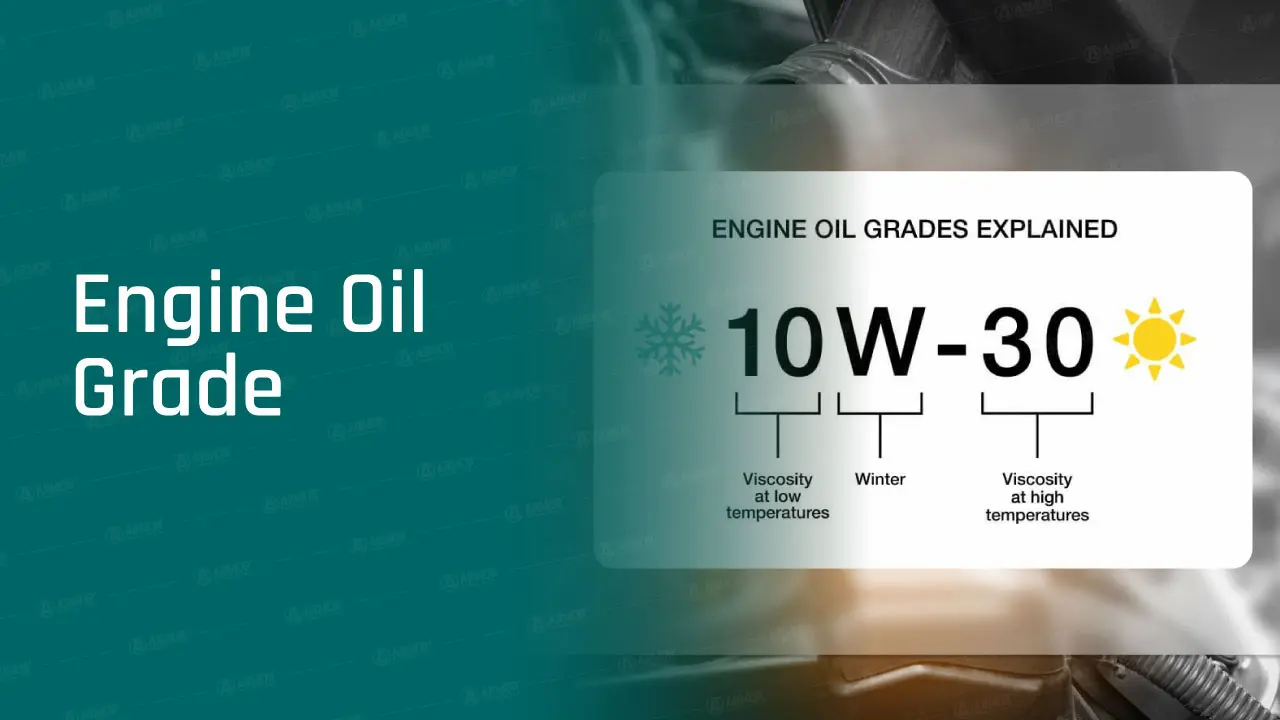
The format of an oil grade reveals its dual-temperature performance profile. The 5w stands for winter, indicating how the oil flows in cold temperatures. A lower winter number means the oil will flow faster during cold morning starts.
Both 5w-20 and 5w-30 share the identical 5w winter rating. This means the oil pump pushes them through the engine block with equal ease at startup. Faster oil flow throughout the engine prevents dry metal-to-metal contact when you turn the key.
The second number represents the oil’s viscosity at normal engine operating temperatures. This is exactly where 5w-20 vs 5w-30 separate in mechanical performance. A 20-weight fluid remains a thinner oil, while a 30-weight fluid maintains a much thicker film.
Internal engine components require a specific oil thickness to safely maintain oil pressure. When the engine is hot, oil that’s too thick restricts flow. Conversely, oil that is too thin might not protect bearing surfaces. You must use the oil specified by the manufacturer.
Temperature heavily dictates how thick or thin the oil behaves. As the engine run cycles generate heat, overall oil viscosity drops. The fluid thins out rapidly, which is why multi-grade engineering is absolutely essential for protecting your engine across various climates.
The best oil provides optimal protection when it maintains a highly stable viscosity. If you drive in extreme heat, the fluid reaches high temperatures rapidly. A premium oil will flow at vehicle operating specs without breaking down under severe stress.
To know about your car engine oil, you must evaluate how it responds to thermal load. Oil viscosity affects everything from fuel economy to heat dissipation. A stable oil grade ensures the fluid reaches critical upper valvetrain components.
Normal engine operating temperatures typically hover around 212 degrees Fahrenheit. At this precise heat level, 5w-30 will flow slightly slower than 5w-20. The 30-weight fluid is a thicker oil like syrup compared to the water-like flow of the 20-weight.
The correct viscosity for your engine guarantees the fluid wedge between moving parts stays entirely intact. If you use 5w-20 in an engine built for 30-weight, the oil film might shear. This leads directly to accelerated engine wear over time.
Conversely, using 5w-30 in a tightly clearanced modern engine might cause sluggish fluid dynamics. The engine oil pump must work harder to push thicker oil like 5w30 through narrow galleries. This slight resistance can marginally reduce overall engine performance and efficiency.
The fundamental differences between 5w-20 and 5w-30 become apparent only when the engine is hot. While they look identical pouring out of the bottle, their behavior at 100 degrees Celsius differs. The 30-weight motor oil remains noticeably more viscous.
Many modern passenger vehicles require 5w-20 to maximize daily fuel economy. Thinner oil reduces internal fluid friction, allowing internal combustion engines to operate with less parasitic loss. This slight efficiency gain helps automakers meet stringent global emission standards.
However, 5w-30 will provide a much thicker protective barrier. This specific oil type is best for older engines or vehicles subjected to heavy towing. The increased oil’s viscosity at high temperatures prevents the fluid from thinning out dangerously under extreme mechanical load.
When choosing between 5w30 vs 5w20 motor oil, always check your owner's manual first. The automotive engine oil types listed by the manufacturer perfectly account for internal bearing clearances. Using the exact recommended grade prevents unwanted long-term engine damage.
A thin oil like 5w20 reaches internal components slightly faster when the engine operates at its normal heat range. This rapid flow helps cool the entire engine block more efficiently. Faster fluid dynamics rapidly pull heat away from critical friction zones.
A thicker oil like 5w-30 resists shearing better under sustained high stress. If you frequently drive in heavy stop-and-go traffic, the oil's viscosity at high temperatures becomes paramount. The thicker oil maintains noticeably better oil pressure when idling hot.
Some vehicle owners mistakenly believe thicker is always better. However, oil that is too thick can cause localized overheating within the block. The oil must flow rapidly enough to carry heat away. Balancing flow and thickness dictates which oil is right for you.
Engine wear primarily occurs during the very first few seconds of startup. Because 5w-20 and 5w-30 share the same 5w winter rating, cold-start wear protection is identical. Both flow quickly to lubricate the camshaft and bearings instantly.
Significant wear differences emerge primarily during high-load operations. If a 5w20 motor experiences severe thermal stress, the fluid film might break down. Under these specific conditions, 5w-30 will provide superior boundary lubrication, preventing catastrophic metal-to-metal contact.
Regularly monitoring your engine oil weights ensures you precisely match the fluid to your driving habits. High-performance driving demands higher viscosity at operating temperature. Everyday commuting in modern efficient vehicles perfectly aligns with thinner 5w-20 specifications.
Many drivers ask what happens if I accidentally put 5w30 instead of 5w20 during maintenance. In most standard passenger vehicles, doing this once will not cause immediate engine damage. The 5w30 oil will flow properly, just acting slightly thicker at operating temp.
However, making a strict habit of using 5w-30 instead of 5w-20 can trigger long-term issues in certain motors. Engines engineered specifically for 5w-20 feature extremely tight bearing clearances. Thicker oil might not flow quickly enough through these microscopic mechanical gaps.
This noticeably reduced flow can lead to inadequate lubrication at the top end of the engine. Over time, substituting thicker oil like 5w30 might cause variable valve timing mechanisms to actuate slowly. These complex systems rely on precise oil pressure to function.
Before deciding to use 5w-30 instead of 5w-20, carefully consult a mechanical professional. If you are trying to silence a noisy valvetrain by going up a grade, you might be masking a mechanical failure. Always diagnose mechanical issues before altering oil viscosity.
Switching fluid weights in the opposite direction carries much higher risks. Going from 5w30 to 5w20 in an engine requiring thicker fluid can lead directly to catastrophic failure. The thinner 5w-20 will not provide adequate film strength for bearings machined for 30-weight oil.
Under heavy mechanical load, the thinner oil will shear rapidly, causing a dangerous drop in oil pressure. This severe lack of pressure means the oil cannot properly support the crankshaft journals. The resulting friction will destroy the motor rapidly.
Never use a thinner oil than what the factory specifically recommends. If you need to choose the right vehicle engine oil, stick to the heavier spec if you are caught between two approved grades. Thicker generally offers a much better safety margin.
Using oil thicker than recommended significantly increases internal engine drag. The engine must burn more fuel to overcome this persistent fluid resistance. You will immediately notice a slight drop in your vehicle's overall miles per gallon.
Excessively thick oil also runs noticeably hotter. Because it flows slower, it spends much more time absorbing heat in the engine block before returning to the oil pan. This elevated fluid temperature can prematurely degrade the oil's chemical additive package.
For older engines burning oil, stepping up to a 5w-30 might successfully slow consumption. The thicker fluid has a harder time slipping past worn piston rings. Review a best high mileage oil guide to understand if this shift benefits your specific engine.
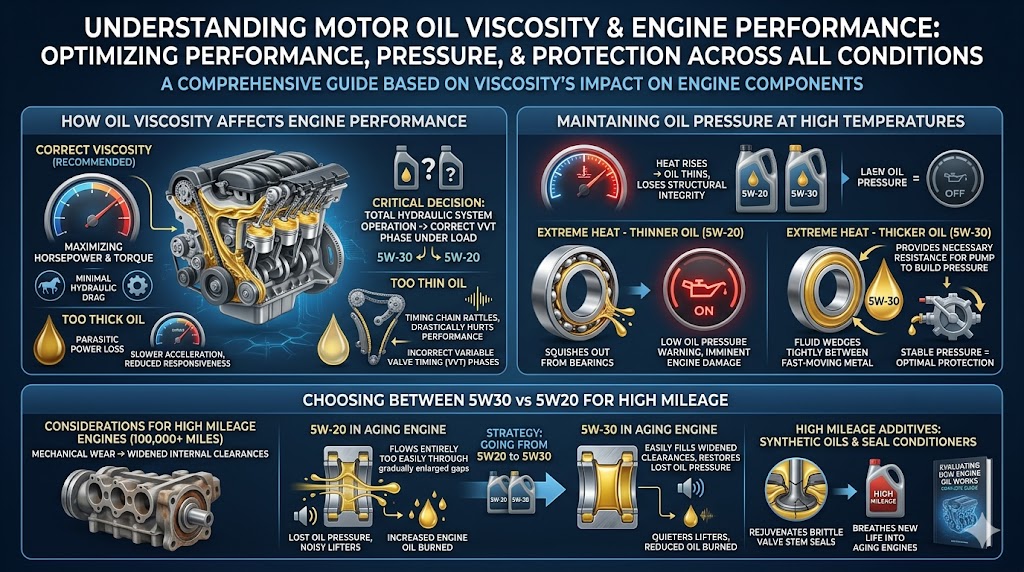
Engine performance directly correlates with how efficiently motor oil flows through tight internal passages. When you select the correct oil, the engine experiences minimal hydraulic drag. This allows the internal components to spin freely, maximizing available horsepower and torque output.
If the oil that's too thick enters the system, the engine works harder simply to pump the fluid. This parasitic power loss translates to slightly slower acceleration and reduced engine responsiveness. Utilizing the recommended oil viscosity ensures the motor spins up with intended agility.
Alternatively, oil that is too thin severely compromises the hydraulic tensioners. Many modern engines use oil pressure to maintain critical timing chain tension. If the oil flows too quickly and loses pressure, timing components can rattle, drastically hurting engine performance.
Therefore, choosing between 5w30 vs 5w20 involves much more than just basic lubrication. It is a critical decision regarding total hydraulic system operation. The precise fluid thickness guarantees that variable valve timing phases correctly under heavy acceleration and load.
High temperatures thoroughly test the absolute limits of your motor oil viscosity. As heat rises, the fluid naturally wants to thin out and lose its structural integrity. Maintaining robust oil pressure is essential to keeping engine components separated by a fluid barrier.
When operating at extreme heat, a thicker oil like 5w-30 truly shines. It provides the necessary resistance for the oil pump to build and properly hold pressure. If pressure drops too low, the dashboard warning light activates, signaling imminent engine damage.
Evaluating how engine oil works complete guide emphasizes that stable pressure equals optimal protection. The oil must completely resist thinning out so severely that it squishes out from bearings. The proper grade ensures the fluid wedges tightly between fast-moving metal surfaces.
As engines steadily age and cross the 100,000-mile mark, internal bearing clearances slowly widen due to normal mechanical wear. A 5w-20 oil that provided perfect pressure when new might start flowing entirely too easily through these gradually enlarged gaps.
This is precisely when going from 5w20 to 5w30 becomes a highly legitimate strategy. The thicker 5w-30 fluid easily fills the widened clearances more effectively. This restores lost oil pressure, quiets noisy lifters, and can significantly reduce the amount of engine oil burned.
High mileage engines often benefit immensely from synthetic oils blended with seal conditioners. These specific chemical formulas actively rejuvenate brittle valve stem seals. Combining a high-mileage additive package with a slightly thicker oil viscosity breathes new life into aging internal combustion engines.
When comparing 5w-20 vs 5w-30, you must also carefully consider the base oil. Synthetic oils dominate the modern automotive market due to their perfect molecular consistency. Conventional oil, refined directly from crude, contains varied molecule sizes that break down much faster.
Synthetic vs conventional is a mechanical debate largely settled by clear performance metrics. Full synthetic 5w-30 will provide vastly superior thermal stability compared to conventional 5w-30. Synthetic fluid actively resists oxidation and sludge formation under severe engine temperatures.
Automakers increasingly mandate synthetic formulas for all modern engines. If your vehicle strictly requires 5w-20, it highly likely specifies synthetic. Thinner grades rely heavily on robust synthetic base stocks to maintain their protective film strength at high heat.
To understand synthetic vs conventional oil what's the difference, look closely at extreme cold performance. A synthetic 5w flows much faster at sub-zero temperatures than a conventional 5w. This guarantees vital instant lubrication during harsh winter morning starts.
Synthetic oil is engineered carefully in a laboratory, ensuring every single molecule serves a specific lubricating purpose. This purity means the fluid contains no waxy impurities that cause conventional oils to thicken in the cold. It remains perfectly fluid and pumpable.
Furthermore, synthetic base oils offer inherently higher overall film strength. A synthetic 5w-20 can often protect exactly as well as a conventional 5w-30 under shear stress. This allows engines to run thinner, highly efficient oils without sacrificing necessary component protection.
For ultimate daily peace of mind, synthetic is often the best route. It significantly extends drain intervals and keeps internal engine components remarkably clean. Upgrading to synthetic is a highly cost-effective way to ensure long-term mechanical reliability.
All multigrade oils use viscosity index improvers to manage temperature shifts. These microscopic polymer coils expand when hot to thicken the oil and contract when cold to thin it out. In conventional oils, these polymers shear and break down rapidly over time.
Synthetic base stocks possess a naturally high viscosity index natively. They require far fewer artificial modifiers to successfully achieve a 5w-30 or 5w-20 rating. With fewer polymers to break down, synthetic motor oil maintains its correct viscosity grade much longer.
When you want to guarantee car engine oil quality performance, robust viscosity retention is mandatory. If a conventional 5w-30 shears down, it might operate exactly like a 5w-20 after just a few thousand miles. Synthetics stay exactly in their designated grade.
Selecting the absolutely correct oil for your car requires reading the oil filler cap or owner's manual. The manufacturer spent millions engineering specific tolerances that demand a precise motor oil viscosity. Guessing the right oil often leads to highly expensive repairs.
If the manual specifically states "5w-20 or 5w-30," carefully consider your primary driving environment. Use 5w-30 if you live in a perpetually hot climate, frequently tow heavy loads, or drive aggressively. The thicker fluid provides a noticeably better high-temperature safety buffer.
Use 5w-20 if you prioritize maximum daily fuel efficiency and do mostly light city commuting. This thinner grade rapidly reduces internal drag and gets up to the valvetrain swiftly. It is perfectly formulated for modern, highly efficient daily drivers.
Never deviate entirely from the recommended winter or operating numbers without consulting a certified expert. Putting a 10w oil into an engine designed for 5w will drastically accelerate cold-start wear. Always respect the strictly factory engineered fluid specifications.
Regularly checking your motor oil level remains the absolutely most critical maintenance task. Even the very best oil cannot protect your engine if there is not enough fluid in the crankcase. Low oil levels cause extreme heat spikes and highly rapid fluid degradation.
Ensure you carefully select oil with the completely correct API service category. Modern engines actively require SP or SN Plus certifications to prevent dangerous low-speed pre-ignition. The correct viscosity paired with the proper chemical certification ensures comprehensive engine defense against modern stressors.
Always pair your high-quality oil with a premium oil filter. The filter successfully captures microscopic metal shavings and dangerous carbon deposits. A cheap filter can bypass dirty oil back into the engine block, completely negating the benefits of premium synthetic fluid.
Your dedicated oil change interval dictates overall engine health exactly as much as oil viscosity. Over time, heavy combustion byproducts contaminate the fluid, causing it to thicken and become acidic. Even top-tier synthetics eventually succumb to heavy chemical contamination and heat cycles.
Relying solely on dashboard mileage can be highly misleading. Stop-and-go traffic, short daily trips, and extreme heat qualify as severe service, requiring significantly shorter intervals. Refer to a trusted guide on the best time to change engine oil to match your driving habits.
Fresh oil instantly restores the necessary protective fluid film. Whether you choose 5w-20 and 5w-30, frequent changes actively flush out abrasive wear particles. Clean, properly graded motor oil remains the absolute cheapest and most effective insurance for your vehicle's engine.