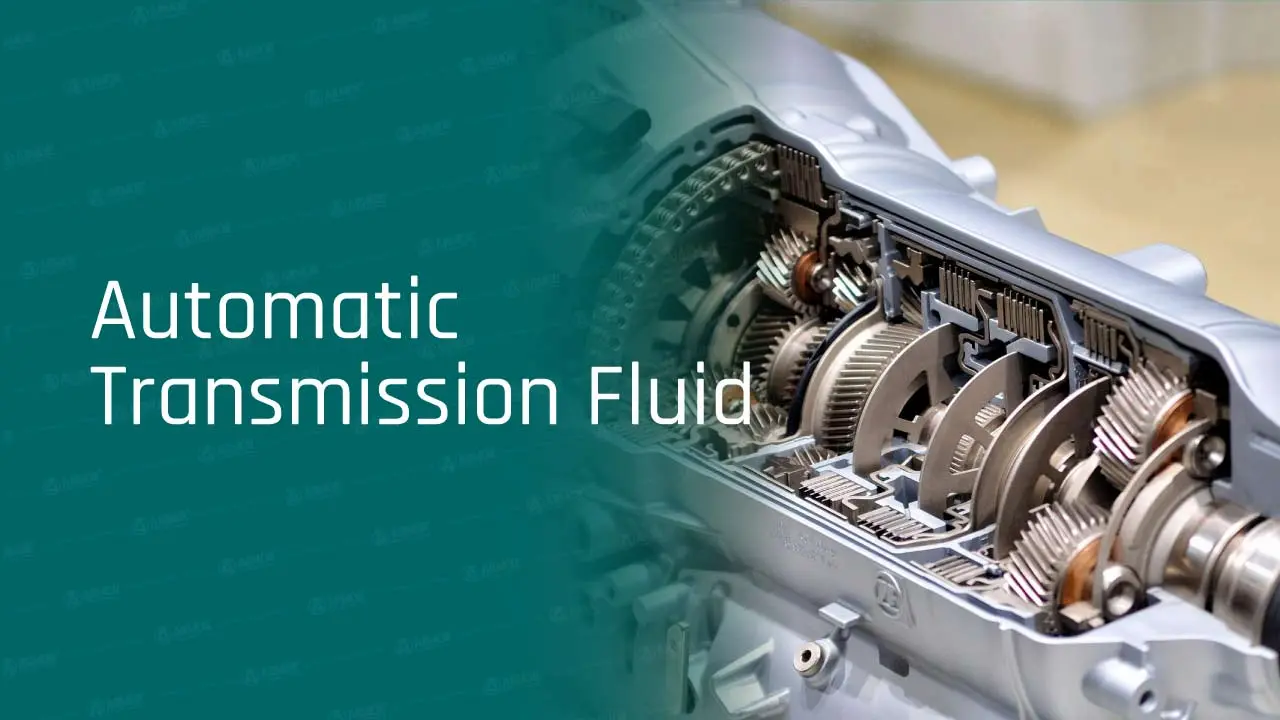
Automatic transmission fluid (ATF) is the lifeblood of your vehicle's transmission. It's a highly specialized transmission oil optimized for the unique demands of modern automatic transmissions. Choosing the correct type of transmission fluid is not just a recommendation; it's a critical requirement for proper operation and longevity.
The right fluid ensures smooth gear shifts, protects against wear, and helps maintain the correct operating temperature. Using the wrong fluid can lead to poor performance, transmission damage, and costly repairs. It is essential to know what transmission fluid you need for your car among the different fluid types available.
While its primary function is to lubricate moving parts, ATF does much more. It acts as a hydraulic fluid, enabling the engagement of clutch packs and facilitating gear changes. This hydraulic pressure is precisely controlled, and the fluid's properties are key to this process.
Furthermore, ATF contains special friction modifiers that are essential for the proper operation of the clutch components. It also serves as a coolant, helping to keep the transmission cool by dissipating the immense heat generated within it. This function is vital to prevent overheating and component failure.
Using an incorrect automatic transmission fluid can have severe consequences. It can lead to shuddering, slipping gears, and hesitation during shifts. The wrong fluid might not provide adequate protection, leading to premature wear on gears, bearings, and clutch plates.
In the worst-case scenario, it can cause complete transmission failure, a repair that can cost thousands of dollars. The viscosity and additive package of the fluid are specifically engineered for your type of transmission, and deviation can be catastrophic.
Automatic transmission fluid specifications are standards set by vehicle manufacturers to ensure the fluid meets the precise performance requirements of their transmissions. These standards dictate properties like viscosity, friction characteristics, and thermal stability. Using a fluid that meets the recommended particular atf specification is crucial.
When you ask, "What type of transmission fluid do I need?", the answer lies in the specification listed in your owner's manual. Brands like Castrol, Valvoline, and ACDelco produce fluids that meet these specific standards, such as Dexron VI or ATF+4.
Historically, the two most dominant specifications in North America have been General Motors' Dexron and Ford's Mercon. For decades, these two standards guided the development of automatic transmission fluids, with many other manufacturers referencing them.
While many fluids were once labeled "Dex/Merc," indicating compatibility with both, modern transmissions require much more specific formulations. The evolution of these standards reflects the increasing complexity of automatic transmissions and the need for more advanced fluid technology.
Transmission technology is constantly advancing as manufacturers strive to make automatic transmissions are more efficient. Modern automatics often have more gears and sophisticated electronic controls, and operate under higher stress. These advancements necessitate more robust and specialized fluids.
As a result, Dexron specifications have evolved from the pre-2006 standards of Dexron II and Dexron III to the current Dexron VI and Dexron ULV. Each new generation is designed to meet the demands of newer transmission designs, and they are not always backward-compatible.
In previous decades, Dexron II and Dexron III were the standard for GM vehicles. These fluids were common for both automatic transmissions and some power steering fluid applications. Many older, pre-2006 passenger cars and light trucks still specify these older fluid types.
However, these fluids are now considered obsolete for modern GM automatic transmissions. While you might still find fluids marketed as a Dexron III equivalent, they do not meet the more stringent requirements of current GM vehicles.
Introduced in 2006, Dexron VI (often written as Dexron-VI ATF) became the standard for all new GM automatic transmissions. This fluid has a lower viscosity than its predecessors, which helps improve fuel efficiency. It also offers significantly better thermal stability and protection against oxidation and rust thanks to its advanced additive technology.
ACDelco Dexron VI is the factory-fill fluid for GM vehicles. Dexron VI is fully backward-compatible with older GM transmissions that previously used Dexron II or III, making it a universal choice for most GM passenger cars.
Dexron ULV (Ultra-Low Viscosity) is an even newer specification, representing the next step in transmission fluid technology. This fluid, like Motorcraft XT12QULV Mercon ULV, is designed for the latest generation of highly efficient 10-speed automatic transmissions that require this specific formulation.
The primary goal of Dexron ULV transmission fluid is to further reduce internal friction and improve fuel economy. Its viscosity is significantly lower than Dexron VI, and it is not backward-compatible. Using it in a transmission not designed for it can cause damage.
The key difference between Dexron VI and Dexron ULV is viscosity. Dexron VI has a viscosity of around 6.0 centistokes (cSt) at 100°C, while Dexron ULV is much thinner, at approximately 4.5 cSt. This difference is critical for transmission operation.
You must use the exact fluid specified for your vehicle. A 2008 Chevy Impala transmission fluid requirement would be Dexron VI, not ULV. Always check your owner's manual to determine the correct transmission fluid you need.
For many years, Mercon V was the primary automatic transmission fluid for Ford vehicles. It offered improved performance over older fluids like the original Mercon and the even older Type F fluid. Many Ford, Lincoln, and Mercury vehicles on the road today still require Mercon V.
It's important to note that Mercon V is not the same as Mercon LV or ULV. Using the wrong Mercon fluid can lead to shift problems and potential long-term damage to the transmission.
Similar to GM's move to lower viscosity fluids, Ford introduced Mercon LV (Low Viscosity) to improve fuel efficiency in its newer 6-speed automatic transmissions. Mercon LV has specific frictional properties and is not interchangeable with Mercon V.
Following this trend, Ford introduced Mercon ULV (Ultra-Low Viscosity) for its 10-speed transmissions. This fluid is designed for maximum fuel economy and has a very specific additive package. The difference between Mercon LV vs ULV is significant.
While older fluids were often cross-compatible, modern Dexron and Mercon fluids are distinct. The primary differences lie in their viscosity and the specific additive packages, including friction modifiers. These are tailored to the clutch materials and hydraulic systems used by each manufacturer.
The debate of Mercon LV vs Dexron VI is common, but they are not interchangeable. Using a Dexron VI fluid in a transmission requiring Mercon LV, or vice versa, can disrupt the precise timing of clutch engagements, leading to poor shift quality.
Chrysler, Dodge, Jeep, and Ram vehicles (now under Stellantis) have a very specific fluid requirement known as ATF+4. This specification was introduced in the late 1990s and is a fully synthetic fluid designed for long fluid life and consistent performance.
Unlike Dexron or Mercon, there has not been a succession of ATF+5 or +6. The ATF+4 specification has remained the standard for the vast majority of Chrysler-built automatic transmissions, including the 48RE transmission fluid type.
Mopar ATF+4 is the OEM fluid, but other brands like Castrol and Valvoline offer licensed ATF+4 products. To be a true equivalent, the fluid must be certified by Chrysler. Unlicensed "multi-vehicle" fluids that claim ATF+4 compatibility may not provide the best performance.
For example, if you need ATF 4 transmission fluid, it's best to look for a product that explicitly states it is a licensed ATF+4 fluid. This ensures it has the correct synthetic base oils and advanced additive technology.
Chrysler transmissions are notoriously sensitive to fluid type. The use of a non-licensed fluid can lead to issues with the torque converter clutch, causing shudder and vibration. Sticking with a licensed Mopar ATF+4 or an approved equivalent is the safest choice.
The formulation of ATF+4 is unique, and using a generic ATF can compromise the longevity and performance of the transmission. It is not worth the risk to save a few dollars on a cheaper, non-certified fluid.
Many Asian automakers, such as Honda, Toyota, and Nissan, have their own proprietary ATF specifications. For instance, Honda has its ATF DW-1, while Toyota often requires Type T-IV or WS (World Standard) fluid. Nissan vehicles may require Nissan Matic fluids.
If you have a 2001 Toyota Camry, the recommended transmission fluid is likely Type T-IV. A 2005 Toyota Camry transmission fluid requirement would be similar. Using a generic Dexron/Mercon fluid in these vehicles is not recommended.
Hyundai and Kia also have their own fluid specifications, most commonly designated as SP-III or the more modern SP-IV. These fluids are formulated to meet the specific requirements of their transmissions. Using an SP-IV equivalent is essential for proper performance.
When searching for transmission fluid for your Hyundai Sonata or Kia, ensure the product explicitly lists compatibility with the required SP specification. This will ensure the fluid has the correct frictional properties.
European vehicles from manufacturers like BMW, Mercedes-Benz, and Volkswagen have highly specific and often complex fluid requirements. These transmissions are built to exacting standards and demand fluids that meet specifications like Shell M-1375.4 or specific ZF Lifeguard fluids.
Using a generic ATF in these high-performance transmissions is a recipe for disaster. It is imperative to use the exact OEM fluid or a certified equivalent that meets the manufacturer's unique specification.
It's crucial to understand that automatic transmission fluid is specially designed for automatic transmissions. It should never be used in a manual transmission. Manual transmission systems require a different type of gear oil, which has a much higher viscosity to protect the gears under extreme pressure.
A continuously variable transmission (CVT) is another distinct type of transmission. CVTs do not have traditional gears and require a very specific continuously variable transmission fluid. Using regular ATF in CVT transmissions will cause slipping and rapid failure. Always use the specified CVT fluid.
The single most reliable source of information when choosing a transmission fluid is your vehicle's owner's manual. It will clearly state the required specification, such as Dexron VI, Mercon V, or ATF+4.
Always default to the manufacturer's recommendation. The engineers who designed the transmission know exactly what type of fluid is required for optimal performance and durability. This is the best way to determine the correct transmission fluid for your vehicle.
In some vehicles, the transmission fluid dipstick will have the required fluid type stamped directly onto it. This provides a quick and easy reference point when you are under the hood and checking the transmission fluid level.
Also, many modern cars no longer have a user-accessible transmission dipstick, as they feature "filled for life" transmissions. In these cases, checking the vehicle's transmission fluid is a job best left to a professional.
If you are unsure what type of automatic transmission fluid to use, or if your vehicle has a sealed transmission, it is always best to consult a qualified mechanic or your dealership. They have access to technical databases that can identify the correct fluid for your specific vehicle.
They can also properly check the fluid level and condition, which is often a more complex procedure on modern cars than simply pulling a dipstick. Professional advice can prevent costly mistakes.
Most modern, high-performance automatic transmission fluids, like Dexron VI and ATF+4, are fully synthetic. Synthetic ATF offers superior performance across a wider range of temperatures. It resists breakdown from heat much better than conventional fluid, extending the fluid service life.
Synthetic fluids also provide better protection against wear and can help improve fuel efficiency due to their stable viscosity. They are the best choice for severe service conditions like towing or heavy-duty use.
For any vehicle that specifies a synthetic fluid (like ATF+4 or Dexron VI), you must use a synthetic ATF. For older vehicles that originally used a conventional fluid, upgrading to a compatible synthetic can offer enhanced protection and longevity.
However, the most important factor is meeting the correct specification. A conventional fluid that meets the spec is better than a synthetic fluid that does not. Always prioritize the manufacturer's required standard to get the correct transmission fluid.
Synthetic ATF is generally more expensive than conventional fluid. However, the added cost often translates to better protection and longer change intervals, potentially saving money in the long run by preventing transmission repair.
Considering the high cost of replacing a transmission, the price difference for a high-quality, synthetic ATF is a worthwhile investment in your vehicle's health.
Multi-vehicle ATFs are designed to be suitable for use with a wide range of specifications from different manufacturers. They are convenient for repair shops and DIYers who work on various cars. These fluids aim to provide a universal solution.
These products, like some from Valvoline or Castrol, are formulated to meet the base requirements of many different fluid types, from older Dexron III to certain import specifications.
The main drawback of a multi-vehicle fluid is that it's a compromise. While it may be acceptable for many applications, it may not perfectly match the specific friction characteristics or viscosity requirements of your transmission. This can sometimes lead to subtle shift quality issues.
For transmissions that are particularly sensitive, like those from Chrysler or Honda, or for high-performance European models, using a multi-vehicle fluid is generally not recommended. The risk of premature wear or performance problems is higher.
Multi-vehicle fluids can be a suitable choice for older, out-of-warranty vehicles that require less-stringent fluid specifications, such as Dexron III or Mercon V. They offer a convenient and cost-effective option for top-offs or fluid changes in these applications.
However, for any modern transmission, especially those still under warranty, it is always the safest bet to use a fluid that is specifically licensed and approved for that exact specification.
It is strongly recommended not to mix different types of automatic transmission fluid. Different fluids have unique additive packages and viscosity ratings. Mixing them can compromise their performance and potentially lead to transmission damage.
The only exception is when a newer fluid is fully backward-compatible, such as using Dexron VI in a transmission that originally called for Dexron III. In all other cases, avoid mixing.
When the transmission fluid is low, it can cause the transmission to overheat and can lead to shifting problems, slipping, and eventually, severe internal damage. The fluid is necessary for hydraulic pressure, and insufficient fluid will starve the system.
If you suspect your fluid is low, it's important to check it and add fluid of the correct type as soon as possible. Make sure there are no leaks, as a low level often indicates a seal or gasket has failed.
The recommended service interval for changing your automatic transmission fluid varies widely depending on the vehicle and driving conditions. It's time to change the fluid based on the schedule in your owner's manual, which can range from every 30,000 to over 100,000 miles.
For vehicles used in severe service, such as frequent towing or city driving, it's wise to perform a fluid service more often than the standard recommendation to ensure a long transmission life.
In some older vehicles, the manufacturer did specify automatic transmission fluid for use in the power steering system. Dexron type ATF was a common recommendation. However, this is not a universal rule and should not be confused with motor oil.
Many modern cars require a dedicated power steering fluid. Using ATF in a system that doesn't call for it can damage seals and other components. Always check your owner's manual to be certain, as motor oil and other fluids are not interchangeable.
Choosing the correct ATF fluid is one of the most important decision you can make for your vehicle. It's not just about picking up any fluid from the shelf; it's about matching the fluid's specific properties to your car's transmission type and manufacturer's requirements. Using the wrong ATF can lead to low performance, issues in shifting, and even leads to costly transmission maintenance.
Always consult your owner's manual and choose a trusted global brand that meets the required performance specifications. Armor Lubricants offers a range of high-performance transmission fluids, including their Dexron 6 product, which is specifically engineered for GM vehicles requiring this specification, providing superior thermal stability and wear protection.