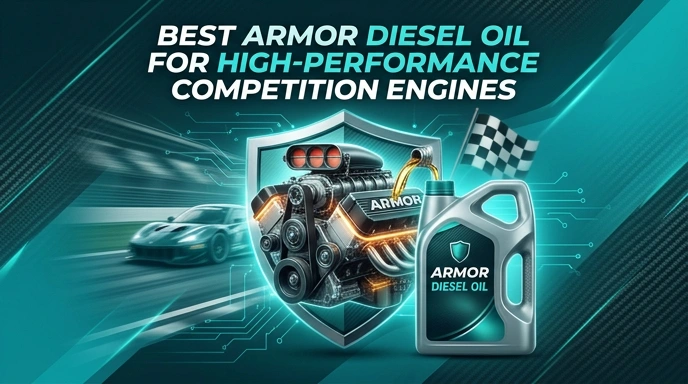
High-performance competition engines operate in environments that destroy standard lubricants within seconds. The immense cylinder pressures associated with competition pulling diesel engines create a hostile environment for oil films. Armor Diesel Oil has engineered formulations specifically designed to withstand these extreme mechanical stresses.
Selecting the right lubricant is not merely about maintenance. It is a critical component of engine tuning. The oil serves as a hydraulic fluid, a coolant, and a protective barrier simultaneously. In engines producing upwards of 2,000 to 3,000 horsepower, the margin for error effectively disappears.
Tuners and builders understand that component failure often stems from lubrication breakdown rather than structural insufficiency. Using Armor Diesel Oil ensures that the fluid dynamics within the crankcase support the mechanical goals of the build. This protection is vital when pushing injection timing and boost pressures to their absolute limits.
Standard over-the-road heavy-duty oils are designed for longevity and emissions compliance. They are not formulated for the savage load curves of a sled pull or drag race. Competition engines subject crankshafts to torsional stresses that shear molecular bonds in conventional base stocks.
The immense torque generated at low RPM during a sled hook places the main bearings in a state of boundary lubrication. If the oil film strength is insufficient, metal-to-metal contact occurs instantly. This results in spun bearings and catastrophic bottom-end failure before the vehicle reaches the full track distance.
Competition engines utilizing massive compound turbo setups generate cylinder pressures far exceeding OEM specifications. These pressures force piston rings outward against the cylinder wall with incredible force. The oil film must perform a dual function under these conditions.
First, it must lubricate the ring travel to prevent scoring of the liner. Second, it serves as a critical gasket to seal combustion gases. Armor Diesel Oil provides the necessary hydrodynamic wedge to separate the rings from the wall while maintaining compression.
If the oil creates a weak link, blow-by increases dramatically. This pressurizes the crankcase and contaminates the oil supply with unburned fuel and soot. Maintaining ring seal is the primary defense against localized overheating and power loss during a competition run.
Temperature spikes in competition applications happen in milliseconds. A pulling truck might see exhaust gas temperatures soar, transferring massive heat loads to the pistons and turbochargers. The oil spraying the underside of the piston crown must absorb this thermal energy without oxidizing.
Oxidation causes oil to thicken and turn into sludge. In a high-performance engine, this thickening restricts flow to tight-tolerance areas like cam journals and lifter bores. Armor Diesel Oil utilizes thermally stable base stocks that resist oxidation even when exposed to extreme heat cycles.
Base oil alone cannot survive the environment of a competition diesel engine. The additive package dictates how the fluid behaves under stress. Armor integrates specific chemical compounds designed to sacrifice themselves to protect hard parts.
These additives are carefully balanced to work in unison. An excess of one compound can negatively dramatically affect the performance of another. Precision chemistry ensures that anti-wear agents, detergents, and dispersants function cohesively at high RPM.
Zinc dialkyldithiophosphate, commonly known as ZDDP, is the primary anti-wear agent in performance lubricants. Modern emissions-compliant oils have reduced ZDDP levels to protect catalytic converters. Competition engines do not require this compromise and demand higher concentrations.
Armor Diesel Oil formulations meant for off-road competition feature elevated levels of zinc and phosphorus. These elements create a sacrificial phosphate glass film on metal surfaces. This film is crucial for protecting flat-tappet camshafts and high-lift roller profiles found in performance builds.
Without adequate ZDDP, the extreme pressure at the cam lobe interface leads to galling and lobe wiping. The chemical barrier provided by Armor products ensures the valvetrain survives the aggressive ramp rates required for high airflow cylinder heads.
Competition pulling diesel engines run notoriously rich fuel mixtures to spool large turbochargers. This over-fueling results in significant soot generation. Soot particles are abrasive and can agglomerate to form larger sludge deposits that block oil passages.
The dispersant package in Armor Diesel Oil encompasses the soot particles in a chemical envelope. This prevents them from sticking together or adhering to engine surfaces. By keeping soot in suspension, the oil filter can effectively remove contaminants without clogging premature.
Effective soot management also prevents viscosity increase. If soot runs unchecked, the oil becomes distinctively thicker, increasing fluid drag on the crankshaft. This parasitic loss robs horsepower and creates additional heat within the lubrication system.
Viscosity is a measure of a fluid's resistance to flow. In a competition scenario, consistency is key. The oil must maintain its specified grade from the burnout box to the end of the track. If the oil thins out due to heat or mechanical stress, oil pressure drops dangerously.
Armor products focus heavily on shear stability. This ensures that the viscosity modifiers do not break down permanently. A stable viscosity profile guarantees predictable oil pressure data throughout the RPM range.
Shear down occurs when the long-chain polymers used as viscosity index improvers are physically torn apart. This happens as oil is squeezed through tight clearances in bearings and gear trains. Once sheared, the oil permanently loses viscosity.
A 15W-40 oil can easily shear down to a 30-grade oil after a single hard run if the polymers are weak. Armor Diesel Oil utilizes shear-stable polymers that resist this mechanical degradation. This retention is vital for maintaining hydrodynamic spacing in main and rod bearings.
The film strength of a lubricant is its ability to resist being squeezed out of the contact zone. Under the shock load of a clutch drop or a gear shift, the oil film acts as a shock absorber. This prevents the crankshaft from physically hammering the bearing shells.
Armor formulates its oils to possess exceptional film strength characteristics. This hydrostatic cushion is the only thing preventing catastrophic seizures. Even when oil flow is momentarily disrupted by G-forces, the residual film strength offers a momentary layer of protection.
The debate between mineral and synthetic oils shifts when discussing competition engines. Synthetics generally offer superior molecular uniformity. This uniformity translates to predictable performance at the extremes of the temperature spectrum.
Armor synthetic diesel oils are synthesized to minimize impurities found in refined crude. This purity allows for better thermal transfer and lower volatility. For engines costing tens of thousands of dollars, the consistency of a synthetic base is a necessary insurance policy.
Most engine wear occurs during the initial startup before oil pressure stabilizes. Competition engines often have looser tolerances that require immediate oil volume. Synthetic Armor oils flow more readily at ambient temperatures compared to mineral equivalents.
This rapid flow ensures that the top end of the engine receives lubrication quickly. Valve springs and rocker arms in competition heads operate under immense tension. Immediate lubrication upon cranking prevents dry friction wear on these expensive components.
Synthetic molecules are engineered to be robust. They withstand the oxidation and thermal cracking that breaks down mineral oils. In a Turbocharged pulling engine, the oil acts as the primary coolant for the turbo bearings.
When the engine is shut down after a run, the heat soak is intense. Armor synthetic oils resist coking in the turbo lines. This resistance prevents the formation of abrasive carbon deposits that destroy turbo shaft bearings.
Competition diesels frequently utilize multi-stage turbocharging systems producing boost pressures exceeding 100 PSI. The shaft speeds in these turbochargers are incredibly high. The lubrication demands for these components are unique and severe.
The oil must lubricate the shaft while simultaneously removing heat from the center cartridge. If the oil fails here, the result is immediate turbo failure. Armor Diesel Oil is tested to ensure thermal stability in these high-heat zones.
Coking is the formation of solid carbon deposits when oil burns. This typically happens in the oil feed and drain lines of a hot turbocharger. Armor additives include antioxidants that raise the thermal threshold of the oil.
By preventing coke formation, oil flow remains unrestricted. Restricted drain lines cause oil to back up into the turbo housing, often blowing past seals and entering the intake. Keeping these lines clear is essential for the longevity of the forced induction system.
Turbo shafts spin on a thin layer of oil. At speeds over 100,000 RPM, any imbalance or lack of lubrication is destructive. The oil must possess low internal friction to allow for rapid spooling while supporting the rotating assembly.
Armor formulations reduce fluid drag within the bearing housing. This aids in transient response, allowing the turbo to build boost faster. Faster spool-up times are directly correlated to competitive advantages in drag racing using diesel platforms.
Professional teams do not guess about oil performance. They use used oil analysis (UOA) to monitor engine health. Armor Diesel Oil is formulated to provide consistent baselines, making analysis easier to interpret.
Regular sampling creates a trend line. Sudden spikes in wear metals indicate pending failures. This data-driven approach allows teams to catch issues like bearing wear or filtration bypass before a rod exits the block.
High levels of copper often indicate thrust washer or bushing wear. Elevated lead or tin suggests main and rod bearing deterioration. Iron usually points to cylinder liner wear or geartrain issues. Armor oil chemistry is stable specifically to isolate these variables.
By using a consistent high-quality lubricant like Armor, variances in the report generally point to mechanical changes rather than oil degradation. This clarity helps mechanics diagnose whether the setup needs adjustment or if the lubricant was pushed beyond its service life.
Total Base Number (TBN) measures the oil's ability to neutralize acids. Combustion byproducts are acidic and corrode soft metals inside the engine. High-performance diesel engines produce significant acid loads due to rich fueling.
Armor Diesel Oils start with a high TBN retention formulation. Monitoring how fast this number drops indicates how well the oil is fighting corrosion. A rapid drop in TBN suggests that the drain interval needs to be shortened to protect the engine internals.
Price is often a factor for privateer teams, but the cost of oil is negligible compared to an engine rebuild. Conventional oils lack the robust additive packages found in Armor performance lubricants. The difference lies in the concentration and quality of the chemical agents.
Mass-market oils are diluted to meet cost targets and broad OEM approvals. Armor competition oils are concentrated for protection. This distinction is what separates an engine that lasts a full season from one that fails mid-season.
Replacing a custom billet crankshaft or a set of competition pistons is expensive. Using superior lubrication extends the service life of these components. Armor Diesel Oil acts as a cheap insurance policy against premature wear.
The reduction in friction also leads to cooler operating temperatures. Cooler parts last longer and maintain their structural integrity better. Investing in high-grade oil reduces the overall operating budget by minimizing hard part replacement.
Switching to a high-performance synthetic like Armor is a key step to boost diesel truck performance and yield measurable horsepower gains. The reduction in parasitic drag and pumping losses frees up power to the wheels. On a dyno, this can translate to significant numbers.
While protection is the primary goal, efficiency is the secondary benefit. An oil that flows easier and resists thickening allows the engine to spin more freely. In classes where victories are measured in inches, every bit of efficiency counts.
Standard mileage-based change intervals do not apply to competition engines. Intervals should be based on engine hours, fuel consumption, or number of passes. Armor Diesel Oil maintains its properties well, but contamination is the limiting factor.
Fuel dilution usually dictates the change schedule more than oil breakdown. Once fuel percentage in the oil exceeds a safe limit, the viscosity drops dangerously. Frequent changes are necessary to remove these contaminants.
High-flow injectors often wash down cylinder walls, mixing diesel with the engine oil. Diesel fuel provides some lubricity, but far less than engine oil. This dilution reduces the oil's film strength and load-carrying capacity.
Armor oils are designed to handle moderate dilution without immediate film collapse. However, monitoring fuel levels in the oil is critical. If increasing oil levels on the dipstick are observed, the oil must be changed immediately to prevent bearing damage.
After a major event, inspection of the oil filter and the oil itself is mandatory. Cutting open the filter reveals particles that the oil carried away from friction zones. This is the first line of defense in predictive maintenance.
Armor Diesel Oil's strong detergency ensures that debris is moved to the filter rather than settling in the pan. A clean pan and a dirty filter indicate the oil is doing its job. This protocol allows teams to identify potential failures before the next competition.