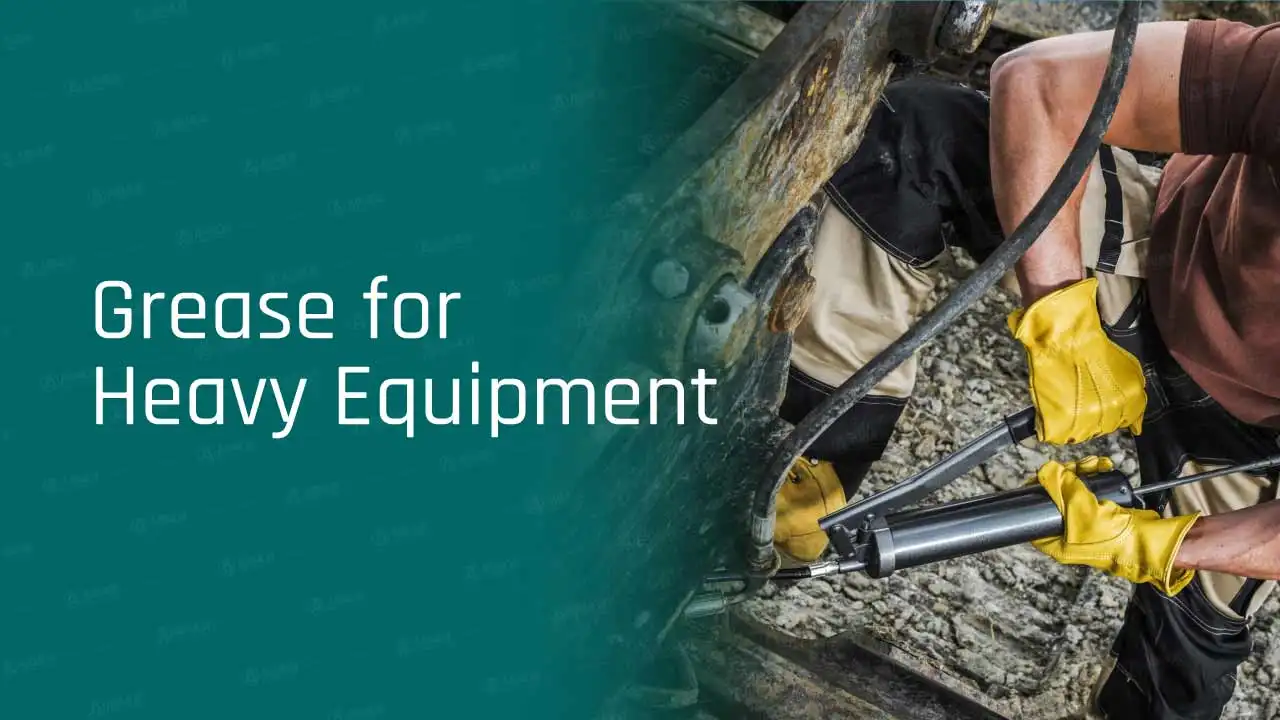
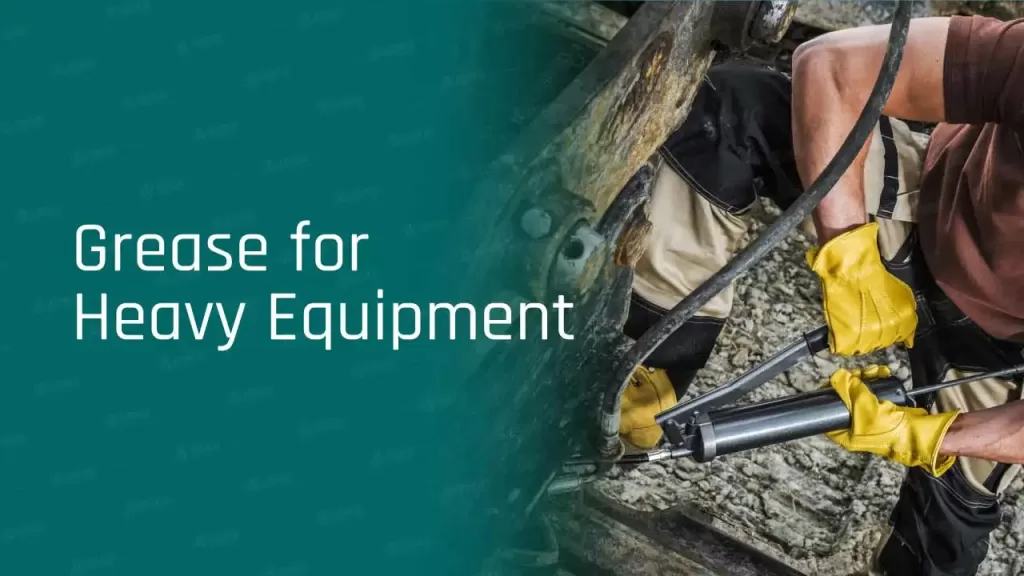
Choosing the best grease for heavy equipment is a crucial decision that directly impacts machinery performance and longevity. The correct lubricant prevents premature wear on critical components, reduces costly downtime, and ensures your equipment operates efficiently under demanding conditions. This guide provides the necessary insights.
Selecting an inadequate equipment grease can lead to catastrophic failures. It's more than just a maintenance task; it's a strategic choice to protect valuable assets. From an excavator to a loader or tractor, every machine has specific lubrication requirements that must be met.
The right grease does more than just reduce friction. It acts as a protective barrier against contaminants like dirt and water, prevents corrosion, and helps dissipate heat from bearing surfaces. This ensures the reliability of your heavy machinery.
Effective lubrication is the lifeblood of heavy equipment. A quality grease forms a resilient film between metal surfaces, preventing the metal-to-metal contact that causes wear. This is especially vital in high-load applications common in construction equipment.
The best grease for heavy equipment maintains its consistency across a wide range of operating temperatures. It won't thin out excessively when hot or become too hard to pump when cold, ensuring consistent protection for your machinery.
Using the wrong type of grease can accelerate wear, leading to unexpected equipment failure. This results in significant expenses, not only for repairs and replacement parts but also for the operational downtime that halts productivity on a job site.
An unsuitable lubricant can also lead to increased energy consumption as moving parts face higher resistance. Over time, this inefficiency adds up, increasing the overall operating cost of your heavy equipment and impacting your bottom line.
Your heavy equipment represents a substantial financial investment. Proper greasing with a high-quality product is one of the most cost-effective measures you can take to protect that investment and maximize its service life and resale value.
A consistent maintenance schedule with the correct heavy-duty grease ensures that components like pins and bushings are shielded from the harsh realities of their operating environment. This proactive approach minimizes the risk of sudden, costly breakdowns.
Understanding the technical specifications on a grease container is key to making an informed choice. Terms like NLGI grade, thickener type, and base oil viscosity define the grease's performance characteristics and its suitability for different applications.
The National Lubricating Grease Institute (NLGI) consistency number indicates the grease's hardness. For most heavy-duty applications, an NLGI 2 grade is the standard. This grade provides an optimal balance, being firm enough to stay in place but soft enough for a grease gun.
Softer greases (NLGI 1) may be used in colder temperatures or for centralized lubrication systems where the grease flows more easily. Harder greases (NLGI 3) are sometimes specified for high-temperature bearing applications to prevent leakage.
The thickener is what gives grease its semi-solid consistency, holding the base oil in suspension. The type of thickener determines the grease's water resistance, structural stability, and high-temperature performance. Common types include lithium, lithium complex, and polyurea.
Lithium complex grease is a popular choice for heavy equipment due to its excellent stability, high-temperature resistance, and water tolerance. It is often considered the best grease for construction equipment because of its versatility and robust performance in severe conditions.
Base oil is the primary lubricating component within the grease. Its viscosity—a measure of its thickness or resistance to flow—is critical. A higher viscosity base oil provides a thicker lubricating film, which is essential for low-speed, heavy-load applications.
Always check the original equipment manufacturer's (OEM) recommendations for the required base oil viscosity. Using a grease with the wrong viscosity can compromise component protection, leading to increased friction and wear on metal surfaces.
For demanding jobs, not just any grease will do. Heavy-duty grease is formulated with specific additives and properties to withstand intense pressure, heavy loads, and harsh environmental factors, making it essential for equipment like excavators and skid steers.
Lithium complex grease is a versatile, high-performance option for many applications. It offers a higher dropping point (the temperature at which it becomes liquid) than simple lithium grease, making it suitable for high-temp operations. Its inherent stability is a major advantage.
This type of grease also provides good water resistance and mechanical stability. This means it won't break down or wash out easily, making it a reliable choice for the pins and bushings on an excavator or the wheel bearings on a loader.
Moly grease contains molybdenum disulfide, a solid lubricant that provides an extra layer of protection. This additive is particularly effective in high-pressure, sliding contact applications, such as for excavator pins, U-joints, and ball joints.
The molybdenum particles bond to metal surfaces, offering protection even if the primary grease film is temporarily displaced. This makes moly grease the best grease for excavator applications where high shock loads are common. A 3-5% moly content is typical.
Synthetic grease offers superior performance over a much wider range of temperatures compared to conventional mineral oil-based greases. It provides excellent protection in both extreme cold and high heat, ensuring reliable lubrication year-round.
While it has a higher upfront cost, synthetic grease can extend service intervals and reduce overall lubricant consumption. For equipment that operates in extreme climates or under severe conditions, the investment can pay off through reduced maintenance and downtime and repairs.
The environment where your heavy equipment works is a primary factor in selecting the right grease. High temperatures, moisture exposure, and extreme pressure all demand specific grease properties to adequately protect the machine.
High operating temperatures can cause grease to soften and bleed, losing its ability to lubricate effectively. When selecting a high temp grease, look for a high dropping point and excellent thermal stability, often found in lithium complex or polyurea thickener types.
Consistently high temperatures can also cause the base oil in the grease to oxidize, leading to hardening and loss of lubricating properties. A quality heavy duty grease will contain antioxidants to resist this degradation and prolong service life.
Equipment exposed to moisture, such as an excavator working near water or a tractor in a humid climate, requires a grease with excellent water washout resistance. The grease must stay in place to prevent rust and corrosion.
Marine grease, often formulated with a calcium sulfonate or aluminum complex thickener, provides superior protection against both freshwater and saltwater. This kind of grease forms a robust barrier that repels water from grease points and bearings.
Applications involving heavy shock loads require a grease with extreme pressure (EP) additives. These additives form a protective film on metal surfaces to prevent seizure and wear when the equipment is under immense stress.
This is critical for components like the pins and bushings on a Bobcat skid steer or the boom on an excavator. Using a multipurpose grease without EP additives in these areas can result in rapid equipment failure. Brands like Lucas, Mobil, and Valvoline offer excellent heavy-duty EP greases.
Applying the right grease is only half the battle. Knowing the specific needs of your machinery, from an excavator to a skid steer, ensures that the lubricant performs as intended and protects your investment effectively.
The best grease for excavator pins is typically a high-quality moly grease with an NLGI 2 consistency. The molybdenum disulfide provides an essential buffer against the high-pressure, oscillating movements that these components endure, preventing galling and wear.
A tacky grease is also beneficial here, as it will adhere better to the surfaces and resist being squeezed out under load. Regular application through the grease fitting or zerks is vital to purge contaminants and maintain proper lubrication.
The best grease for a skid steer, like a Bobcat, is often a high-performance lithium complex grease with EP additives. Skid steers have numerous pivot points and bearings that operate under heavy loads and in dirty conditions, demanding a robust lubricant.
For a Bobcat skid steer, a heavy-duty grease that provides excellent water resistance and corrosion protection is essential. Check the OEM manual, but an NLGI 2 EP grease is a common and effective recommendation for these versatile machines.
The single most reliable source of information is the equipment manufacturer. Brands like John Deere and Kubota provide detailed grease spec recommendations for their machines. Adhering to these guidelines helps ensure you meet equipment requirements.
Deviating from the OEM's advice can sometimes void warranties. The manufacturer has tested their equipment extensively and knows what kind of grease provides the best protection and performance for each specific grease point on the machine.
Proper greasing of heavy equipment involves more than just pumping grease into a fitting. Avoiding common errors can prevent component damage, reduce downtime, and ensure the lubricant provides maximum protection.
Never mix different types of grease. Incompatibility between thickener types—for example, mixing a lithium complex with a polyurea grease—can cause the grease to break down, losing its consistency and releasing the base oil. This will result in equipment failure.
If you must switch grease types, thoroughly purge the old grease from the system by applying new grease until you see only the new grease exiting the bearing or joint. This ensures no harmful interaction occurs.
Over-greasing can be just as damaging as under-greasing. Pumping too much grease into a bearing cavity can blow out the seals, allowing contaminants like dirt and water to enter. This creates a grinding paste that accelerates wear.
Follow the manufacturer's guidelines for the correct amount of grease and lubrication intervals. Listen for the sound of the old grease being purged and watch for the new grease to appear at the seal, then stop.
Establishing and following a regular maintenance schedule is critical for the health of your heavy equipment. Greasing should be performed at the intervals recommended by the OEM, adjusted for the severity of the operating conditions.
Regularly check grease levels and inspect grease points for damage. A proactive approach to lubrication is the best way to prevent wear, avoid unexpected equipment failure, and keep your machinery running reliably.
Degreasing involves removing old, hardened grease and contaminants. The best method uses a combination of scraping away heavy deposits, applying a commercial-grade degreasing solvent, and using a pressure washer with hot water, while always following safety and environmental guidelines.
For high-pressure points like excavator pins and bushings, a high-quality moly grease (with 3-5% molybdenum disulfide) of NLGI 2 grade is highly recommended. For other components, a versatile lithium complex grease with EP additives is an excellent choice.
Yes, moly grease is exceptionally good for heavy equipment, especially for parts subjected to high pressure and sliding contact. The molybdenum disulfide provides an extra layer of protection against wear and galling, even under extreme shock loads.
A lithium complex grease is a very good, versatile choice for many applications on an excavator. It offers excellent high-temperature stability and water resistance. However, for the highest-pressure points like pins, a moly grease is often considered superior.
The "best" heavy-duty grease depends on the specific job. A lithium complex grease with EP additives is a top all-around performer. For high shock loads, a moly grease is better. For extreme temperatures or wet conditions, a synthetic or marine grease may be required.
You should follow the lubrication intervals recommended by the original equipment manufacturer (OEM). These schedules should be adjusted based on operating conditions; increase the frequency for equipment working in severe heat, wet, or dusty environments.
There is no single "best" grease for all heavy equipment. The ideal choice depends on operating temperature, exposure to moisture, and load conditions. Always start with the OEM's recommendation and then select a high-quality grease, like a lithium complex or moly grease, that matches those conditions.