Specification / Feature

The main difference between GL4 and GL5 gear oils comes down to the level of extreme pressure (EP) additives. API GL-4 has about half the EP additives of GL-5 and is typically used in manual transmissions where yellow metals (like brass synchronizers) are present. API GL-5 has highly concentrated EP additives and is designed for high-load hypoid gears, differentials, and axles.
Warning: Unless specified by the manufacturer, you should never use GL-5 gear oil instead of recommended GL-4 in a manual transmission, as it can cause rapid wear of brass components.
API GL-4 is designated for axles with spiral bevel gears and manual transmissions operating under mild to severe conditions of speed and load.
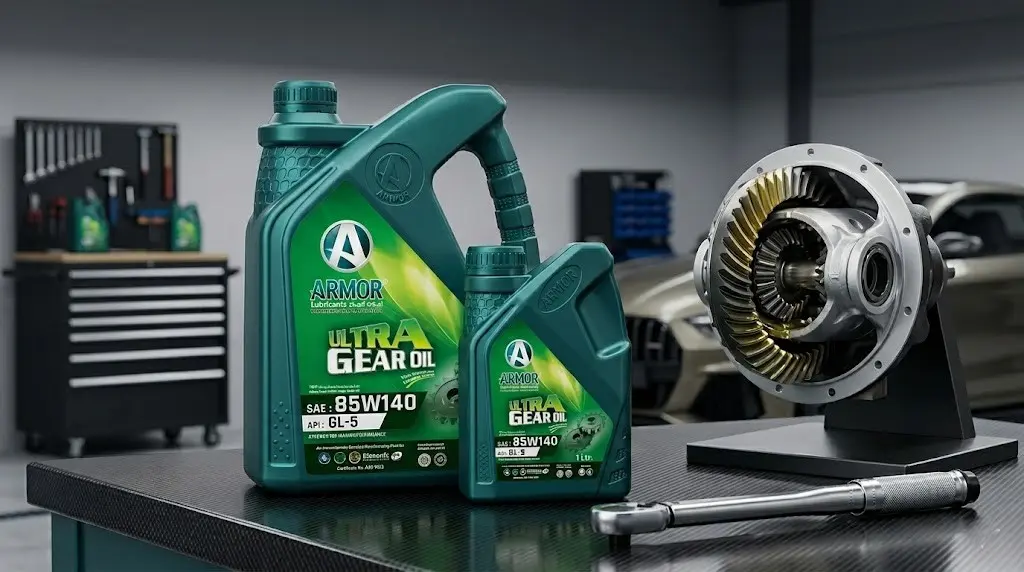
API GL-5 is designed for gears, particularly hypoid gears, in axles operating under various combinations of high-speed/shock load and low-speed/high-torque conditions.
A side-by-side technical comparison showing the exact difference in gl4 and gl5 gear oil.
Modern gear oils rely heavily on sulfur and phosphorus compounds for Extreme Pressure (EP) protection. Under high pressure and high temperature, these additives undergo a chemical reaction with the metal surface to form a sacrificial compound layer (iron sulfide and iron phosphide). This layer shears away under stress, preventing actual metal-to-metal welding, scoring, and galling.
To meet API GL-5 specifications for high-offset hypoid gears, the oil typically contains roughly 2x to 3x the active sulfur content of API GL-4 oils.
Manual transmission synchronizer rings are commonly manufactured from brass or bronze—alloys that contain copper. At operating temperatures exceeding 250°F (121°C), the high concentration of active sulfur in GL-5 gear oil becomes highly reactive.
Instead of forming a protective layer, the sulfur aggressively attacks the copper within the alloy (a destructive process known as dezincification). Over thousands of shifts, this chemical attack dissolves the synchronizer rings, degrading friction characteristics and leaving gold-colored metallic shavings in the fluid.
If you experience stiff, grinding shifts in a manual transmission, you likely used GL5 gear oil instead of GL4. GL-5 is too slippery for synchronizers.
If you experience stiff, grinding shifts in a manual transmission, you likely used GL5 gear oil instead of GL4. GL-5 is too slippery for synchronizers.
When draining the fluid, finding shiny, gold-colored metallic flakes is a classic sign that GL-5's sulfur additives have corroded the yellow metal components.
Whether you are searching for the right fluid for a specific brand—like figuring out gl4 vs gl5 gear oil toyota requirements, servicing a porsche macan, finding the exact gl4 vs gl5 gear oil nissan spec, or looking for ecstar gear oil sae 90 gl4 or gl5 for your yamaha—always consult your owner's manual.
Some modern formulations like a high-quality toyota synthetic gear oil api gl4 gl5 sae 75w 90 or advanced mobil 1 gear oil might offer dual ratings, but traditional formulations remain distinctly different. Never guess when it comes to 80w-90 gear oil gl4 vs gl5.
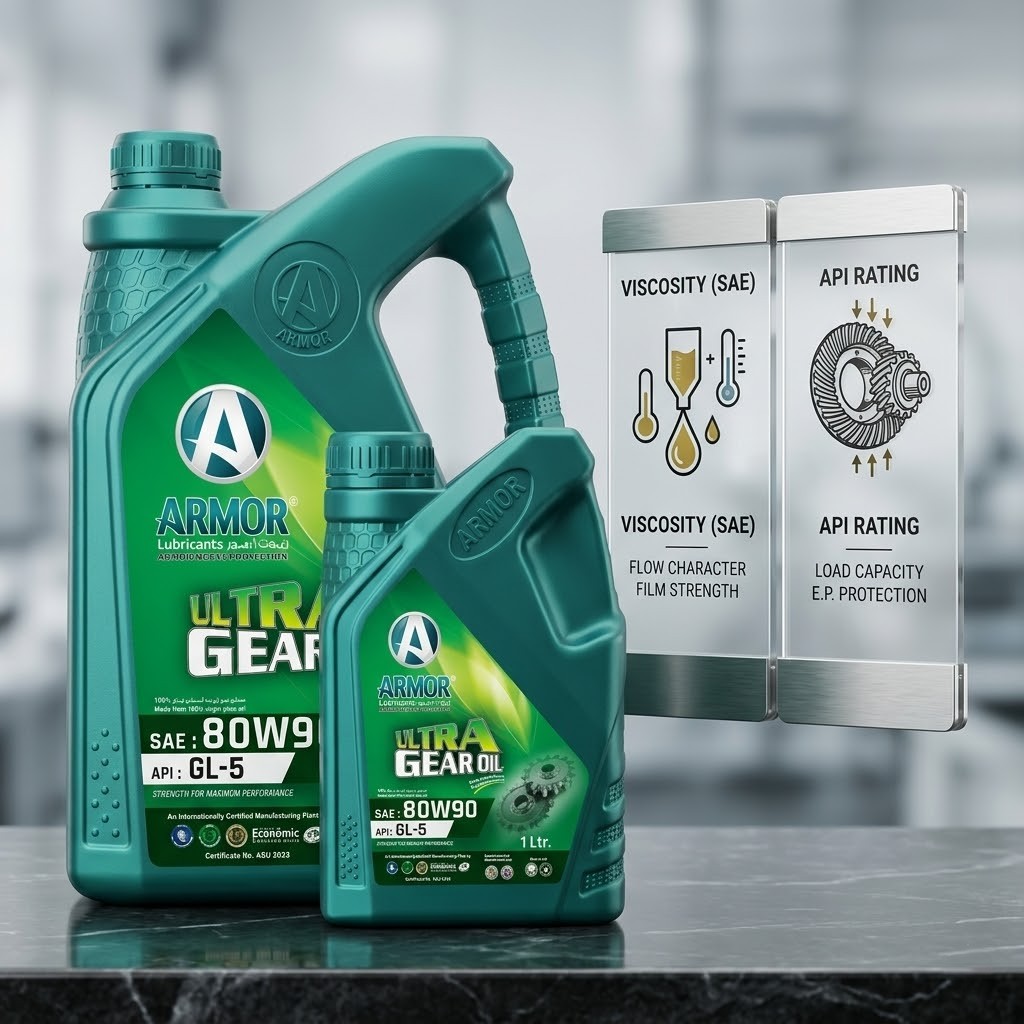
It's important to remember that API ratings (GL-4 and GL-5) indicate the additive package and performance standard, while numbers like 80W-90 or 75W-90 indicate the kinematic viscosity (thickness) of the oil measured in centistokes (cSt) at 100°C.

An 80w-90 gear oil gl4 vs gl5 comparison means you have two oils of the exact same thickness (usually between 13.5 and 24.0 cSt at 100°C), but completely different chemical properties and extreme pressure limits.
Using a sae 80w-90 gl5 gear vs gl4 oil for boats or heavy marine outboard applications often requires strict adherence to GL-5 due to the extreme moisture, lower operating RPMs, and heavy propeller shock-load conditions (high torque shear).
Expert Answers
Armor Lubricants formulates premium gear oils meeting precise API GL-4 and API GL-5 specifications to ensure maximum protection and performance for your vehicle.