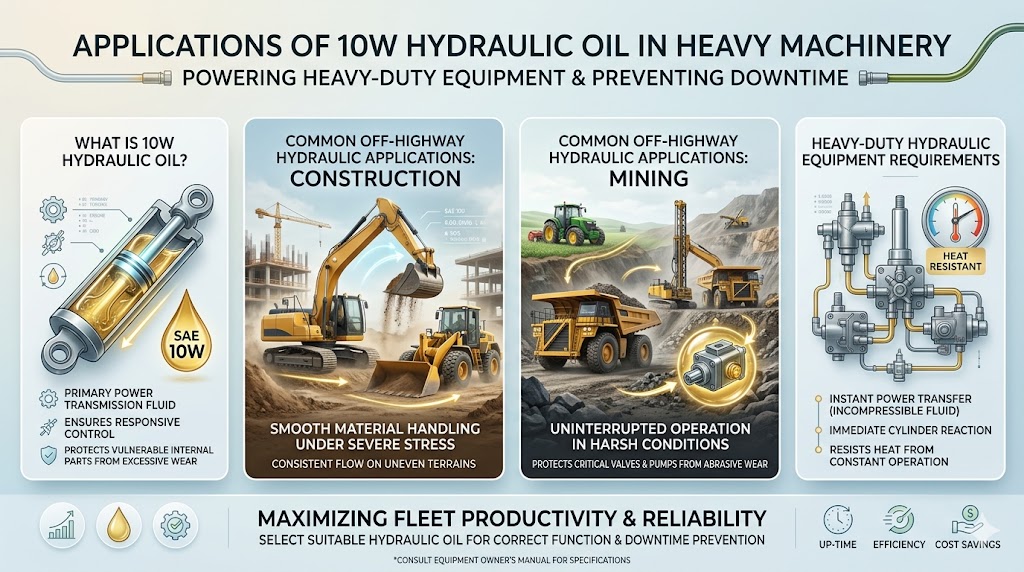
Heavy machinery requires specific fluids to operate under immense operational pressure. Hydraulic 10w oil serves as the primary power transmission fluid in these harsh environments. It ensures responsive control and protects vulnerable internal parts from excessive wear during daily operation.
Operators rely on this hydraulic fluid for heavy-duty industrial and mobile machinery. It is widely used in a wide range of heavy-duty hydraulic systems. Construction, mining, and agricultural operations depend on its stable viscosity for maximum productivity.
Knowing the parameters for choosing suitable hydraulic oil ensures your equipment functions correctly. The hydraulic oil used dictates overall system efficiency and reliability. Correct fluid selection prevents costly unplanned downtime across your entire machinery fleet.
Construction excavators and loaders heavily utilize off-highway hydraulic applications to lift materials. The fluid must maintain consistent flow properties under severe mechanical stress. Proper lubrication guarantees smooth operation across various load capacities and challenging uneven terrains.
Mining equipment also demands a high performance hydraulic oil to function in harsh conditions. Dust, dirt, and continuous operation threaten overall system integrity rapidly. The right lubricant protects critical valves and pumps from abrasive wear and tear.
Complex systems demand fluids that meet strict heavy-duty hydraulic equipment requirements consistently. The oil must transfer power instantly without suffering from severe compression. Incompressible fluids ensure that hydraulic cylinders react immediately to operator control inputs.
Industrial machinery often runs continuously for days without scheduled shutdown periods. This constant operation generates significant heat within the internal hydraulic circuit. Premium sae 10w fluids resist this heat to maintain stable operating pressures.
The properties of SAE 10W hydraulic oil vary depending on different factors like the formula and added additives. SAE 10W hydraulic oil from Armor is a hydraulic fluid that is made from premium quality base-oil that is highly refined to deliver ultra protection to equipment.
Its high viscosity index keeps the oil relatively stable over a wide range of temperatures. This is important for the efficient and effective functioning of hydraulic systems.
Additionally, hydraulic 10W oil has also a number of other properties that make it a popular choice for many hydraulic systems, including:
Modern hydraulic 10w is a high performance hydraulic oil designed for optimal power transfer. It acts rapidly within complex circuits to deliver immediate mechanical response. This fluid prevents sluggish operation that can delay critical industrial project timelines.
Manufacturers often specify mobil hydraulic 10w for its exceptional oxidation resistance. This characteristic prevents sludge formation that clogs filters and damages precision parts. Clean systems operate efficiently and require significantly less frequent maintenance interventions.
Top-tier hydraulic oil formulated from advanced base oils delivers superior thermal stability. These base oils resist chemical breakdown when subjected to high operational heat. Equipment operators experience fewer fluid changes and lower overall daily operating costs.
An advanced oil formulated from advanced base stocks minimizes internal component friction. Reduced friction translates directly to lower operating temperatures and extended equipment life. This specific formulation prevents premature mechanical failure in demanding industrial settings.
Premium fluids feature base oils and a balanced additive package. This balanced additive system designed to satisfy a wide range of operational demands stops wear. Detergent and dispersant additives keep internal system surfaces remarkably clean.
The additive system designed to satisfy severe industrial requirements includes anti-wear zinc components. These zinc additives create a microscopic protective film on internal metal surfaces. They actively prevent destructive metal-to-metal contact during peak operational stress.
Complex hydraulic systems and components used in modern machinery require precise lubrication. Pumps, motors, and control valves rely entirely on clean, stable hydraulic oil. Contaminated or degraded fluid quickly destroys these expensive, tightly toleranced internal parts.
To prevent issues operators must monitor the top 5 causes of hydraulic system failure. Regular fluid inspection reveals early warning signs of component fatigue and wear. Proactive maintenance preserves system integrity and prevents catastrophic mechanical breakdowns entirely.
Many components used in conjunction with high-pressure systems demand specific fluid shear stability. The oil must not thin out excessively under intense mechanical shearing forces. Stable viscosity ensures consistent hydraulic pressure and accurate heavy equipment control.
Fluid used in conjunction with equipment must actively resist air entrainment and foaming. Excessive foam introduces compressible air into the hydraulic circuit leading to erratic operation. Anti-foam additives ensure the hydraulic fluid remains completely incompressible for precise power.
The ambient temperature directly impacts hydraulic fluid viscosity and flow rate. Cold environments cause conventional mineral oils to thicken sluggishly overnight. This thickening strains pumps during startup and delays normal equipment operation significantly.
Premium SAE 10w provides excellent low-temperature fluidity for harsh winter operations. It flows quickly to protect critical components the moment the engine starts. Operators avoid severe pump cavitation and excessive wear during cold weather starts.
As ambient temperature rises the fluid must maintain adequate protective film thickness. Thinning fluid leads to internal bypass leakage and significant pressure loss. A high viscosity index ensures the oil protects parts across broad temperature ranges.
High performance hydraulic oil resists thermal degradation effectively under heavy load. It prevents varnish deposits that cause sensitive control valves to stick. Consistent fluid performance across varying temperatures guarantees reliable equipment operation all year round.
Operators frequently use this fluid in conjunction with equipment from leading global brands. Strict engineering tolerances require lubricants that meet highly specific OEM requirements. Using the exact recommended oil protects your valuable heavy machinery investments.
You will find it used in conjunction with equipment from leading american builders. Brands like Caterpillar and John Deere specify exact fluid performance parameters. Following these specifications strictly maintains warranty coverage and ensures maximum durability.
Heavy machinery from leading american manufacturers often requires fluids meeting specific API specs. Caterpillar equipment frequently demands fluids that pass stringent friction and wear tests. Proper fluid selection ensures these massive machines operate flawlessly under heavy loads.
When maintaining a tractor operators must consult the specific equipment manual. The manual outlines the exact hydraulic oil used and required drain intervals. Adhering to these guidelines prevents premature wear of internal transmission and gear components.
Machinery from japanese manufacturers also relies on highly precise hydraulic lubrication. Excavators and loaders from these builders feature extremely responsive hydraulic circuits. Premium sae 10w oil provides the rapid response required by these advanced systems.
These modern systems demand excellent corrosion and rust protection constantly. Moisture condensation within hydraulic reservoirs threatens internal steel components overnight. Advanced rust inhibitors neutralize moisture and protect expensive pumps and valves from destructive oxidation.
Heavy-duty hydraulic equipment often operates in wet or highly humid environments. Water ingression severely degrades the lubricating property of standard hydraulic fluid. Specialized anti-rust additives form a barrier that keeps water away from metal surfaces.
Protecting against corrosion and rust extends the overall lifespan of the hydraulic system. Clean, rust-free valves react faster and seal tighter than degraded components. This level of advanced protection is mandatory for off-highway hydraulic applications.
Operators often ask about safely cross-referencing different industrial fluid specifications. Comparing ISO viscosity grades to SAE ratings requires careful attention to data sheets. Proper cross-referencing ensures you select the optimal fluid for your specific machinery.
A 10w motor oil is sometimes specified as an equivalent in heavy-duty equipment. However motor oil contains different additive packages than dedicated industrial hydraulic oil. You must verify OEM approval before substituting engine oil for specific hydraulic fluid.
SAE 10w generally falls closely between ISO VG 32 and ISO VG 46 viscosity ranges. The exact equivalence depends on the specific product formulation and target temperature profile. Always consult the product data sheet to confirm exact fluid viscosity characteristics.
Knowing the hydraulic oil vs motor oil differences is vital for fleet maintenance. Motor oils contain high detergents to handle severe engine combustion byproducts. Hydraulic fluids prioritize rapid demulsibility to separate from internal water efficiently.
AW32 represents an anti-wear hydraulic fluid with an exact ISO viscosity grade of 32. While similar in viscosity to SAE 10w they are not always strictly interchangeable. The specific industrial application determines which fluid provides optimal mechanical protection.
The aw designation signifies the strong presence of dedicated anti-wear additives. Many premium 10w oil formulations also contain robust anti-wear chemical packages. Checking the equipment manual ensures you meet the exact performance requirements perfectly.
It is crucial to know hydraulic oil vs fluid terminology when purchasing lubricants. Fluid is a broad term while hydraulic oil specifies a distinct petroleum-based product. Knowing the difference prevents accidental application of incompatible synthetic or water-based fluids.
A standard AW32 industrial hydraulic oil may lack the strong detergent properties found in 10w motor oil. Some mobile equipment requires these detergents to keep complex hydraulic systems clean. Proper right hydraulic fluid selection depends entirely on strict OEM specifications.
The standardized SAE viscosity grading system clearly defines specific fluid thickness. A 20W oil is visibly thicker than a 10w oil at specific cold testing temperatures. The "W" indicates mandatory winter performance characteristics for safe cold weather starting.
Lower numbers represent thinner fluids that flow much easier in cold ambient temperatures. A 10w oil provides superior cold-start pumpability compared to a heavier 20W fluid. This rapid initial flow actively prevents dry starts and severe mechanical wear.
As equipment reaches normal high operating temperatures the fluid must maintain appropriate film thickness. If an oil is too thin it cannot separate moving metal parts adequately. If it is too thick it creates excessive internal fluid friction and heat.
Choosing the correct fluid viscosity grade significantly minimizes daily energy consumption. A lighter 10w oil reduces unnecessary drag on internal hydraulic pumps. This mechanical efficiency translates directly into noticeable fuel savings for diesel-powered mobile equipment.
Knowing when to execute a fluid change prevents irreversible heavy machinery damage. Operating conditions dictate the actual practical lifespan of the fluid inside the system. Severe industrial environments with high dust levels demand much more frequent fluid replacements.
An engine oil vs hydraulic oil comparison highlights vastly different service intervals. Engine oils deal with heavy combustion soot requiring rapid scheduled changes. Hydraulic fluids last longer but still degrade from heat and microscopic wear particles eventually.
Always store hydraulic fluid in highly clean, dry environments to prevent water ingress. Water contamination rapidly destroys the fluid's ability to protect against friction and wear. Proper handling techniques ensure the oil remains pristine until it enters the machinery.
Adhere strictly to the heavy equipment manufacturer recommended oil change intervals. Over time vital additives deplete and base oils begin to physically oxidize. Fresh fluid restores critical protection and extends the overall service life of equipment.
Maintaining heavy equipment requires strict daily attention to current lubricant condition. Regular hydraulic fluid testing identifies microscopic wear metals and unexpected water contamination. Catching these hidden issues early prevents minor component wear from escalating into major system failures.
Many operators choose premium mobil hydraulic solutions for their proven global field reliability. These products combine high-quality base oils with highly advanced additive technology. The result is a fluid that withstands the most demanding industrial and off-highway environments.
Implementing a rigorous fluid analysis program saves industrial fleets significant capital. Monitoring ongoing fluid health takes the dangerous guesswork out of maintenance scheduling. It ensures your heavy equipment operates safely, efficiently, and reliably under all ambient conditions.
High performance hydraulic oil formulated with premium base stocks extends system filter life. It actively resists forming sludge that prematurely clogs expensive internal system filters. Maintaining strict fluid cleanliness is the most critical factor in achieving maximum equipment life.