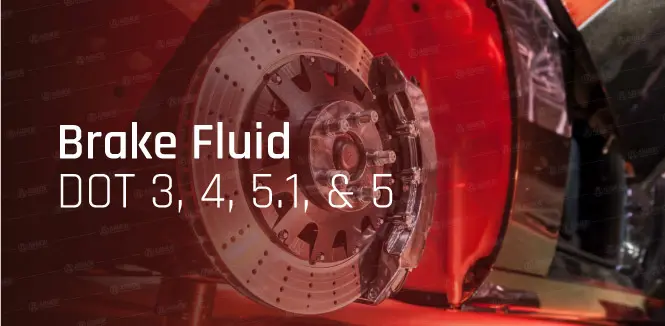

These three fluids are all glycol-based brake fluids. This shared chemical foundation makes them technically compatible with each other. However, their specific boiling points and overall moisture absorption rates differ significantly across each distinct DOT classification.
Typical DOT 3 fluid serves as the standard for most economy commuter vehicles. Review our dot 3 fluid comprehensive guide to see how it provides adequate stopping power. However, it absorbs moisture faster than higher-tier alternatives, lowering its effective boiling point rapidly.
A standard DOT 4 fluid features a notably higher boiling point than DOT 3. Manufacturers add specific borate esters to the chemical mix. Read our brake fluid dot 4 guide to see how this unique addition helps the fluid handle the increased heat generated during heavy braking.
Upgrading to DOT 5.1 provides an immediate increase in your dry and wet boiling point limits. This higher boiling capacity actively prevents the fluid from vaporizing during aggressive downhill driving. It significantly improves overall safety margins.
The lower viscosity of DOT 5.1 also drastically improves modern braking mechanisms. It flows much faster through the intricate micro-valves of an anti-lock braking system. This rapid fluid movement ensures much quicker pedal response times during emergencies.
You can safely pour DOT 5.1 directly into a system designed for DOT 4. The glycol bases remain perfectly compatible. This specific fluid upgrade requires no expensive mechanical modifications to your existing master cylinder or brake lines.
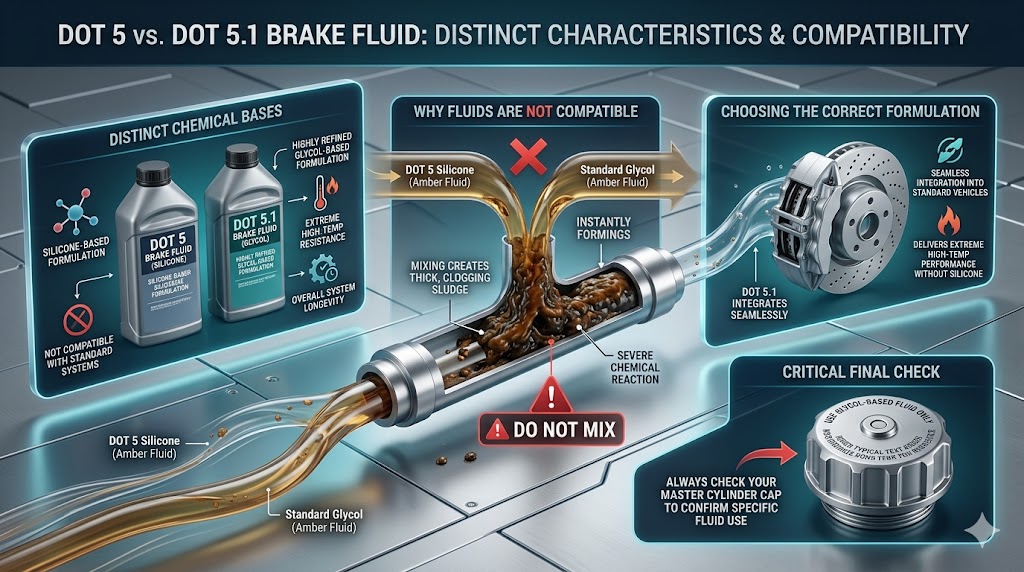
The primary difference lies entirely in their foundational chemistry. DOT 5 is a silicone-based brake fluid. Conversely, DOT 5.1 relies on a highly refined glycol-based formulation explicitly engineered for extreme high-temperature resistance and overall system longevity.
Because their base chemicals clash entirely, DOT 5 fluid is not compatible with standard brake systems. Mixing a silicone fluid with a glycol fluid instantly creates a thick, sludgy mixture. This severe chemical reaction clogs your brake lines rapidly.
DOT 5.1 delivers the extreme high-temperature performance of DOT 5 without utilizing the incompatible silicone base. It seamlessly integrates into standard vehicles requiring glycol-based brake fluids. Always check your master cylinder cap to confirm exactly which specific fluid you use.
Because they fundamentally share a compatible glycol base, you can technically mix these two fluids during an emergency. Adding a DOT 4 fluid to a DOT 3 system will temporarily boost the overall boiling point of the resulting mixture.
However, mixing a lower-grade fluid into a high-performance system creates severe mechanical risks. Adding typical DOT 3 into a DOT 4 system instantly lowers the total boiling point. This dangerous temperature reduction makes the vehicle highly susceptible to sudden brake fade.
If you must mix different types of brake fluid, schedule a complete fluid flush soon after. Replacing the compromised mixture with fresh, uniform fluid restores optimal hydraulic pressure. Read about brake fluids differences to never rely on a mixed fluid reservoir permanently.
Every brake fluid manufacturer clearly lists two distinct temperature ratings. The dry boiling point measures the fluid straight from an unopened bottle. This specific metric reflects the maximum heat capacity before any atmospheric moisture successfully enters the closed hydraulic system.
The wet boiling point provides a much more realistic measurement for daily drivers. It indicates the fluid's heat resistance after it has absorbed roughly three percent water. This specific metric accurately reflects the fluid conditions inside an actively driven vehicle.
When heavy braking pushes temperatures past this precise limit, the fluid vaporizes. This dangerous phase change creates highly compressible gas pockets inside the brake lines. Instead of firmly clamping the brake pads, your physical pedal force merely compresses this trapped gas.
Not all hydraulic fluids share the exact same chemical formulation or operational properties. While DOT 3, DOT 4, and DOT 5.1 rely heavily on a glycol base, DOT 5 utilizes a completely different silicone-based fluid structure. These distinct chemical bases behave differently.
Standard glycol-based fluids are inherently hygroscopic by design. This chemical trait means they naturally attract and absorb moisture directly from the surrounding atmosphere. Over time, this absorbed water drastically reduces the operational efficiency of your entire mechanical brake system.
Silicone-based brake fluid aggressively repels water instead of absorbing it. Heavy military vehicles and restored classic cars often use this specialized fluid. However, you absolutely cannot use DOT 5 in standard commuter vehicles equipped with modern anti-lock braking systems.
You absolutely cannot operate any modern vehicle safely without proper brake fluid. The entire braking mechanism relies completely on consistent hydraulic pressure. Without this vital fluid transferring your physical effort, the heavy brake pads will never engage the spinning metal rotors.
Attempting to drive with a completely empty master cylinder guarantees complete brake failure. Pushing the brake pedal will immediately push it straight to the floorboard with zero mechanical resistance. You will have absolutely no physical ability to stop the heavy vehicle.
If you notice a sudden lack of hydraulic pressure, safely pull over immediately. A severely leaking brake line rapidly drains the entire braking system. Tow the vehicle directly to a certified professional for immediate brake service and comprehensive leak repair.
In a perfectly sealed system, you should rarely need to add new fluid. The fluid level naturally drops slightly as your brake pads wear down over time. Check your brake fluid colors to ensure this minor drop remains completely normal and rarely requires manually topping off the reservoir.
However, if the reservoir suddenly drops far below the minimum indicator line, you have a critical mechanical problem. This rapid fluid loss strongly indicates a severe hydraulic leak. Simply adding new brake fluid will never fix the underlying catastrophic mechanical failure.
Instead of just randomly adding liquid, focus strictly on regular replacement intervals. Most certified mechanics strongly recommend flushing the entire system every two years. This routine maintenance physically removes the accumulated moisture and restores a firm feeling brake pedal immediately.
Since glycol-based brake fluids are hygroscopic, they constantly absorb moisture directly through the microscopic pores in flexible rubber brake lines. Even a tightly sealed master cylinder cannot completely stop this gradual water accumulation over several years of normal daily driving.
This additional moisture in the fluid actively corrodes expensive internal metal components. The trapped water slowly rusts the delicate ABS valves and heavy brake calipers from the inside out. Routine fluid changes actively prevent this highly costly internal system corrosion entirely.
Replacing the heavily contaminated fluid fully restores your vehicle's original stopping power. Fresh fluid immediately reinstates the optimal high boiling point required for safety. This crucial service completely eliminates the terrifying risk of sudden brake fade during heavy daily traffic situations.
Brake fade directly occurs when your hydraulic fluid absorbs too much intense heat. As the hot fluid begins boiling, it turns from an incompressible liquid into a highly compressible gas. Your mechanical braking efficiency instantly drops to near absolute zero.
You will physically feel this terrifying phenomenon entirely through the brake pedal. The normally firm pedal will suddenly feel incredibly soft or completely spongy underfoot. You must manually pump the pedal furiously just to generate a tiny fraction of normal stopping force.
Using a premium high-performance option heavily prevents this highly dangerous scenario. Upgrading to a specialized fluid with a significantly higher boiling point provides an essential physical safety margin. It strictly ensures your brakes remain highly responsive even on steep, demanding mountain descents.
Always strictly follow the specific Department of Transportation recommendations clearly printed on your vehicle's master cylinder cap. If the cap officially specifies DOT 3, you can safely use DOT 3, DOT 4, or DOT 5.1. Never downgrade your specified fluid specification manually.
If your high-performance car requires DOT 4 brake fluid, adding typical DOT 3 fluid is extremely dangerous. The significantly lower boiling point of the DOT 3 fluid absolutely cannot handle the immense physical heat generated by high-performance brake pads and heavy rotors.
For heavy commercial towing applications or aggressive track driving, installing DOT 5.1 provides the absolute maximum possible protection against boiling. This advanced synthetic formulation consistently maintains a rock-solid brake pedal feel under the most severe operational driving conditions imaginable.
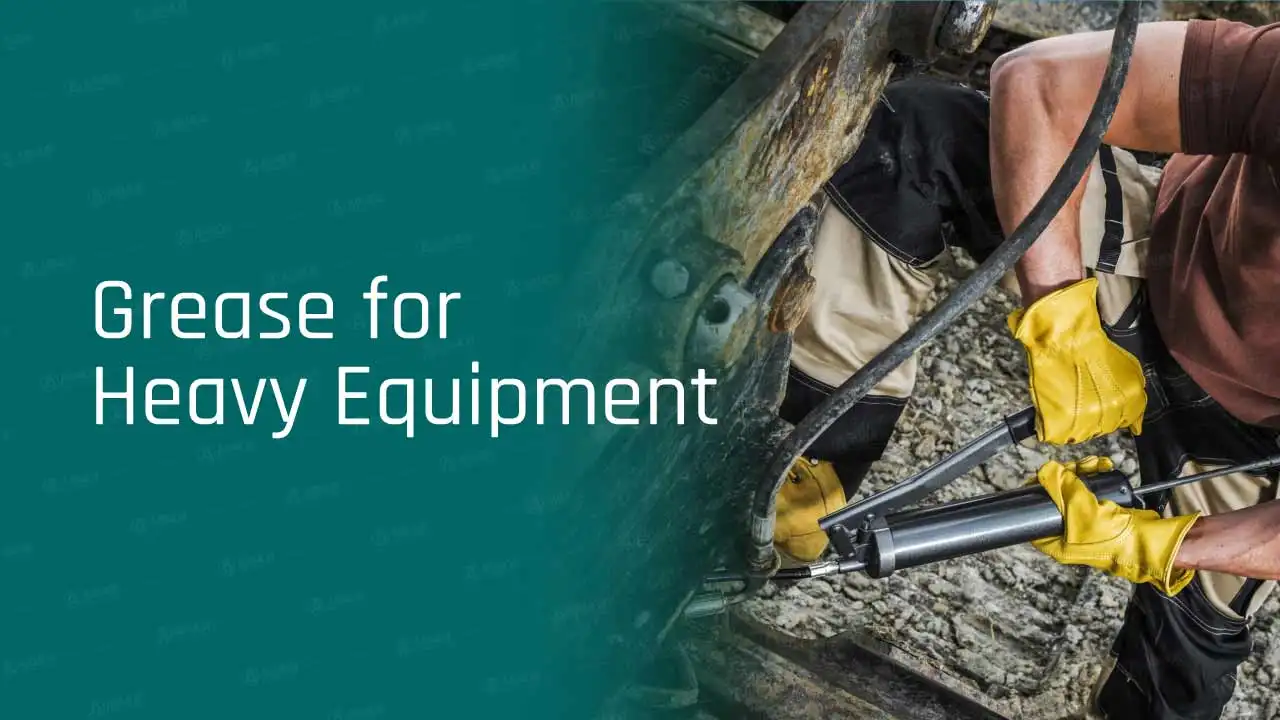
While the internal hydraulic fluid manages extreme pressure, exterior mechanical brake components require dedicated physical lubrication. Specialized synthetic grease actively prevents the metal brake caliper slide pins from seizing up entirely under extreme physical friction and tremendously high operational heat.
Properly greasing these specific external contact points ensures the heavy brake pads wear perfectly evenly. It completely stops annoying high-pitched brake squealing and drastically extends the physical lifespan of your expensive rotors. Fresh hydraulic fluid and quality slide pin grease work perfectly together.
Always ask your mechanic to properly apply premium lubricant during your next scheduled fluid change. Read our comprehensive guide on how brake lubricant enhances performance to fully protect your stopping system. This dual approach guarantees maximum safety and totally optimal daily vehicle reliability.
Many older vehicles factory-filled with standard DOT 3 fluid benefit significantly from a modern chemical fluid upgrade. Performing a complete fluid flush and refilling with fresh DOT 4 drastically modernizes your vintage vehicle's daily stopping capabilities instantly and highly cost-effectively.
The highly robust chemical structure of DOT 4 actively repels moisture slightly better than older, outdated DOT 3 formulations. This simple fluid upgrade effectively grants older cars a much more reliable and consistently firm feeling brake pedal during repeated hard highway stops.
Always ensure you thoroughly extract all the old, contaminated fluid before adding the new premium product. Bleeding the flexible brake lines properly removes every single trapped air bubble. Learn about the dot 3 vs dot 4 differences to guarantee peak mechanical braking efficiency.
Professional mechanics utilize highly specialized electronic testing pens to measure exactly how much water your fluid has aggressively absorbed. These highly sensitive electronic probes instantly detect the precise percentage of moisture contamination hiding deep within your vehicle's main hydraulic fluid reservoir.
When the accurately measured water content safely exceeds three percent, the fluid rapidly reaches its critical wet boiling point. At this specific advanced stage, the manufacturer officially considers the fluid completely chemically compromised. You must schedule an immediate full system flush to remain safe.
Regular electronic moisture testing accurately takes the dangerous guesswork out of routine vehicle maintenance. Instead of blindly guessing based on total mileage alone, you physically verify the actual chemical condition of your hydraulic fluid. This proactive testing actively prevents catastrophic highway braking failures.
Modern anti-lock braking systems rely heavily on rapidly actuating internal micro-valves to forcefully prevent wheel lockup. These highly complex mechanical systems require a premium brake fluid with exceptionally low viscosity to flow seamlessly through the microscopic internal passageways during sudden panic stops.
Using an excessively thick fluid severely slows down this critical mechanical valve actuation entirely. This dangerous delay heavily increases your total stopping distance during severe rain or slick icy conditions. You must utilize the exact fluid type specified for your specific ABS module.
If your car features advanced safety systems, always utilize DOT 4 or DOT 5.1 for totally optimal fluid flow. Review what is abs in a car anti lock braking systems explained to fully verify your specific vehicle's strict hydraulic requirements before performing any fluid maintenance.