Effective power transfer requires a well-maintained drivetrain. Neglecting chain lubrication best practices accelerates wear on sprockets and reduces engine efficiency. Riders often underestimate the friction generated during off-road operation.
Dirt environments introduce abrasive elements that standard street maintenance schedules cannot address. Sand, mud, and water act as grinding pastes that destroy metal integrity. Understanding the specific needs of your machine ensures longevity and reliability.
Dry rollers serve as the primary visual cue for immediate maintenance. If the metal rollers in the center of the chain links appear shiny or matte gray, lubricant is absent. This indicates metal-on-metal contact between the roller and the bushing.
Rust formation on the side plates suggests prolonged exposure to moisture without a protective oil barrier. Even surface rust indicates that the protective film has failed. This compromises the structural integrity of the steel over time.
Kinked links are a severe symptom of neglect. When links fail to straighten out naturally as they exit the sprocket, friction has seized the pivot points. Lubrication may resolve minor kinks, but this often signals internal damage to the bushing or pin.
Inspect the rollers for a polished appearance. A well-lubricated chain retains a slightly dark, wet look. While you want to avoid a dripping mess, a bone-dry appearance confirms that the chain lube dirt bike products used previously have dissipated.
Touch the chain after a brief ride. Excessive heat implies high friction levels. If the chain is too hot to touch compared to the engine casing, the lubrication layer is insufficient for the operating load.
Place the bike on a stand and rotate the rear wheel. Watch the bottom run of the chain as it travels toward the rear sprocket. Any vertical hopping or binding indicates seized links that require immediate penetration with high-quality oil.
Manually manipulate the links. They should articulate freely without resistance. Stiffness here destroys horsepower and can lead to a snapped chain under high torque situations like hill climbs or hole shots.
Standard mileage intervals valid for street bikes do not apply to off-road machinery. The rule for dirt bikes is situational. A singular ride in adverse conditions can strip the best dirt bike chain lubricant completely.
Riding in dry, dusty conditions requires a specific approach. Dust clings to wet lubricants, creating an abrasive paste. This paste grinds down O-rings and metal surfaces. In these environments, dry wax-based lubricants are superior as they shed dirt rather than attracting it.
Wet and muddy rides demand a heavy, waterproof lubricant. Water displaces lighter oils quickly. If you cross creeks or ride in rain, lubrication must happen immediately after the ride to displace water effectively.
Sand is the enemy of drivetrain longevity. It penetrates the smallest gaps and eats away at the o ring chain motorcycle seals. Riders in dunes or sandy tracks need to clean and lube the chain before every single ride.
Avoid sticky, tacky sprays in sand. These act as a glue for silica particles. Use a lighter, non-tacky formula that lubricates the contact points without creating a customized grinding compound on your drivetrain.
Mud acts as a moisture trap against steel plates. Once the mud dries, it sucks moisture from the chain. Post-ride washing is mandatory here to remove the mud, followed instantly by a water-displacing lubricant.
Pressure washing risks forcing water past the O-rings. If you blast the chain, you must re-apply lubricant immediately to prevent internal corrosion. The water trapped inside a sealed link destroys it from the inside out.
Understanding the construction of your chain determines your maintenance strategy. Standard non-sealed chains rely entirely on external application for internal lubrication. The applied oil must penetrate past the side plates to reach the pin and bushing.
O-ring and X-ring chains differ significantly. The factory seals grease inside the pin and bushing assembly during manufacturing. The external lubricant serves primarily to protect the rubber seals and cushion the roller-to-sprocket impact.
Using the wrong solvent on a sealed chain is catastrophic. Harsh chemicals cause the rubber rings to swell or crack. Once the seal fails, the factory grease escapes, and the chain dies rapidly. Always verify the product is safe for x ring o ring chain applications.
The primary goal when maintaining an o ring chain lube schedule is keeping the rubber pliable. If the O-ring dries out and cracks, dirt enters the internal assembly. Lubricant must condition this rubber to maintain the seal.
Petroleum-based propellants in some aerosols can damage rubber. Use dedicated chain lubricants labeled specifically for sealed chains. These formulations contain additives that preserve the elasticity of the synthetic rubber rings.
While the internal pin is sealed, the roller still rotates around the bushing. This interface is not sealed. External lubrication must penetrate under the roller to prevent galling. This is where the actual power transfer friction occurs.
The interface between the chain roller and the sprocket teeth also relies on this external film. Without it, the hardened steel chain will rapidly wear down the aluminum or steel teeth of the sprocket.
Spraying lubricant on the outside of the chain is a common error. Centrifugal force throws the oil away from the working components as the wheel spins. This results in a messy swingarm and a dry chain.
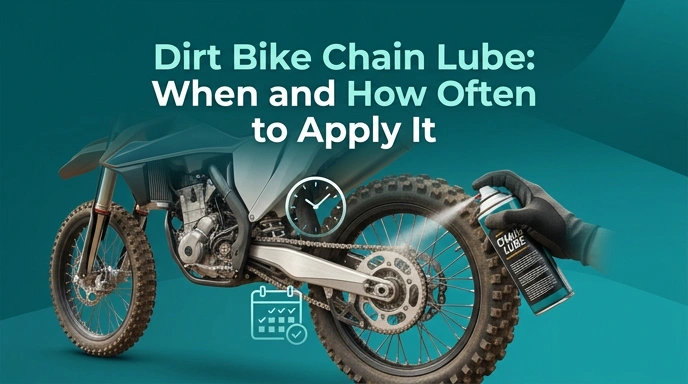
Apply lubricant to the inside of the lower chain run. As the chain travels over the rear sprocket and toward the countershaft, centrifugal force pushes the oil outward. This forces the fluid into the pins and rollers where it is needed.
Precision is key. Do not spray toward the tire or the brake rotor. Overspray on brake components compromises safety. Use the straw attachment included with most spray cans to direct the flow precisely onto the gap between the side plates.
The ideal time to apply lubricant is immediately after a ride while the chain is still warm. Heat causes the metal components to expand slightly and lowers the viscosity of the lubricant. This aids in deep penetration.
Solvents in spray lubricants need time to evaporate. Applying lube and riding immediately flings the product off before it sets. Allow the lubricant to cure for at least 15 to 30 minutes before starting the engine.
More is not always better. A chain dripping with oil attracts excessive contaminants. After applying the dirt bike chain oil and allowing it to soak, wipe the exterior side plates with a clean rag.
This removal of excess surface oil prevents dirt buildup. The critical lubrication is inside the rollers and on the O-rings, not on the flat outer surfaces of the side plates. Keeping the exterior dry reduces mess.
Applying fresh lube over layers of old grease and dirt is counterproductive. The sludge acts as a barrier, preventing the fresh oil from reaching the metal. Regular cleaning is as vital as lubrication.
Use a specific chain cleaner or kerosene. Kerosene is cost-effective and safe for O-rings. Avoid gasoline or harsh degreasers, as they strip the inevitable oil from the rubber seals, leading to premature failure.
A grunge brush is an essential tool. These three-sided brushes clean three sides of the chain simultaneously. Scrubbing agitates the debris, allowing the cleaner to flush away abrasive particles before you re-lube.
How often clean motorcycle chain components depends on visual buildup. If you can see a thick layer of black paste, it is time to scrub. For trail riders, this might be every three rides. For motocross, it might be weekly.
Always clean the chain after a ride in wet sand or clay. These materials harden like cement. Once hardened, they damage the seals during the next ride. Rinse, scrub, and dry the chain before applying fresh protection.
Never apply lubricant to a wet chain. Water repels the oil, preventing it from adhering to the metal. After washing, dry the chain with a shop rag or use compressed air to blow water out of the links.
If using compressed air, keep the nozzle a few inches away. High-pressure air at close range can force water past the O-rings. The goal is surface drying to prepare the steel for the lubricant bond.
For dirt bikes, the baseline is every ride. The harsh environment of off-road riding degrades lubricants much faster than pavement riding. A quick spray after every session ensures the chain is ready for the next outing.
Long endurance rides require a different strategy. If you are racing a 3-hour hare scramble or an enduro, start with a high-quality, heavy-duty wax or gel. These products adhere longer under sustained heat and stress.
Check the chain mid-ride during long adventure days. If the rollers look distinctively shiny or you hear a chirping noise, the lubrication has failed. Carrying a small can of lube for multi-day trips is professional practice.
While lubricating, check the tension. A loose chain slaps against the swingarm and wears out the slider. A tight chain binds the suspension and stresses the countershaft seal. Adjusting tension is part of the lubrication workflow.
A well-lubricated chain often runs smoother and may appear looser than a dry, binding one. Verify specs in your manual. Proper tension extends the life of both the chain and the lubricant layer.
Before winter storage or long breaks, clean and lube the chain heavily. Moisture in the air causes oxidation on bare metal. Following lubricant storage and handling best practices when dealing with your chemicals and applying a thick coat to the bike acts as a storage preservative, preventing rust seizure.
Rotate the wheel periodically during storage if possible. This prevents the lubricant from pooling at the bottom and leaving the top section exposed. It keeps the O-rings from taking a compression set in one position.
Even with perfect maintenance, chains are consumables. How often to replace bike chain hardware depends on elongation. Chains do not "stretch" in the sense of the metal getting longer; the pins and bushings wear down, creating play.
Measure the chain stretch using a specific gauge or a tape measure. Count out a specific number of pins as per the service manual. If the length exceeds the limit, the case hardening on the pins is gone.
Check the sprockets simultaneously. Hooked teeth that look like shark fins indicate severe wear. Putting a new chain on worn sprockets ruins the new chain immediately. Replace the chain and sprockets as a matched set.
Grasp the chain at the chaotic 3 o'clock position on the rear sprocket. Pull it straight back away from the wheel. If you can reveal half a tooth or more of the sprocket, the chain is elongated beyond service limits.
Side-to-side play is another indicator. Twist the chain laterally. Excessive flex indicates worn side plates and pins. While off-road chains need some flex, floppiness suggests imminent structural failure.
Inspect the master link clip every time you lube. The open end of the clip must face opposite the direction of rotation. If the clip looks worn or bent, replace it. A lost master link ends the ride instantly.
For rivet-style master links, check the flare on the pins. Ensure no cracking is visible on the rivet head. This is the weakest point of the chain installation and requires visual verification during maintenance.
The market dictates a choice between waxes, pastes, and oils. Understanding general motorcycle oil formulation differences helps in making this choice. Waxes dry hard and attract less dirt. They are excellent for dry, dusty desert riding. However, they require more frequent application as they flake off.
Wet oils offer superior lubrication and corrosion protection. They are ideal for wet woods riding where rust is a concern. The trade-off is that they attract dirt. You must balance the need for protection against the risk of abrasive buildup.
Synthetic options often provide a middle ground. They offer the flow of an oil to penetrate, then flash off to leave a semi-dry film. These are often the best dirt bike chain lubricant for mixed conditions.
Cold weather increases lubricant thickness. Aerosols may not spray thoroughly in freezing temperatures. Store your chemicals indoors or warm the can in warm water before application in winter conditions.
High heat thins oil. During summer riding, a thin oil may a fing off entirely, so knowing how to prepare your motorcycle for summer conditions includes switching to a thicker, tackier formula in high heat to ensure the lubricant stays on the chain at operating temperatures.
Not all rubber is the same. Vintage bikes may use standard rubber, while modern machines use synthetic compounds like Nitrile. Verify that your cleaner and lube are chemically compatible with your specific chain type.
Avoiding WD-40 implies understanding its role. Standard WD-40 is a solvent and water displacer, not a lubricant. It cleans well but offers zero load-bearing protection. Only use it for cleaning, followed immediately by real chain lube.