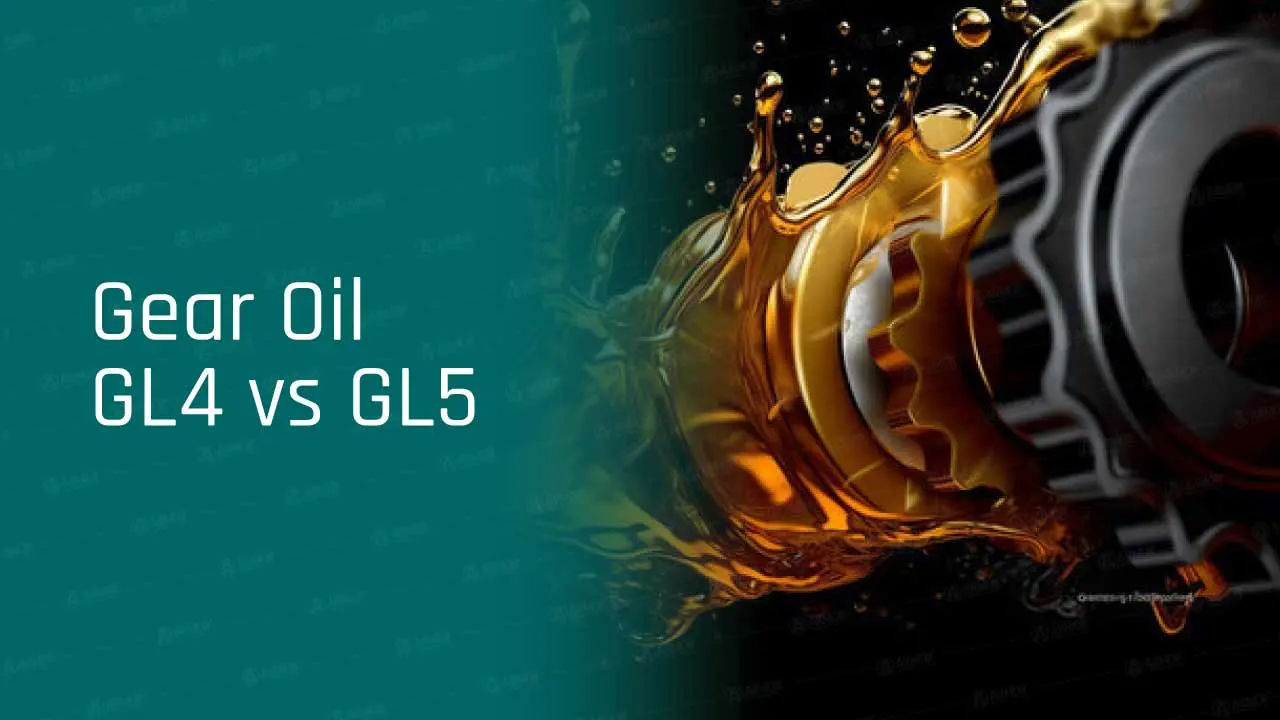
Choosing the correct gear oil is critical for the longevity and performance of a vehicle’s drivetrain components. The American Petroleum Institute (API) “GL” ratings are the industry standard, but the nuances between them, particularly the GL4 vs GL5 gear oil distinction, often cause confusion.
Using the wrong fluid can lead to premature wear, poor shifting in a manual transmission, or even catastrophic failure of a differential. This guide dives deep into the key differences, helping you understand which lubricant is right for your specific application.
The API GL rating system classifies gear lubricants based on their performance level and the type of gear sets they are designed to protect. It is a critical specification that dictates the oil’s protective capabilities under various loads and pressures.
Understanding this system is the first step in differentiating between API GL4 and API GL5 products. The numbers indicate the level of extreme pressure (EP) additive in the formulation, which directly relates to the oil’s ability to protect against wear.
The API is a trade association that establishes standards for the oil and natural gas industry. Its lubrication standards, including the “GL” series for gear oils and the “S” and “C” series for engine oil, provide a reliable benchmark for consumers and mechanics.
These specifications ensure that a lubricant meets specific performance criteria. When you see an API rating on a bottle of 80W-90 gear oil, it signifies that the product has passed rigorous testing for gear protection under defined conditions.
“GL” stands for “Gear Lubricant.” The numerical value that follows, such as GL-1, GL-4, or GL-5, denotes the oil’s performance level. The scale was created to address the evolving needs of automotive gear systems, from simple spur gears to complex hypoid gears.
The higher the number, the more stress the oil is designed to handle. For instance, the now-obsolete GL-1 gear oil was a straight mineral oil with no EP additives, suitable only for very light-duty applications. Today, GL-4 and GL-5 are the most common ratings for automotive use.
A common misconception is that a higher GL rating is always an upgrade. While a GL-5 gear oil offers more protection than a GL-4 in certain scenarios, it is not a universal replacement. The additive chemistry that gives GL-5 its high-pressure strength can be detrimental to specific components.
The choice between GL-4 and GL-5 is not about which is superior overall, but which is correct for the application. Using a GL-5 fluid in a gearbox designed for GL-4 can cause significant issues, particularly with synchronizer performance and longevity.
The main difference between GL-4 and GL-5 gear oil lies in the quantity of extreme pressure (EP) additives. These chemical compounds are essential for protecting gear teeth under intense pressure, but their concentration dictates the oil’s appropriate use.
A GL-5 formulation contains roughly double the amount of EP additives compared to a GL-4 product of the same viscosity, such as a 75W-90. This chemical difference is the source of the debate and the reason they are not always interchangeable.
EP additives are activated by the high temperatures and pressures that occur at the contact points between gear teeth. They form a sacrificial layer that prevents the metal surfaces from welding together under load, which would cause severe damage.
The GL-4 specification is designed for moderate loads, typical of many manual transmissions and transaxles. The GL-5 specification, with its higher additive concentration, is formulated for the severe, high-torque conditions found in hypoid gear sets, like those in automotive differentials.
The most common EP additives are based on sulfur and phosphorus compounds. These chemicals are highly effective at protecting steel gears from wear. When subjected to pressure, they react with the gear’s metal surface to form a protective, soap-like film.
This sacrificial coating wears away instead of the gear teeth, significantly extending the life of the component. The higher concentration in GL-5 oils provides a more robust layer, necessary for protecting hypoid gear arrangements where sliding and shearing forces are intense.
Imagine the immense forces acting on the ring and pinion gears in a rear axle. The gear teeth mesh with a sliding, wiping action under extreme load. Without protection, the lubricant would be squeezed out, leading to direct metal-to-metal contact and rapid wear.
The EP additive package in a quality 80W-90 GL-5 gear oil creates a durable film that withstands this pressure. This lubrication boundary prevents scoring and scuffing, ensuring the differential operates smoothly and reliably for thousands of miles.
The most critical issue in the GL-4 vs GL-5 debate is compatibility with “yellow metals.” The aggressive sulfur-based additives in many GL-5 oils can be corrosive to brass and bronze components, which are commonly used for synchronizers in manual transmissions.
This potential for corrosion is why a GL-5 gear lube should not be used in a transmission that specifies a GL-4 fluid. The damage may not be immediate, but over time it can lead to shifting problems and the need for a costly rebuild.
Synchronizer rings, or “synchros,” are essential components in a manual gearbox. They act as small clutches that match the speed of the gear you are selecting to the speed of the output shaft, allowing for a smooth, clash-free shift.
Historically, these rings have been made from soft metals like brass and bronze due to their excellent frictional properties. These are the “yellow metals” that are vulnerable to the high concentration of sulfur in some GL-5 gear oils.
The same sulfur compounds that protect steel hypoid gears so effectively can chemically attack brass or bronze. The sulfur essentially “eats away” at the soft metal, degrading the synchronizer’s precision-machined surfaces.
As the synchro wears, its ability to properly match gear speeds diminishes. This results in grinding noises during shifts, difficulty engaging a gear, or the transmission popping out of gear. This is a classic symptom of using the wrong type of GL-4 transmission fluid.
The corrosive action is a chemical reaction between the active sulfur in the EP additive package and the copper in the brass or bronze alloy. This reaction is accelerated by the heat generated during transmission operation, leading to premature wear and failure of the synchronizer rings.
While some modern GL-5 oils use “buffered” or “inactive” sulfur additives to be less corrosive, the risk remains. Unless the 80W90, describes the oil’s flow characteristics at different temperatures. The GL rating describes its performance level and additive package.
You can have a 75W-90 GL-4 and a 75W-90 GL-5 gear oil. They will have nearly identical flow properties, but their chemical makeup and intended applications are completely different. It is vital not to confuse these two ratings.
The “W” in a viscosity rating like 75W-90 stands for “Winter” and indicates the oil’s flow performance at cold temperatures. The first number (75W) relates to its cold viscosity, while the second number (90) relates to its viscosity at operating temperature.
This rating is separate from the API GL spec. You must match both the manufacturer’s recommended viscosity and the correct GL rating (GL-4 or GL-5) for your specific component to ensure proper lubrication and protection.
The 75W-90 and 80W-90 grades are among the most common for gear oils. A 75W-90 offers better cold-flow performance than an 80W-90, which can be beneficial for smoother shifting in cold climates and slightly improved fuel efficiency.
However, the choice between 75W90 GL-4 gear oil and 80W90 GL-4 gear oil is less critical than the choice between a GL-4 and a GL-5 of the same viscosity. The performance rating (GL-4/GL-5) always takes precedence over minor differences in viscosity.
The complexities of gear oil lead to many questions and myths. Clarifying these points is essential for making an informed decision and avoiding costly mistakes with your vehicle’s drivetrain.
From mixing different oils to using modern fluids in older cars, understanding the facts helps ensure component longevity. Always prioritize the vehicle manufacturer’s specifications over general advice or marketing claims.
As a general rule, you should not use a GL-5 gear oil in a transmission that specifies GL-4. The risk of damage to brass or bronze synchronizers is too high. The potential for shifting problems and long-term wear outweighs any perceived benefit.
Some newer GL-5 oils are marketed as “yellow metal safe” or suitable for synchronized transmissions. These products use buffered additives. However, unless the product explicitly meets the API GL-4 specification, it is safest to use a dedicated GL-4 fluid.
Mixing different types of gear oil is not recommended. GL-4 and GL-5 oils have different additive chemistries that are not designed to work together. Mixing them could compromise the performance of both fluids.
If you need to top off your transmission or differential, always use the same type of fluid that is already in the component. If you are unsure what is in it, a complete drain and refill with the correct, manufacturer-specified lubricant is the best course of action.
API GL1, GL2, GL3, and GL6 are now considered obsolete for modern automotive use. GL-1 was a non-EP mineral oil, while GL-3 had a mild EP package for early manual transmissions. You may still find GL-1 gear lube for specialized industrial or vintage applications.
The GL-6 rating was intended for very high-offset hypoid gears but was never widely adopted and was eventually withdrawn. For any vehicle made in the last several decades, the choice will almost certainly be between API GL-4 and API GL-5.