Synthetic oil outperforms conventional formulations on every metric that matters, including thermal stability, oxidation resistance, and engine wear protection. But its lifespan is not infinite. Mileage, months, and driving conditions all dictate when to change full synthetic oil, and ignoring those signals leads to viscosity breakdown and engine deposits.
This guide breaks down exactly how long synthetic oil lasts in miles and months, what shortens its life, and how to align OEM intervals with the bottle's claim for optimal lubrication.
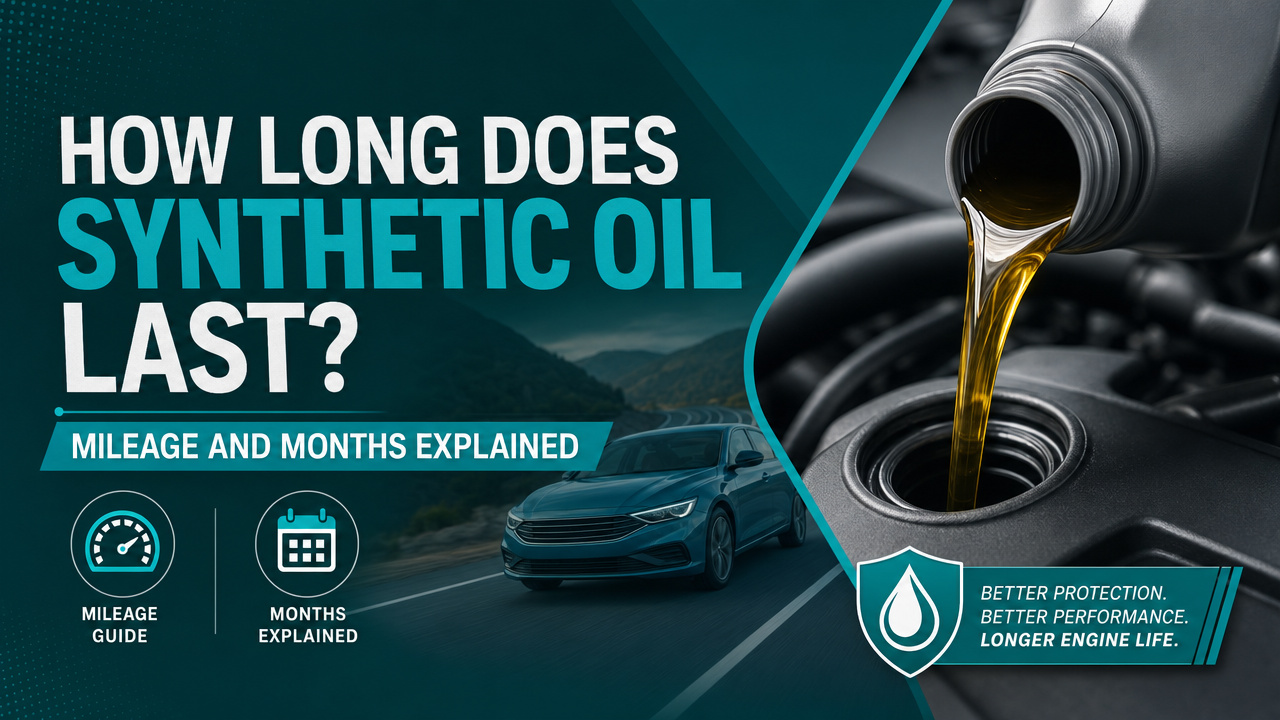
Most full synthetic oils deliver a service window between 7,500 and 15,000 miles under normal driving. Premium synthetic oil life can stretch even further with API SP, ACEA C3, or dexos-approved formulations engineered for long drain intervals and advanced friction reduction.
For passenger car motor oil, SAE 0W20 commonly delivers 10,000 miles, while SAE 5W30 synthetic lifespan typically falls between 7,500 and 10,000 miles. Heavy-duty synthetic lubricants meeting API CK-4 specs, such as SAE 15W40, often run 25,000 to 50,000 miles in commercial truck fleet applications.
Is 10,000 miles too long for synthetic oil? Not if your manufacturer recommended oil interval supports it and your driving profile stays moderate. Severe service cuts that figure significantly.
Driving less than 5,000 miles a year does not exempt you from oil changes. Most manufacturers cap synthetic oil timeframe at 12 months in the engine, regardless of mileage. Oxidation, condensation, and additive depletion still progress while the vehicle sits.
How many months can oil sit in the engine? Six to twelve months is the safe ceiling. Beyond that, anti-foam additives weaken, and base oil degradation accelerates from moisture and acid buildup.
For unopened bottles, synthetic lubricant shelf life ranges from three to five years when stored in stable temperatures. Once opened, use within one year to preserve the synthetic base fluid and additive package.
Even premium base stocks degrade faster under specific driving conditions. Recognizing these stressors helps you adjust your automotive fleet maintenance schedule before damage occurs.
Stop and go city driving oil degradation is real. Constant idling, low-speed cycles, and frequent restarts create heat soak without adequate airflow across the oil pan. Friction modifiers and anti-wear additives deplete faster under this load.
Daily short commuter trips compound the issue. The oil never reaches full operating temperature long enough to evaporate moisture and fuel contaminants, accelerating sludge formation.
Oil for towing a trailer endures sustained high operating temperatures and elevated cylinder pressures. This thins viscosity, stresses oxidation stability, and shortens drain intervals by 30 to 50 percent.
For frequent towing, choose lubricants with MB Approval 229.5 long life, Volvo VDS-4.5, or equivalent OEM approvals built for prolonged oil drain intervals under load.
Extreme temperatures engine oil exposure cuts service life sharply. In hot climates, oxidation accelerates above 230°F sump temperatures. Is SAE 5W30 good for hot weather? Yes, but pair it with shorter intervals if ambient temps regularly exceed 100°F.
Cold starts present the opposite problem. Thicker cold oil delays full circulation, increasing wear on bearings and cam lobes during the first 30 seconds of operation.
Does fuel dilution ruin synthetic oil? Yes. Short trips fuel dilution occurs when unburned fuel washes past piston rings into the crankcase. Without heat to vaporize it, fuel thins the oil, lowers flash point, and degrades viscosity grade performance.
Direct-injection engines are especially vulnerable. If your routine consists of trips under 10 minutes, halve your recommended oil grade mileage interval.
Modern oil life monitor synthetic algorithms track engine RPM, coolant temperature, trip duration, and load to estimate remaining oil quality. They do not measure oil condition directly, but they accurately model additive depletion based on operating data.
When the indicator drops to 15 percent, schedule the change. At 0 percent, change immediately. Resetting the oil life indicator without an actual oil change defeats the system and risks engine sludge prevention failure.
Trust the monitor over the windshield sticker. Quick-lube intervals of 3,000 miles ignore the engineering behind extended performance oil limits and waste perfectly good synthetic oil.
Bottles advertise impressive numbers, but OEM intervals vs bottle claims do not always align. Manufacturers test exact OEM specifications against specific engine designs, fuel systems, and emissions hardware. Their numbers reflect real-world warranty data.
Follow the owner's manual when it specifies a shorter interval than the bottle. This is especially true for turbocharged engines, GDI powertrains, and vehicles requiring dexos approved synthetic intervals or MB 229.5 fluids.
Severe service schedules apply if you tow regularly, drive in dust, run short trips, or operate in extreme heat or cold. Standard vs severe maintenance schedule differences typically cut intervals by 40 to 50 percent.
For commercial operators managing a heavy equipment fleet, agricultural diesel engine oil life depends on used oil analysis, not just mileage. UOA reveals viscosity breakdown symptoms, soot loading, and contamination before failure occurs.
Armor Lubricants formulates commercial synthetic engine oil for passenger cars, light trucks, and heavy-duty diesel platforms. Whether you need the right lubricant for passenger cars, the right lubricant for light trucks, or bulk synthetic motor oil for fleet operations, matching the API, ACEA, and OEM approvals to your application delivers premium engine protection and maximum drain interval.
What happens if you don't change synthetic oil? Additives deplete, acids accumulate, viscosity collapses, and engine wear protection disappears. The cost of one neglected interval often exceeds years of proper maintenance.
Synthetic oil lasts longer than conventional, but it is not maintenance-free. Match your interval to your driving profile, respect the time limit, and source your lubricants from a high quality lubricant supplier engineered for the demands you actually place on your engine.