Transmission fluid serves as the lifeblood of your vehicle’s drivetrain. It functions not merely as a lubricant but as a complex hydraulic fluid that facilitates gear changes, cools internal components, and cleans metal surfaces. Over time, the chemical properties of this fluid degrade.
Heat is the primary enemy of transmission longevity. As the fluid endures repeated heating and cooling cycles, its viscosity index breaks down. This loss of viscosity compromises the protective film strength required to separate moving metal parts within the planetary gearsets and bearings.
Contamination is inevitable in any mechanical system. Clutch material, metal shavings, and gasket debris accumulate in the fluid over thousands of miles. Eventually, the filter reaches saturation, allowing abrasive particles to circulate freely through the valve body and delicate oil passages.
Modern automatic transmissions operate under extreme pressure and temperature. When transmission fluid exceeds its operating temperature threshold, the molecular chains responsible for viscosity begin to shear. This shearing effect thins the fluid, reducing its ability to generate the hydraulic pressure necessary for firm engagement.
Once the fluid loses its shear stability, the transmission pump cannot maintain optimal line pressure. This typically manifests as a delay in engagement or a "soft" shift feel. The fluid’s inability to manage heat further exacerbates the problem, creating a cycle of degradation.
Synthetic fluids offer higher resistance to thermal breakdown compared to conventional oils. However, even high-quality synthetic blends are subject to oxidation. Oxidized fluid thickens and turns acidic, which can corrode internal seals and gaskets leading to leaks and pressure loss.
Transmission fluid contains specific additive packages known as friction modifiers. These chemical compounds are essential for the correct operation of clutch packs and torque converter lock-up clutches. They allow for a precise amount of slip during engagement to ensure smooth transitions.
As these modifiers deplete, the coefficient of friction changes. Motorists often wonder why to change transmission fluid when the car seems fine. The answer lies in these invisible additives. Without them, you experience shuddering or harsh engagement as the clutches grab too aggressively or slip excessively.
The depletion process is gradual and often goes unnoticed until symptoms become severe. By the time physical symptoms appear, significant wear on the friction material has likely already occurred. Regular servicing replenishes these vital friction modifiers before damage is irreversible.
Neglecting fluid changes turns the lubricant into an abrasive compound. The suspended metal particulates act like liquid sandpaper, scouring soft contaminants like aluminum and brass bushings. This creates excessive clearance between parts, leading to mechanical slop and vibration.
The valve body is particularly susceptible to this abrasive wear. This component directs hydraulic pressure to various clutch packs. If the spool valves inside the body are scored by dirty fluid, they may stick or bypass pressure, causing erratic shifting behavior.
Planetary gears rely on a constant bath of clean oil to function. Contaminated fluid fails to carry heat away from these gear sets. The resulting localized hotspots can lead to gear tooth pitting and eventual catastrophic failure of the hard parts.
Fresh fluid is a potent heat transfer medium. It absorbs heat generated by the torque converter and friction elements, transporting it to the transmission cooler. As fluid ages and oxidizes, it forms a varnish layer on internal metal surfaces.
This varnish acts as an insulator. It prevents efficient heat transfer from the metal components to the fluid. Consequently, the internal operating temperature of the transmission rises, even if the gauge on your dashboard reads normal.
Overheating is the leading cause of transmission failure. By failing to exchange old fluid, you compromise the system's thermoregulatory efficiency. This forces the transmission to run hotter, which in turn accelerates the breakdown of the remaining fluid.
Restoring hydraulic integrity directly impacts how the vehicle drives. Fresh fluid restores the correct viscosity, allowing the hydraulic pump to generate pressure efficiently. This results in crisper, more decisive shifts and eliminates the sluggish feeling often associated with high-mileage units.
Torque converter efficiency also improves. The torque converter relies on fluid dynamics to transfer power from the engine to the transmission. Clean fluid ensures maximal power transfer with minimal slippage, which can result in a noticeable improvement in throttle response.
Fuel economy can see a marginal benefit as well. A transmission struggling with dirty fluid has higher parasitic drag. By reducing internal friction and restoring efficient lock-up clutch operation, the engine does not have to work as hard to maintain highway speeds.
Many manufacturers now market "filled for life" or "sealed" transmission units. This terminology often misleads owners into believing service is never required. In reality, "lifetime" typically refers to the warranty period of the vehicle, not the operational life of the car.
Service is still physically possible and necessary for longevity. These units usually lack a dipstick but possess drain and fill plugs. Ignoring these units leads to the same degradation issues found in traditional transmissions, often resulting in premature failure just outside the warranty window.
Professional mechanics advise servicing these sealed units at regular intervals. The definition of a "lifetime" fluid is scientifically flawed, as no organic or synthetic fluid retains its properties indefinitely under thermal stress and mechanical shear.
Continuously Variable Transmissions (CVTs) have unique maintenance requirements. Looking at the 2016 Subaru Outback maintenance schedule reveals that inspection is required frequently, but replacement intervals can be vague depending on usage. Harsh conditions dictate more frequent changes.
Subaru CVTs rely on a specific high-friction fluid to prevent the steel belt from slipping against the cone pulleys. If this fluid degrades, the chain slips, scoring the cones. This damage is typically non-repairable and requires a full transmission replacement.
Owners often ask about the transmission fluid change Subaru Outback procedure. It is temperature-sensitive and requires precise leveling. Understanding the transmission fluid CVT vs ATF difference is crucial here; using generic fluids in these systems is disastrous as only the manufacturer-specified high-torque CVT fluid ensures proper belt traction.
The 2020 Subaru Outback service schedule continues to emphasize inspection but implies fluid longevity. However, mechanics seeing these units at higher mileage recommend intervals between 30,000 and 60,000 miles to prevent solenoid contamination and valve body failure.
Modern CVTs operate at higher pressures than their predecessors. The 2020 models incorporate updated logic and thermal management, but the fundamental chemistry constraints remain. Fresh fluid is the only defense against the microscopic metal wear generated by the steel-on-steel contact.
Comparing the 2016 and 2020 schedules highlights a trend toward "inspection" over "replacement." Owners seeking longevity should view the service schedule as a minimum requirement, not the gold standard for high-mileage vehicle preservation.
Trucks and SUVs utilizing the 6L80E 4x4 transmission face different challenges. These units are often subjected to towing, hauling, and off-road use. These activities generate immense heat, stressing the fluid significantly more than highway commuting. Specific 4wd lubricants for SUVs are often recommended to handle the increased load.
The 6L80E is known for issues with torque converter failure if fluid maintenance is neglected. The lock-up clutch lining can degrade, sending debris throughout the unit. Regular fluid exchanges remove this suspended material before it clogs the pump filter.
Thermostatic bypass valves in these units can sometimes prevent fluid from reaching the cooler until high temperatures are reached. This makes the quality of the fluid critical. It must resist breakdown during the rapid heating cycles inherent to heavy-duty truck applications.
When towing, the shearing force on the fluid film is massive. The fluid must prevent metal-to-metal contact between gear teeth carrying the full weight of the truck and trailer. Degraded fluid allows momentary contact, leading to rapid gear face wear.
Fluid oxidation happens faster under load. A transmission operating at 220 degrees Fahrenheit degrades fluid twice as fast as one operating at 175 degrees. For 4x4 vehicles, keeping the fluid fresh maintains the additive package required to handle these thermal spikes.
Off-road use introduces the risk of water contamination. If a breather tube is submerged, water can enter the system. Even a small amount of water destroys the friction lining on clutch plates. Immediate flushing is required if water ingress is suspected.
The most common sign of fluid failure is transmission slip. This feels like the engine is revving up, but the vehicle speed does not increase correspondingly. It indicates that hydraulic pressure is insufficient to hold the clutch packs tight.
Delayed engagement typically occurs when shifting from Park to Drive or Reverse. If there is a noticeable pause of two seconds or more before the gear engages, the fluid may be too thin or the filter heavily restricted. Recognizing these signs of gearbox failure early is a precursor to preventing total breakdown.
Surging is another variation of this symptom. The vehicle may lurch forward or backward as the transmission struggles to maintain consistent pressure. This is often caused by dirty fluid affecting the operation of the pressure control solenoids.
Whining noises usually point to the transmission pump. When the fluid is low or the filter is clogged, the pump cavitates, creating a high-pitched whine that rises and falls with engine RPM. This indicates air is being mixed with the fluid.
Grinding or buzzing sounds often indicate hard part interference or valve body buzzing. Dirty fluid causes valves to vibrate rather than move smoothly. This buzzing can sometimes be felt through the shift lever or the floor shifters.
Clunks during gear changes are not normal. Valid shift logic should produce smooth transitions. A harsh clunk indicates that the transmission control module is commanding a shift, but the hydraulic execution is delayed, resulting in a slam into gear.
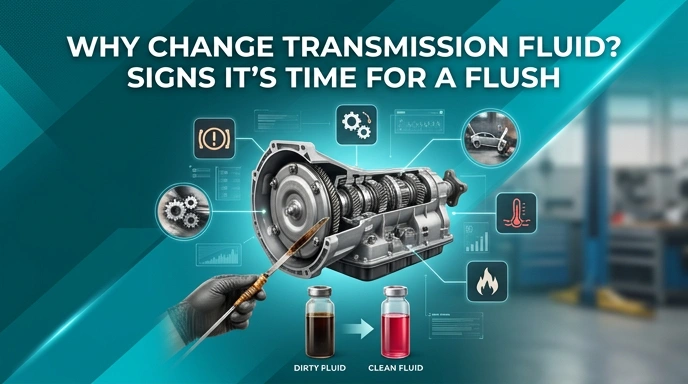
Healthy automatic transmission fluid is typically bright red and translucent. This color is a dye added for identification. As the fluid ages, it darkens to a maroon or cherry color, which is normal for mid-life fluid.
Brown or opaque fluid indicates significant oxidation. At this stage, the fluid has lost much of its protective capability. A flush is highly recommended to restore the system's integrity and clean out the suspended contaminants.
Black fluid is a sign of severe distress. This indicates that clutch material has burned and suspended in the oil. Changing fluid at this stage is controversial, as the thick, gritty fluid may be the only thing providing traction for the worn clutches.
Transmission fluid has a distinct, petroleum-like odor when fresh. If the dipstick reveals a smell similar to burnt toast or burnt sugar, the fluid has been severely overheated. This chemical change is irreversible.
The burnt smell indicates that the friction elements have slipped and generated excessive heat. This cooks the fluid surrounding the clutch packs. Once the fluid smells burnt, its lubricating properties are effectively zero.
Ignoring this smell guarantees failure. The carbon deposits from the burnt fluid will clog narrow oil passages. Immediate service is required to assess if the transmission can be saved or if a rebuild is impending.
Solenoids are electro-mechanical valves that control fluid flow. They rely on precise electromagnetic movement. Varnish buildup causes the plungers inside these solenoids to stick, delaying the execution of shift commands from the computer.
Why change transmission oil? To prevent this varnish. Once varnish hardens, it is difficult to remove. It changes the calibration of the solenoids, resulting in flare shifts or harsh downshifts that confuse the driver.
Modern transmissions use Variable Force Solenoids (VFS) which are highly sensitive. Even microscopic particulate matter can jam these components. Keeping fluid clean is the only way to ensure these intricate electrical parts function for the life of the car.
In cases where sticking is mild, a focused approach can help. Mechanics may suggest a transmission additive to clean solenoids. These additives contain high concentrations of detergents and dispersants designed to liquefy varnish deposits.
This is not a mechanic in a bottle but a cleaning agent. It is best used a few hundred miles before a scheduled fluid change. The additive dissolves the sludge, suspending it in the old fluid so it can be drained away.
However, reliance on additives should not replace regular maintenance. They are remedial measures. If the solenoid is physically worn or the electrical winding is failing, no amount of cleaning additive will restore its function.
A full transmission flush exchanges nearly 100% of the fluid. This is done using a machine that connects to the cooler lines. It pushes new fluid in while extracting old fluid, ensuring the torque converter is also serviced.
Flushing is ideal for vehicles that have been maintained reasonably well. It ensures that all the oxidized fluid is removed preventing the immediate contamination of the new oil. It is the most comprehensive way to reset the fluid's chemical clock.
For vehicles used for heavy towing or severe duty, a flush is often preferred. It guarantees that the heat-degraded fluid hiding in the cooling lines and converter is completely evacuated.
There is a prevailing theory regarding flushing high-mileage, neglected transmissions. The concern is that the high pressure of the flush machine might dislodge sludge that is currently sealing worn seals.
Furthermore, if the clutch packs are severely worn, the gritty, suspended friction material in the old fluid might be aiding in grip. Replacing this with slippery, clean fluid could cause the transmission to begin slipping immediately.
In these specific cases, a simple "drain and fill" is safer. This changes about 40-50% of the fluid, introducing fresh additives without shocking the system or stripping potentially beneficial friction material from the clutch faces.
Transmission maintenance is cheaper than transmission replacement. The cost of a transmission oil change is a fraction of the thousands of dollars required for a rebuild. It is an investment in the reliability of the vehicle.
Drivers must move past the "filled for life" mentality. Understanding the chemistry of fluid breakdown and the mechanical needs of the system facilitates better ownership decisions. Regular inspection of fluid condition remains the best diagnostic tool.
Whether driving a robust 4x4 or a modern CVT crossover, the hydraulic physics remain the same. Clean fluid maintains pressure, reduces heat, and protects metal surfaces. Ignoring this maintenance ensures a premature trip to the salvage yard.