
Selecting the correct lubricant is the single most critical factor in ensuring your machine starts during a blizzard. The best oil for a snowblower combines low-temperature fluidity with high-temperature protection. Most modern 4-cycle engines perform optimally with 5W-30 synthetic oil.
Cold weather places unique stress on small engines. A lubricant that safeguards a lawnmower in July will turn into a gel-like substance in January. You must prioritize pour point and viscosity to prevent catastrophic seizure during a cold start.
Viscosity refers to a fluid's resistance to flow. In the context of snow blower engine oil, this rating dictates how quickly the lubricant circulates when you pull the recoil starter or push the electric start button. Thick oil fails to reach critical bearings immediately.
The Society of Automotive Engineers (SAE) classifies motor oils based on this flow rate. The "W" in a rating like 5W-30 stands for "Winter." The number preceding it indicates the oil's viscosity at 0 degrees Fahrenheit. Lower numbers equate to better cold-flow properties.
Manufacturers generally standardize on 5W-30 oil for snowblower maintenance. This multi-weight numbering means the oil behaves like a 5-weight lubricant when cold, ensuring instant circulation. As the engine reaches operating temperature, it thickens to protect like a 30-weight oil.
Using 5W-30 oil for snowblower engines covers a broad temperature spectrum. It remains fluid down to roughly -20 degrees Fahrenheit. This versatility makes it the default choice for regions with variable winter climates where temperatures fluctuate significantly.
Many operators ask what oil does a snow blower use for general purpose work. The answer is almost invariably 5W-30, specifically designed for outdoor power equipment. It balances the need for easy starting with the requirement for shear stability under load.
Extreme climates demand specialized formulations. If you frequently clear snow in temperatures below -20 degrees Fahrenheit, 5W-30 may become too viscous. In these sub-zero conditions, 0W-30 becomes the superior snow blower oil type.
A 0W-30 rating ensures the fluid remains pumpable at drastically low temperatures. It reduces drag on internal components during ignition. This reduction in friction is vital for preventing battery drain on electric start models and reducing physical strain during manual starts.
Standard SAE 30 is a monograde oil typically reserved for lawn mowers and warmer weather. Using this type of oil in snowblower engines during winter is a recipe for failure. The oil becomes thick and molasses-like as the thermometer drops.
Attempting to start a snow thrower engine filled with SAE 30 at freezing temperatures can strip gears and score cylinder walls. The lack of lubrication during those first few seconds causes permanent damage. Always verify the bottle explicitly states a multi-grade winter rating.
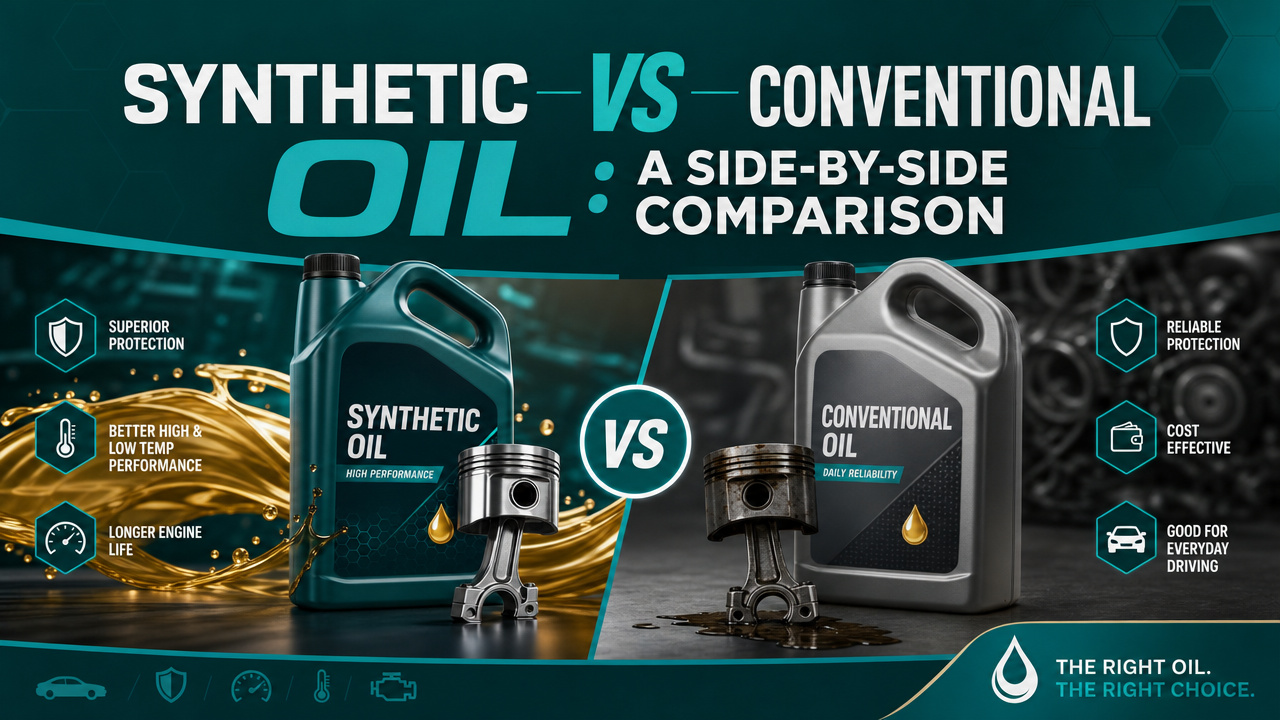
The debate between synthetic and conventional motor oil snowblower users face is settled by performance data. Synthetic oils are chemically engineered to have uniform molecular structures. This uniformity provides superior protection against thermal breakdown and oxidation compared to mineral oils.
Conventional snowblower oil is refined from crude oil and contains impurities such as wax. These waxes crystallize in extreme cold, causing the oil to thicken. Synthetics lack these impurities, allowing them to flow freely even in the harshest winter conditions.
Synthetic oil for snow blowers dramatically improves cold starting. Because it does not thicken as much as conventional oil when idle, the engine encounters less resistance. The piston moves more freely, allowing for faster ignition and less wear on the starter motor.
For those asking what type of oil for snowblower usage guarantees the easiest starts, full synthetic is the answer. It reaches the valve train and camshaft varying seconds faster than mineral alternatives. This immediate lubrication minimizes metal-on-metal contact.
Air-cooled engines run hot, even in the snow. A snow blower engine works under maximum load while clearing heavy, wet snowdrifts. This generates significant heat that can degrade inferior lubricants. Heat causes oil to lose viscosity and shear strength.
Synthetic best small engine motor oil resists this thermal breakdown. It maintains its protective film strength under high-torque conditions. This is essential for preventing sludge buildup and keeping the internal components clean throughout the machine's lifespan.
Synthetic snowblower motor oil costs more per quart than conventional options. However, the typical snow thrower engine oil capacity is small, usually less than a quart. The marginal cost increase is negligible compared to the price of engine repairs.
Given that most owners perform an oil change for snowblower maintenance only once per season, the investment in synthetic is minimal. The enhanced protection and reliability offer a high return on investment. It is cheap insurance for expensive machinery.
Not every machine uses the same what kind of oil does a snowblower take. The primary distinction lies between 2-cycle (2-stroke) and 4-cycle (4-stroke) engines. Confusing these two distinct systems will lead to immediate engine destruction.
Most modern snow blowers utilize 4-cycle engines. These have a separate oil reservoir and do not require mixing gas and oil. Older models and some lightweight single-stage throwers may still use 2-cycle technology.
A 4-cycle snowblower engine oil system operates like a car. You pour the oil into the crankcase, and it circulates through the engine. The fuel goes into a separate tank. These engines require high-quality detergent oils, typically 5W-30.
When searching for what oil to use in snowblower 4-stroke models, look for API service ratings of SJ, SL, or higher. Detergents typically found in these oils keep combustion byproducts in suspension. This prevents deposits from clogging oil passages.
If your machine is a 2-cycle, it does not have a dedicated oil sump. You must mix 2 cycle snow blower oil directly into the gasoline. The typical ratio is 50:1 or 40:1, depending on the manufacturer specifications.
Never use standard motor oil in a 2-cycle engine. You must use oil specifically labeled as 2-cycle air-cooled engine oil. These formulations are designed to burn cleanly with the fuel. Using standard 5W-30 will cause excessive smoke and carbon fouling.
To determine type of oil for a snowblower you need, inspect the engine. A 4-cycle engine will have a dipstick or an oil fill cap usually marked with an oil can symbol. It will also have a separate fuel cap.
A 2-cycle engine lacks a dipstick. It will usually have a label on the fuel cap indicating the required fuel-oil mix ratio. If you are unsure what type of oil does a snowblower use, consult the manual or look up the model number online immediately.
While generic high-quality synthetics work in most machines, manufacturers often certify specific blends. Knowing the OEM recommendations can safeguard your warranty. Here is a breakdown of what major brands suggest for their equipment.
Owners often ask what oil for ariens snowblower is best. Ariens, which frequently utilizes high-performance engines, recommends their specialized branded 5W-30 for standard use. They optimize their blends for the specific metallurgy of their drive systems.
Briggs stratton snow blower oil is widely available and formulated for their ubiquitous engines. They explicitly recommend high-quality detergent synthetic oil. For their snow engines, they emphasize warranty compliance through the use of certified service ratings like SJ or higher.
Honda engines are renowned for tight tolerances. Honda snowblower oil recommendations strictly favor 5W-30 to ensure these tight clearances are lubricated instantly. Using thicker oil in a Honda can trigger low-oil sensors or cause drag.
For a Toro snow blowers oil type, not much differs. Toro typically utilizes engines that thrive on 5W-30 synthetic. However, for older Toro two-stage models with Tecumseh engines, verify if the manual permits 10W-30 in milder climates, though 5W-30 remains safer.
The craftsman snowblower oil type is consistent with the industry standard of 5W-30. Since Craftsman rebrands engines from various makers, checking the specific engine manual is wise. Generally, synthetic remains the top suggestion.
Husqvarna snow blower oil requirements mirror their chainsaw and tractor divisions. They advocate for premium synthetic blends. They warn against using non-detergent oils, which allow sludge to settle in the crankcase.
Knowing how much oil for snowblower maintenance is just as important as the type. Overfilling is a common error that causes oil foaming. Air bubbles in foamy oil cannot lubricate effectively, leading to overheating.
Underfilling is equally dangerous. It leads to oil starvation and rapid overheating. Small engines rely on splash lubrication, so the level must be precise to ensure the dipper can splash oil onto the cylinder walls.
Compact single-stage snow throwers have small engines. The capacity typically ranges between 12 to 20 fluid ounces. You must pour slowly and check the level frequently to avoid overfilling these small sumps.
Precision is key when adding snow thrower oil to these units. A difference of two ounces can push the level from safe to overfilled. Use a measuring cup if the bottle does not have clear graduation lines.
Two-stage and three-stage snowblowers generally have larger engines. These units usually hold between 20 and 40 fluid ounces. For example, a standard 250cc engine might take roughly 20-24 ounces approximately.
When asking how much oil does a snowblower hold, check the specific engine model code. Do not assume all 8HP engines hold the same amount. Differences in sump design alter the required volume significantly.
Always place the machine on a level surface before checking. Remove the dipstick and wipe it clean with a rag. Reinsert the dipstick fully, or screw it in if required by the design, then remove it again to read.
The oil film should sit between the "Add" and "Full" crosshatched area. If you are changing snowblower 5w30 oil, add about three-quarters of the estimated capacity first. Run the engine for a minute, wait for the oil to settle, and then top off.
Engine oil is not the only fluid requiring attention. The snowblower transmission oil and auger gearbox lubrication are critical for drive performance. Neglecting this leads to auger failure during heavy snow removal.
Most operators focus solely on the engine. However, the worm gear driving the auger experiences immense pressure. If this gearbox fails, the engine runs, but the machine will not throw snow.
Do not put motor oil in the auger gearbox unless specified. Gearbox oil for snowblower mechanisms is usually a high-pressure lubricant, such as 75W-90 gear oil or a specific brass-safe lubricant.
Some gearboxes are sealed for life, but many have fill plugs. Using engine oil here provides insufficient shock protection. The gears will grind and wear prematurely under the load of wet, heavy snow packing.
Grease points differ from oil resevoirs. You must use low temp grease for snow blowers on chassis fittings and axle shafts. Standard lithium grease hardens in freezing temperatures, making steering and chute rotation difficult.
Look for synthetic grease rated for sub-zero operation. Apply this to the shear bolt shafts and the hex shaft driving the friction disc. Proper greasing prevents rust seizure and ensures smoother mechanical operation.
Learning how to change the oil on a snowblower is a fundamental skill. It should typically be done after the first 5 hours of use for a new machine (break-in) and then annually or every 50 hours thereafter.
Performing this maintenance at the end of the season is often better than the beginning. Old oil contains acids and moisture that can corrode internal parts during summer storage. Fresh oil protects the engine while it sits idle.
Run the engine for a few minutes to warm the oil. Warm oil suspends contaminants and drains faster. Locate the drain plug, usually found at the base of the engine block near the deck.
Place a shallow pan under the drain spout. Remove the plug using the correct socket size. To facilitate faster flow, remove the top filler cap to prevent a vacuum lock. Tilt the machine slightly back to ensure every drop of old snow thrower engine oil escapes.
Once drained, reinstall the plug securely but do not overtighten. Place a clean funnel into the fill tube. Pour your chosen best oil for snowblower slowly. Monitor the level to prevent an overflow mess.
Stop periodically to check the dipstick. Remember that cold oil flows slowly down the fill tube. Give it time to settle in the crankcase before taking a final reading to ensure accuracy.
Never pour used snowblower oil drainings into the ground or down a storm drain. It is a major environmental hazard. Collect the old oil in a sealable container, such as an empty milk jug or the original oil bottle.
Take the used oil to a local auto parts store or municipal recycling center. Most retailers that sell motor oil are legally required to accept used oil for recycling. This responsible step keeps groundwater clean.
Even seasoned pros make errors with snow thrower oil. Understanding these pitfalls ensures longevity for your machine. The wrong approach can turn a ten-minute job into a costly repair bill.
We mentioned foaming, but overfilling also causes leaks. Excess pressure pushes oil past the seals and gaskets. You may notice oil dripping onto the friction disc, which causes the drive system to slip.
If you accidentally overfill, you must drain the excess immediately. Do not run the machine hoping it burns off. The resulting smoke will be excessive, and the risk of hydrolocking the engine increases.
Skipping an annual change allows sludge to form. Winter condensation mixes with oil to create a corrosive emulsion. This sludge blocks narrow oil passages, starving the top-end components of lubrication.
Regular changes are cheaper than a new short block. Even if the oil looks clean on the dipstick, the additives break down over time. Changing it resets the chemical protection your engine relies on.
Avoid using aftermarket additives designed for highway vehicles. What oil to use for snow blower engines is strictly air-cooled formula or high-quality synthetic. Automotive additives often contain friction modifiers not suitable for splash-lubricated small engines.
These additives can alter the viscosity in unpredictable ways. Stick to the manufacturer's recommended oil weight and type. The engineers who designed the engine know exactly what friction coefficients are required for durability.