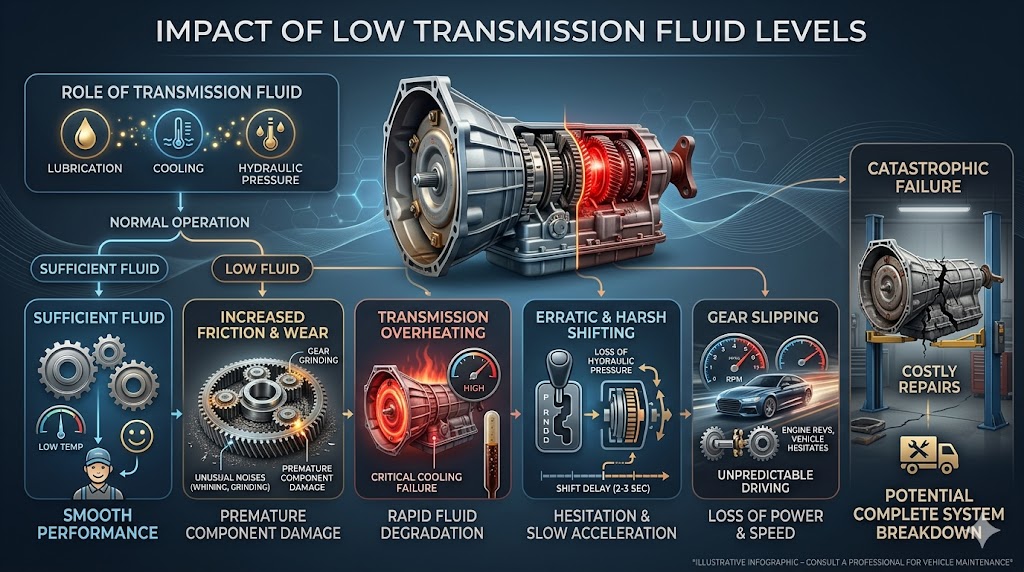
When an automatic transmission starts making strange noises it usually points directly to low transmission fluid levels. The fluid provides vital hydraulic pressure and reduces friction between fast moving parts. Without it the internal components suffer immediate and severe damage.
Insufficient lubrication forces metal surfaces to grind directly against each other. This harsh friction generates extreme heat and causes the entire gearbox to vibrate heavily. Over time this lack of lubrication will destroy the internal transmission mechanisms entirely.
Always check the transmission fluid level using the designated dipstick. If you spot low fluid you must top it up with the exact specified grade. Proper fluid levels prevent abnormal noises and ensure smooth gear shifting.
The torque converter connects the engine directly to the automatic transmission system. It uses complex fluid dynamics to transfer mechanical rotational power safely. When this heavy component malfunctions it disrupts the delicate balance of the entire drivetrain.
A faulty torque converter will cause excessive vibrations that travel straight through the floorboards. You will feel a distinct shudder when you try to accelerate from a complete stop. This violent vibration signifies internal damage to the converter clutch plates.
Ignoring a failing torque converter will inevitably lead to costly repairs. The damaged unit will scatter heavy metal debris throughout the delicate valve body. You must consult a professional mechanic to repair or replace the unit quickly.
Transmission mounts physically secure the heavy gearbox to the metal chassis of the vehicle. These mounts utilize thick rubber blocks to absorb natural mechanical vibrations. They actively prevent raw engine shock from transferring into the passenger cabin.
Over thousands of driving miles these critical mounts can wear down and crack. Worn or damaged mounts allow the entire transmission case to shift out of alignment. This severe misalignment causes heavy rattling noises when you accelerate quickly.
Replacing a broken mount is a standard professional transmission repair procedure. Installing fresh rubber isolators will immediately reduce noise and restore factory ride quality. You should inspect these mounts during your regular maintenance checks.
Hearing a constant high pitched whine from the transmission usually points to a failing fluid pump. The transmission pump creates the massive hydraulic pressure required to actuate the clutch packs. A damaged pump struggles to move thick fluid efficiently.
As the pump strains to operate it produces loud buzzing noises that increase with engine speed. This whining noise warns you that the vital internal components are suffering from fluid starvation. Ignoring this sound will trigger catastrophic transmission failure.
Dirty transmission filters can also restrict fluid flow and cause a similar whine. You should perform a complete transmission oil change to flush out any dangerous blockages. Fresh fluid often cures minor buzzing noises instantly.
A heavy clunking sound when shifting gears indicates excessive mechanical clearance between drivetrain parts. You will frequently hear this loud clunk when moving the selector from park into reverse. This noise typically points to worn out universal joints or differential gears.
If you experience a harsh grinding noise during gear shifting you have severe internal damage. In a manual transmission this means the synchronizer rings are completely destroyed. The gears are violently clashing together instead of meshing smoothly.
An automatic transmission experiencing harsh grinding or clunking has likely blown a planetary gear set. This represents a massive mechanical failure that requires immediate professional attention. You cannot safely drive a vehicle with shattered internal gears.
Hearing rattling noises in neutral while the vehicle is stationary is a major red flag. This specific noise typically originates from a loose input shaft bearing. The bearing fails to support the heavy steel shaft properly.
As the engine idles the unsupported shaft rattles aggressively against the aluminum transmission casing. This creates a distinct metallic chatter that echoes under the car. The noise often disappears momentarily when you press the clutch pedal down.
Addressing gearbox repairs for a loose bearing requires a complete teardown of the unit. You must extract the damaged bearing before it shatters completely. Leaving it alone will cause the metal fragments to destroy adjacent components like gears.
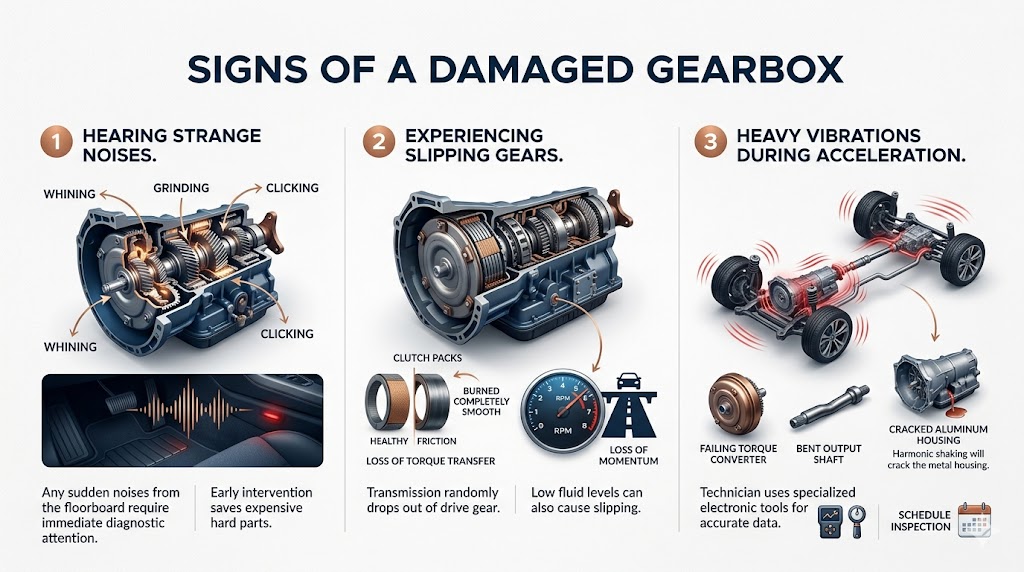
The most obvious indicator of mechanical trouble involves hearing strange noises from the floorboard. Any sudden whining, grinding, or loud clicking noises require immediate diagnostic attention. Healthy transmissions operate with near total silence.
These abnormal noises often serve as early signs of impending transmission failure. Paying close attention to the pitch and frequency of the sound helps pinpoint the exact problem. Different internal components create highly specific acoustic warnings when they fail.
Never ignore unusual sounds emanating from the drivetrain. Scheduling a quick diagnostic inspection can catch small issues before they become massive financial burdens. Early intervention saves the expensive hard parts from permanent destruction.
Slipping gears occur when the transmission randomly drops out of the designated drive gear. The engine RPMs will suddenly spike upward but the vehicle will lose forward momentum. This terrifying experience severely compromises your safety on the highway.
In an automatic transmission slipping gears happen because the internal clutch packs are burned completely smooth. They can no longer physically grip the steel reaction plates to transfer torque. The transmission requires a complete mechanical rebuild to restore function.
Low fluid levels can also cause temporary slipping due to a severe lack of hydraulic pressure. Checking the fluid levels is the very first diagnostic step. Adding the correct specification fluid might instantly cure the dangerous slipping condition.
If the entire vehicle begins to vibrate violently when you accelerate you have a driveline issue. This violent shaking points directly to a failing torque converter or a bent output shaft. The transmission is no longer rotating in perfect balance.
These excessive vibrations place immense structural stress on the external aluminum transmission casing. Over time this harmonic shaking will actually crack the metal housing entirely. A cracked housing will rapidly leak all of the vital transmission fluid onto the road.
A qualified technician must pinpoint the exact cause of these severe vibrations. They will use specialized electronic tools to monitor the transmission sensors in real time. Accurate data prevents you from replacing expensive components unnecessarily.
The most common cause of a heavy clunking noise involves worn out gears inside the casing. As the metal teeth wear down they develop excessive play and backlash. When torque is applied the loose gears slam together violently.
This violent impact creates the distinct clunk you hear when accelerating from a stop. Damaged or worn splines on the main output shaft will produce the exact same acoustic symptom. The loose metal components are simply banging against each other.
Rebuilding a transmission to fix this requires replacing the damaged components like gears and shafts entirely. You cannot repair worn gear teeth with standard chemical additives. You must physically replace the destroyed metal parts with brand new components.
The internal transmission pump provides the critical hydraulic pressure needed to engage different gear sets. If the pump rotor is scored or damaged it cannot maintain a steady flow of fluid. This causes the hydraulic pistons to engage erratically.
When the hydraulic pressure spikes and drops randomly the clutch packs will slam shut aggressively. This sudden harsh engagement creates a terrifying clunking sound. The transmission is essentially drop kicking itself into the next gear ratio.
To learn more about diagnosing hard engagements you should read about gearbox problems diagnosis and solutions. Understanding the specific pressure requirements helps you troubleshoot erratic shifting behaviors efficiently.
Every single component inside a transmission requires highly specific measurement clearances to operate smoothly. If these free transmission clearances are too wide the parts will physically slam into one another. Precision engineering is mandatory for a quiet gearbox.
Factory assembly errors or long term heavy towing can force these internal tolerances out of specification. Once the gaps become too wide the transmission will constantly clunk during every single upshift. The shift timing is completely ruined.
Correcting wide clearances requires a master technician to completely disassemble the unit on a workbench. They must measure every single clutch pack with a micrometer and install thicker steel retaining rings. This restores the tight factory tolerances perfectly.
Transmission fluid is the absolute lifeblood of the entire automatic transmission system. It provides essential lubrication to dozens of fast moving parts simultaneously. It also acts as a critical liquid coolant to disperse massive heat loads.
Running the gearbox with low transmission fluid levels guarantees catastrophic mechanical failure. The lack of lubrication causes the delicate metal bearings to overheat and seize solid. The internal friction literally melts the vital components together.
You can prevent this disaster by understanding what is transmission fluid and why is it important. Maintaining the correct fluid capacity ensures your expensive gearbox survives for hundreds of thousands of miles.
A transmission will never consume fluid naturally like an internal combustion engine consumes motor oil. If your transmission fluid level is low you definitively have a physical leak somewhere in the system. You must locate and seal this leak immediately.
Common leak points include the rubber axle seals, the main pan gasket, and the external cooling lines. Look for bright red puddles forming under the center of your parked vehicle. These red stains are the primary indicator of a breached transmission seal.
If you spot a leak you should immediately read about why change transmission fluid signs it s time for a flush. Resealing the unit and flushing the old fluid restores the maximum hydraulic performance.
Even if your fluid levels are perfectly full the liquid itself can simply wear out. Over time the extreme internal heat breaks down the chemical viscosity of the oil. The fluid turns from bright red to a dark burnt brown.
Burnt transmission fluid loses all of its protective friction modifiers and cooling properties. The transmission will start to vibrate and shift erratically because the fluid cannot grip the clutches. You will often notice a harsh burning smell coming from the dipstick.
Performing a routine fluid exchange flushes out the oxidized oil and heavy metal contaminants. Fresh synthetic fluid will instantly reduce noise and smooth out harsh gear engagements. Routine maintenance is far cheaper than buying a brand new transmission.
Driving a vehicle with a loud and vibrating gearbox is incredibly dangerous and highly discouraged. The abnormal noises are your final warning that a massive mechanical component is actively failing. Ignoring these warnings guarantees total vehicular breakdown.
If a gear shatters while driving at highway speeds the metal fragments will lock the output shaft instantly. The drive wheels will lock up tight and throw the vehicle into an uncontrollable skid. You risk causing a severe traffic accident.
You must identify the potential causes of the noise before operating the vehicle any further. Check for external leaks and verify the fluid levels immediately. Do not attempt to drive the car if it makes loud grinding sounds.
Modern automatic transmissions are incredibly complex hydraulic computers requiring specialized knowledge to diagnose. You cannot fix a vibrating gearbox with simple hand tools in your driveway. You must seek out a dedicated professional transmission repair facility.
A professional mechanic possesses the expensive computerized scanning tools required to read the internal transmission control module. This computer logs specific error codes that pinpoint the exact malfunctioning solenoid or sensor. Accurate data prevents expensive diagnostic guesswork.
Always trust a certified specialist to repair or replace the damaged internal components. They understand the intricate valve body pathways and clutch pack clearances perfectly. A proper rebuild comes with a warranty to protect your expensive investment.
Proactive drivers save thousands of dollars by addressing small noises immediately. If you hear a faint whine and fix the fluid pump early you save the entire gear set. Catching issues before they become destructive saves the hard metal parts.
Waiting until the transmission is violently slipping guarantees that you have destroyed the entire internal assembly. These massive issues can lead to costly complete replacement procedures. A full replacement is significantly more expensive than a minor preventative repair.
Read our comprehensive guide on fix hard transmission shifts to understand how early intervention works. Adjusting a simple shift solenoid today prevents the total destruction of the clutch packs tomorrow.
The easiest way to diagnose common transmission issues is to check the fluid condition monthly. Pull the transmission dipstick while the engine is running and fully warmed up. Wipe it clean and reinsert it to get an accurate reading.
The fluid should be bright translucent red and reach the designated hot fill line. If the fluid is dark black or smells heavily like burnt toast you have severe internal slipping. You must schedule a diagnostic appointment immediately.
Maintaining the proper fluid levels is the single most important maintenance task for an automatic transmission. This simple check prevents the vast majority of catastrophic heat related failures. Clean fluid ensures the hydraulic valves operate without sticking.
A rhythmic clicking noise that increases directly with vehicle speed usually indicates a failing constant velocity joint. However if the click occurs only while shifting gears the problem is internal. This specific noise points to a broken gear tooth.
A broken tooth will continuously click every time that specific gear completes a full rotation. This sharp metallic sound warns you that the gear is structurally compromised and ready to shatter. You must stop driving the vehicle to prevent further internal damage.
You should review the exact signs of gearbox failure to better understand these acoustic warnings. Knowing the difference between a failing axle joint and a shattered gear saves diagnostic time.
When your transmission starts making weird noises it will typically trigger a check engine light on the dashboard. The internal sensors have detected a severe drop in hydraulic pressure or an incorrect gear ratio. The computer is begging for help.
You must plug an OBD2 scanner into the diagnostic port to read these critical error codes. The codes will specify exactly which internal solenoid or speed sensor is malfunctioning. This digital information is vital for an accurate repair plan.
Never clear a transmission error code without actually fixing the underlying mechanical problem first. The computer triggered the code to protect the transmission from destroying itself completely. Deleting the warning simply ensures the gearbox will fail catastrophically.
When driving at highway speeds the torque converter actively locks up to provide a direct mechanical connection. If the internal lockup clutch is worn out the converter will rapidly engage and disengage. This creates a severe shuddering vibration through the chassis.
This violent shudder feels exactly like driving over a continuous rumble strip on the shoulder of the highway. A malfunctioning transmission computer can also cause this exact same terrifying vibration. The computer is commanding the converter clutch to apply incorrectly.
Replacing a failing torque converter requires removing the entire transmission from the vehicle chassis. It is a labor intensive procedure that requires heavy lifting equipment. Always rely on a professional to perform this heavy mechanical swap safely.
The internal transmission pump sits directly behind the torque converter inside the bell housing. If the pump bushing spins out of alignment it will scream loudly while driving. This high pitched whine is impossible to ignore.
A failing pump cannot supply the massive volume of fluid required to keep the clutches cool. As you drive the transmission will quickly overheat and start boiling the internal fluid. You will see heavy white smoke pouring out from under the car.
If you experience a loud whine followed by slipping gears pull over immediately. You have lost all internal hydraulic pressure and the transmission is actively melting itself. Tow the vehicle directly to a repair center.
Transmission explains common signs of failure through heat noise and violent vibration. The moment your vehicle begins exhibiting any of these symptoms you must act decisively. Delaying the repair process only guarantees a much higher final bill.
Understanding gearbox mechanics helps you communicate effectively with your chosen transmission technician. Be precise about exactly when the noise happens and what the vibration feels like. Detailed driver feedback makes the diagnostic process significantly faster and more accurate.
Whether you need a simple fluid flush or a complete internal rebuild address the problems swiftly. Protect your vehicle investment by maintaining the drivetrain rigorously. A healthy transmission provides years of reliable and perfectly smooth driving.