The rating of the oil indicates the oil’s viscosity and specific operational parameters. The society of automotive engineers established this viscosity grade system to classify motor oil based on strict flow characteristics. The "5W" stands for winter, showing how the oil behaves when the engine is cold.
The number 40 represents the viscosity at higher temperatures once the engine runs at normal operating temperature. Higher viscosity means the oil remains viscous while your engine operates under severe stress. An oil that’s more viscous provides a significantly thicker protective film for internal parts.
Synthetic oils like 5W-40 maintain their structural integrity better than conventional options. This full synthetic lubricant flows quickly during cold starts while actively resisting breakdown during extreme heat. This dual capability makes 5W40 oil highly versatile, effectively acting as an oil made for modern engine demands.
Choosing the right grade of motor oil actively prevents premature engine wear and catastrophic failures. A 5W-40 motor oil ensures rapid oil pressure buildup as soon as the engine starts. This immediate circulation is vital for protecting moving parts from initial friction damage.
Oil flows instantly to critical areas when starting your engine at low temperatures. A fast-flowing lubricant like 5W-40 ensures that metal components are never starved of essential lubrication. This grade of motor oil is engineered to handle tight engine clearances highly efficiently.
As the engine runs, the new oil creates a durable barrier between fast-moving metal surfaces. A synthetic 5W-40 effectively acts as a solid shield, doing the primary job of protecting engine components from immense internal friction and extreme operational heat.
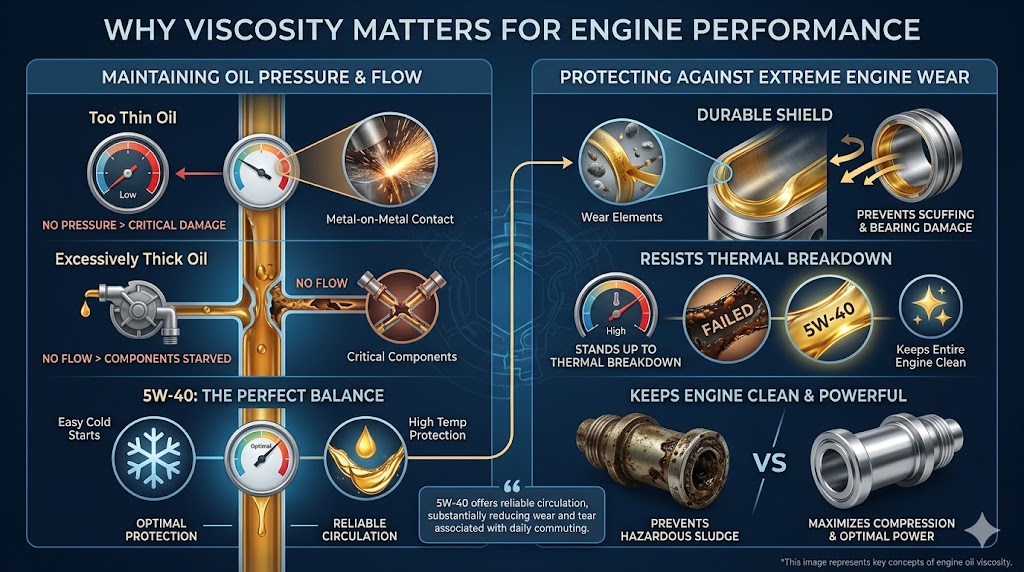
Viscosity is its resistance to fluid flow inside the crankcase. An oil that’s too thin won’t maintain adequate oil pressure, leading directly to dangerous metal-on-metal contact. Conversely, an excessively thick oil won't flow properly through narrow engine passages, starving critical engine components of vital lubrication.
A 5W-40 engine oil balances these extreme conditions perfectly. It remains fluid enough for starting engines at low temperatures but stays thick enough at high engine temperatures. This specific viscosity at operating temperature guarantees optimal internal protection across various intense driving conditions.
By maintaining the correct oil pressure, the vehicle retains engine performance and longevity over years of use. 5w-40 offers reliable circulation, substantially reducing the wear and tear associated with daily commuting. It can be used in most conditions without sacrificing fuel efficiency or power.
A 5W-40 synthetic oil does a better job of protecting engine parts than many lower viscosity alternatives available today. The robust base oil and advanced additives in 5W-40 create a durable shield over raw metal surfaces. This robust barrier reliably prevents cylinder scuffing and bearing damage.
High temperatures rapidly accelerate oil degradation, but full synthetic 5W-40 oil stands up to aggressive thermal breakdown. It prevents hazardous sludge formation and keeps the entire engine clean. A cleaner engine running will do a better job of maintaining factory compression and optimal power.
The lubricant drastically reduces friction between rapidly moving engine parts. Less internal friction translates directly to smoother engine performance and highly improved engine durability. This grade of oil is highly effective at high engine temperatures commonly found in modern, tightly toleranced engine designs.
Drivers frequently wonder about 5W-30 or 5W-40 and which is thicker for their vehicle. Both oils flow similarly when the engine is cold, carrying the exact same 5W winter designation. 5w40 is better for starting in extreme cold than heavier multi-grade commercial options.
The stark difference emerges clearly at high operating temperatures. 5W-40 motor oil is thicker at operating temperature than 5W-30. This higher viscosity definitively provides a thicker oil film, which is highly beneficial for engines operating continuously under heavy loads or in extremely hot climates.
While 5W30 offers slight measured advantages in fuel economy due to lower fluid friction, 5w-40 offers superior high-temperature defensive protection. If your daily driving involves heavy towing or high-speed driving, the thicker 5W40 oil delivers better peace of mind and mechanical defense.
Using 5W-40 instead of 5W30 generally increases internal oil pressure slightly. The oil that’s more viscous logically requires slightly more effort from the oil pump to circulate efficiently. However, most modern engines can easily accommodate this minor viscosity change without any negative mechanical consequences.
You might notice a very marginal decrease in overall fuel economy because the engine works slightly harder to pump the thicker oil. In direct return, the 5W-40 engine oil provides enhanced protection against engine wear, especially during prolonged high-speed or heavy-load running.
Always consult your engine manufacturer about exactly which grade of oil is appropriate for your specific model. While upgrading to a higher viscosity might protect older engines, some newer precision engines require thinner oils for proper variable valve timing operation and maximum efficiency.
5W-40 is frequently the go-to diesel engine oil for heavy operators. A turbo diesel engine constantly generates intense heat and soot, requiring a highly robust lubricant. Synthetic oils like 5W-40 easily handle these harsh internal environments, ensuring turbocharger bearings remain well-lubricated and properly cooled.
This specific viscosity grade carefully manages the high torque and internal pressures found in a diesel engine. It actively resists extreme shearing forces that tear apart lower-quality oil molecules. Using 5W-40 keeps heavy-duty diesel engines running smoothly for hundreds of thousands of miles.
Whether operating in light passenger trucks or large commercial vehicles, a 5W-40 motor oil provides consistent year-round protection. It flows efficiently during frigid winter mornings while offering uncompromising, durable film strength when hauling heavy loads up steep mountain grades in the summer heat.
Many European vehicle manufacturers strictly specify 5W-40 synthetic oil for their high-performance engines. These advanced engines feature tight internal tolerances and complex emission systems that demand superior lubrication. The full synthetic formulation entirely prevents carbon deposits from forming in highly critical areas.
Choosing the right engine oil for your car involves precisely matching the oil type to the engine's distinct engineering. A 5W40 engine greatly benefits from the specific additives in 5W-40, which actively neutralize acids and safely suspend contaminants until the next scheduled maintenance interval.
High-revving modern sports cars continuously generate extreme localized heat. A 5W-40 oil made from premium base stocks rapidly conducts heat away from moving parts effectively. This crucial cooling capability is just as important as the oil's primary job of protecting engine components from friction.
5w40 is better for starting your engine at low temperatures than older, heavier conventional oils. The "5W" rating guarantees the oil flows quickly to the sensitive valvetrain and bearings as soon as you turn the ignition key, completely minimizing highly damaging dry starts.
Cold engines unfortunately experience the highest overall rate of wear. By using a full synthetic 5W-40, the specialized lubricant reaches vital engine components in a fraction of the time. Rapid circulation is absolutely crucial for engine durability when starting your engine at low ambient temperatures.
Synthetic oils like 5W-40 inherently resist thickening in severe freezing weather. Even when the outside temperature drops well below zero, this advanced engine oil remains highly fluid, drastically reducing the electrical strain on your battery and starter motor during initial cranking and cold startups.
While performing excellently in the cold, 5W-40 offers incredible high-temperature stability. Its reliable viscosity at higher temperatures ensures a thick protective barrier remains fully intact when the engine runs hot. This stops metal parts from breaking through the critical oil film boundary.
Oils like 5W-40 contain special, highly engineered viscosity modifiers. These polymer additives actually expand as the internal oil heats up, intelligently counteracting the natural tendency of hot liquids to thin out. This specific technology keeps the 5W40 oil highly effective at high engine temperatures under heavy load.
Dangerous thermal breakdown creates restrictive sludge and varnish. Full synthetic 5W-40 oil heavily resists oxidation, naturally keeping internal engine surfaces spotless and clean. This formidable resistance to breakdown makes it the optimal, safe choice for modern, hot-running turbocharged engines operating in severe and demanding conditions.
If your primary engine frequently tows heavy commercial loads, switching to 5W-40 easily provides extra necessary protection. The higher viscosity grade actively resists thinning out under extreme mechanical stress better than a standard 5W30. This ensures continuous, reliable lubrication for heavily stressed bearings and moving parts.
Comparing 5w40 and 10w40 reveals clear, measurable advantages in cold weather climates. While both grades offer similar high-temperature mechanical protection, the 5W-40 engine oil guarantees significantly faster oil flow during cold starts. This undeniably makes it a superior all-season choice for many drivers everywhere.
Older, high-mileage engines with slight internal wear might greatly benefit from intentionally switching to 5W-40. The slightly thicker oil layer can help seal aging piston rings more effectively. This can potentially reduce excessive oil consumption and safely restore a small amount of lost engine compression over time.
It is highly important to consult your engine manufacturer before arbitrarily changing oil viscosities. Your vehicle's owner's manual explicitly specifies the ideal rating of the oil for your specific engine type. Using an unapproved, arbitrary viscosity can sometimes instantly void vehicle warranties and cause mechanical issues.
Modern, highly complex engines use specific oil pressure to reliably actuate complex variable valve timing systems. An oil that’s more viscous might dangerously delay these precise hydraulic mechanisms. Always consult your engine manufacturer about exactly what grade of oil is appropriate for your motor.
Engine oil for your car must legally meet specific global industry certifications. Beyond just checking exactly which grade of oil is appropriate, verify closely that the 5W-40 synthetic oil carries the correct API or ACEA ratings mandated by your vehicle's original engineering team.
Using a 5W-40 oil in an engine designed strictly for 5W20 is generally not recommended by professionals. The significantly higher operating viscosity at normal operating temperature will drastically increase fluid friction, which noticeably reduces overall fuel economy and unnecessarily strains the vehicle's oil pump.
The much thicker 5W40 oil may constantly struggle to flow quickly enough through the highly narrow oil passages in an engine engineered for 5W20. This dangerous delayed flow can rapidly lead to increased engine wear, especially on highly sensitive upper valvetrain components and critical camshaft bearings.
If you accidentally use 5W40 instead of 5W20 during a service, the engine will likely run completely fine in the short term. However, you should immediately drain and replace the oil with the correct manufacturer-specified viscosity as soon as possible to prevent permanent, long-term mechanical damage.
5W-40 synthetic oil is heavily used globally in European performance cars, modern high-torque diesel engines, and advanced turbocharged passenger vehicles. Its highly robust formulation naturally provides a tough lubricating film that easily withstands the intense, localized heat generated by turbochargers and high-compression designs.
This highly popular viscosity grade is also common among daily drivers who regularly operate their vehicles in extreme seasonal temperature fluctuations. Because it efficiently acts like a 5W in winter and a 40-weight in summer, it serves as an excellent, highly dependable year-round lubricant for many applications.
Large commercial fleet operators often use 5W40 engine oil to aggressively standardize their widespread maintenance programs. It can safely and effectively lubricate a diverse range of vehicles, including applications for heavy-duty diesel trucks to light-duty passenger cars, vastly simplifying inventory while safely maximizing overall engine durability.
The reliable performance of any 5W-40 engine oil relies heavily on its foundational base oil quality. Full synthetic base stocks possess highly uniform molecular structures, which significantly reduce internal fluid friction and withstand extreme, punishing temperatures much better than older, conventional mineral oils.
The specialized additives in 5W-40 are equally crucial for operation. Detergents actively keep the engine components clean, while advanced anti-wear agents bind directly to metal surfaces to prevent friction. These sophisticated chemical enhancements are highly effective in protecting against engine wear and ensuring long-term reliability.
Chemical dispersants within the synthetic oil safely suspend microscopic soot and invisible metal shavings, actively preventing them from grouping together and forming harmful, restrictive engine sludge. This advanced molecular chemistry keeps the moving parts operating smoothly and significantly extends the overall functional life of the engine.
Consistent, powerful oil pressure is the absolute lifeline of your moving vehicle. A premium, high-quality 5W-40 synthetic oil rigorously guarantees that the oil pump can quickly distribute lubricant to every critical area, effectively safeguarding essential components from the main lower bearings to the overhead camshafts.
When a heavy engine runs, the oil constantly stands up to tremendous, ripping shearing forces. 5w-40 consistently offers excellent shear stability, meaning it definitively won't thin out excessively over its long service life. Oils like 5w-40 maintain high viscosities and are equally effective in protecting delicate engine internals.
Choosing the absolute right motor oil ultimately dictates how well your specific engine survives daily operations. By exclusively using 5W-40 in fully approved applications, you definitively ensure that the oil flows properly, coats all parts efficiently, and successfully delivers long-lasting protection under all demanding driving conditions.