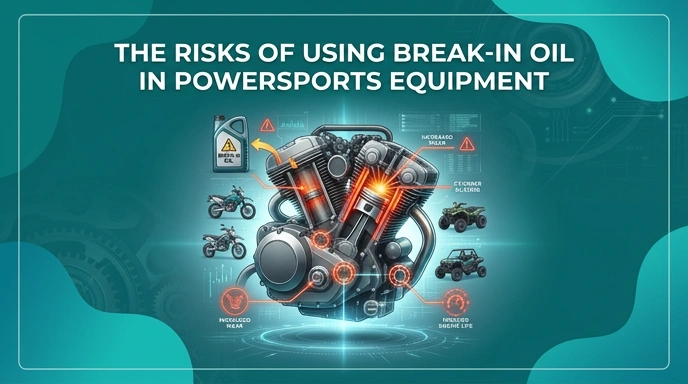
The debate surrounding the initial startup of a fresh powerplant often centers on fluid formulation. While specialized lubricants serve a critical purpose in the automotive racing world, applying these same chemistry principles to powersports equipment introduces significant mechanical hazards. Understanding the divergence in engineering requirements is vital for longevity.
Modern motorcycles, ATVs, and UTVs operate under significantly different stressors than the automotive engines for which most break in oil is formulated. The high-rpm nature of these machines, combined with integrated transmission systems, necessitates specific motorcycle engine oil properties. Blindly pouring a high-zinc racing formula into a modern sportbike can lead to catastrophic component failure.
You must evaluate the specific metallurgical needs of your equipment before selecting a fluid. The assumption that a new engine oil labeled for break-in is universally beneficial is a dangerous misconception. This analysis dissects the specific risks associated with using these specialized fluids in powersports applications.
The primary distinction of a dedicated break-in oil lies in its additive package. These fluids typically utilize high concentrations of Zinc Dialkyldithiophosphate (ZDDP) and lack the detergents found in standard service oils. The goal is to promote the formation of a protective phosphate glass film on metal surfaces.
This formulation targets the protection of flat-tappet camshafts and highly stressed valve train components during the initial firing. The reduction of detergents allows the anti-wear additives to bond more rapidly to fresh metal. While effective for a crate V8, this chemistry presents immediate issues for modern powersports designs.
High levels of zinc and phosphorus are excellent for preventing scuffing between sliding metal surfaces. In a rebuilt automotive engine, this protects the cam lobes before work-hardening occurs. However, the aggressive nature of these additives can chemically attack certain seal materials used in recreational equipment.
Furthermore, the glitter in oil after rebuild that is often trapped by the filter contains metal particulates. A standard oil with high detergency keeps these particles in suspension until the filter catches them. Break-in oil with low detergency may allow sludge and particulate matter to settle in oil galleys if not changed immediately.
A common belief is that you need a low-lubricity fluid to facilitate seating rings. The theory suggests that modern synthetic oils are "too slippery" and prevent the asperities on the piston rings from mating with the cylinder wall. Consequently, many break-in fluids omit friction modifiers to encourage wear.
This lack of friction modification can be disastrous in engines designed for low-viscosity, high-lubricity environments. Modern cylinder honing techniques, such as plateau honing, provide the necessary surface finish for immediate sealing. Aggressive wear promoted by strictly mineral-based break in motor oil may remove cross-hatching too quickly, leading to increased oil consumption later.
The architecture of a powersports drivetrain is the primary reason to avoid automotive-centric break in oil for new engine applications. The vast majority of motorcycles and side-by-sides utilize a shared sump system. The engine oil must lubricate the crankshaft, the transmission gears, and the clutch simultaneously.
Automotive break-in oil is designed exclusively for the distinct environment of an internal combustion engine, generally distinct from the transmission. It does not account for the shear forces generated by transmission gears or the friction requirements of wet clutch plates. Creating a fluid that handles all three tasks requires a specific JASO certification.
The wet clutch relies on a specific friction coefficient to engage the power delivery without slipping or grabbing. Specialized break-in oil often lacks the friction modifiers required to maintain this balance, or it contains additives that glaze the friction plates. Once these plates are glazed, the clutch is effectively ruined.
Standard automotive oils labeled as "resource conserving" cause clutch slip, but dedicated racing break-in oil can be equally damaging due to inconsistent friction properties. The high zinc content can also lead to clutch plate stick-slip issues, making the machine difficult to ride smoothly during the critical break-in period.
Powersports engines operate at RPM ranges double or triple that of standard car engines. This high piston speed creates immense heat and shearing forces. The oil molecules are physically torn apart as they pass through the meshing gears of the transmission. This phenomenon results in a rapid loss of viscosity.
Most break-in oil 5w30 or sae 30 break in oil formulations are mineral-based and lack the shear stability of modern synthetics or semi-synthetics. Under the stress of a 14,000 RPM run, these oils can thin out dangerously, failing to maintain the hydrodynamic wedge needed to protect crank bearings.
The manufacturing tolerances in contemporary component production have shifted the paradigm of the new engine break in procedure. In the past, variances in machining meant parts physically had to wear down to fit together. Today, CNC machining and advanced metrology deliver parts that fit perfectly virtually from the factory floor.
Because the "wearing in" process is significantly reduced, the aggressive abrasive action promoted by old-school break-in oil is largely obsolete for modern OEMs. The focus has shifted from wearing parts down to thermally stabilizing the assembly and ensuring the piston rings seat against the cylinder liners instantly.
Iron liners are becoming less common in high-performance powersports, replaced by Nikasil (Nickel Silicon Carbide) plating. This coating is incredibly hard and microscopic. Using a conventional 10w40 break in oil designed to scuff iron liners can be ineffective or detrimental to Nikasil.
Nikasil cylinders require immediate gas pressure to force the rings outward for a seal. They do not require the prolonged abrasive period that iron liners effectively did. The best oil for breaking in engine components with Nikasil is often the standard spec oil or a non-synthetic version of the manufacturer's specified weight.
The high-zinc mandates for break in motor oil originated with flat-tappet camshafts, where the lifter drags directly across the cam lobe. Modern powersports engines predominantly use roller rockers or finger followers. These designs utilize rolling friction rather than sliding friction.
Roller valve trains do not require the extreme pressure protection provided by excessive ZDDP levels found in fluids like brad penn break in oil or joe gibbs break in oil. While these products are exceptional for vintage restorations, their specific chemical advantages are rendered moot by modern valvetrain geometry.
Regulatory standards have forced powersports manufacturers to adopt sophisticated emission control systems. Catalytic converters and oxygen sensors are now standard on street-legal bikes and many off-road vehicles. The chemistry of traditional break-in oil is chemically hostile to these sensitive components.
Phosphorus and zinc are known catalyst poisons. When oil vapor containing these elements passes through the exhaust stream, it coats the catalyst honeycomb. This coating prevents the necessary chemical reactions, rendering the converter useless and potentially triggering "Check Engine" lights or limp modes.
The "poisoning" effect is cumulative and often irreversible. If you run a high-zinc break in oil change for several hundred miles, you risk coating the catalyst substrate. This reduces the lifespan of the exhaust system, which is a significant financial consideration given the cost of OEM replacements.
Even if the engine does not burn significant amounts of oil, the blow-by gases generated during the breaking in new motor phase contain oil mist. This mist carries the additive package directly into the exhaust tract. Modern API service categories specifically limit phosphorus to prevent this damage.
Wideband and narrowband oxygen sensors rely on a permeable ceramic element to measure air-fuel ratios. Additives found in lucas break in oil or similar high-performance lubricants can contaminate this sensor tip. A fouled sensor sends incorrect data to the ECU, leading to poor fueling.
During the break-in period, correct fueling is critical to manage engine temperature. A lean condition caused by a fouled O2 sensor can overheat the piston crowns, while a rich condition can wash the oil film off the cylinder walls. Both scenarios can lead to one of the major engine failure causes.
The most reliable source for determining the best oil to break in an engine is the engineer who designed it. Almost invariably, powersports owner's manuals specify a standard JASO-rated motorcycle oil for the initial running period. Diverging from this can have legal and mechanical ramifications.
Engineers calculate bearing clearances and oil pump flow rates based on specific viscosity indices. A dedicated sae 30 break in oil may not flow correctly at startup compared to the 10W-40 multi-grade the oil pump was designed for. Trusting aftermarket generalities over OEM specificity is a gamble.
Manufacturers generally ship bikes with a specific "factory fill." This is rarely a commercial break-in oil but rather a standard mineral or semi-synthetic oil. They rely on the correct viscosity to maintain film strength while allowing just enough friction for the rings to bed in within the first 20 miles.
The decision to avoid synthetics during the factory fill is often economic, but also functional. Mineral oils are less thermally stable, which forces the user to perform the break in oil change quickly—usually at 600 miles. This ensures that manufacturing debris is flushed out early.
Using a non-specified fluid during the warranty period gives the manufacturer distinct grounds to deny a claim. If an engine fails and an oil analysis reveals extremely high levels of zinc and phosphorus typical of a racing break-in oil, the manufacturer can argue that the fluid damaged the emissions system or caused clutch failure.
Documentation is key. When you perform the fast break oil change, use oil that meets the service manual's API and JASO specifications. This creates a paper trail proving that the machine was maintained according to the requirements, protecting your investment.
A persistent myth in the industry suggests that one cannot break in an engine on synthetic oil. The argument is that synthetic oils are too slippery to allow ring seating. While this was true decades ago, modern synthetic vs. conventional oil technologies and cylinder surface finishes are compatible from minute one.
Many high-performance vehicles (like the Corvette or Ducati superbikes) come from the factory filled with full synthetic. If the cylinder cross-hatch is correct, the new engine break in will occur regardless of the base stock. The danger lies in extending the drain interval, not the oil type itself.
The primary function of the oil is to prevent metal-to-metal contact of bearings and skirts, not to control ring wear. Gas pressure behind the rings forces them against the wall. If an engine fails to seal, it is usually due to improper engine break in procedure (too gentle) rather than the presence of synthetic oil.
Using a high-quality synthetic during break-in offers better protection against localized overheating. Considering that a new tight engine generates excess heat, the superior thermal transfer of synthetics can be beneficial. However, due to cost, many builders still prefer a short cycle of conventional oil.
New engines experience friction spikes as parts normalize. A mineral-based 10w30 break in oil may break down thermally if the engine sees high loads immediately. Synthetics maintain their viscosity at higher temperatures, ensuring the crankshaft remains floating on a consistent oil wedge.
If you choose to use conventional oil for the break in motor process to save money on the flush, ensure you monitor temperatures closely. Do not allow the engine to idle for long periods, as heat soak can rapidly degrade the mineral base stock, leading to varnish deposits.
The success of an engine breakin relies more on how the engine is run than the magic fluids poured into it. The objective is to load the rings against the cylinder walls using cylinder pressure. This requires acceleration and deceleration, not steady-state cruising.
Cruising at a constant RPM is the worst possible scenario for a breaking in an engine. It creates low cylinder pressure, allowing the rings to float and glaze the cylinder walls. Once glazing occurs, no amount of specialized oil will fix the consumption issue; the cylinder must be honed again.
The ideal break in procedure involves heating the engine to operating temperature and then allowing it to cool completely. These thermal cycles anneal the gaskets and stress-relieve the metal components. During operation, vary the throttle inputs constantly.
Apply moderate load (50% to 75% throttle) in the midrange RPMs, then close the throttle to use engine braking. This vacuum pulls oil up to lubricate the wrist pins and washes away wear particles. This "load and coast" technique seats rings effectively using standard motorcycle oil.
The question of the best time to change engine oil or the factory fill is critical. The first oil change should happen sooner rather than later. Most OEMs suggest 600 miles (1000 km), but many builders prefer changing it at 20 or 50 miles to remove the bulk of the initial metal shed.
Inspect the drained fluid for excessive material. Some non-ferrous sheen is normal, but large chunks are not. Checking the filter pleats for the dreaded glitter in oil after rebuild gives you a health report on the bearings. This physical inspection is far more valuable than the specific brand of oil used.
Rather than purchasing expensive, potentially risky break-in oil, utilize proven assembly techniques and standard fluids. Protection starts before the engine is even fired. The proper application of engine assembly lube on bearings and cam lobes provides the necessary boundary lubrication for the first seconds of operation.
Assembly lube stays in place until oil pressure builds, mitigating the risk of a dry start. Once the oil pressure is up, the assembly lube dissolves into the oil. This makes the specialized high-zinc oil redundant for the purpose of initial startup protection.
Apply Molybdenum Disulfide (Moly) or ZDDP-rich paste strictly to the cam lobes, lifters, and bearings. Do not apply it to the cylinder walls or piston rings. The cylinder walls should be lightly wiped with the same motor oil you intend to fill the sump with.
This strategic application puts the extreme pressure protectants exactly where they are needed without contaminating the entire oil volume with chemistry that might damage the clutch. It strikes the perfect balance for a remanufactured engine break in procedure.
The most effective strategy is to use a high-quality conventional JASO-rated oil for the first 20-50 miles. Drain it hot. Refill with the same conventional oil for up to 600 miles. Then, switch to your preferred synthetic. This flushes contaminants efficiently.
This method avoids the risks of unintended clutch slippage associated with "energy conserving" oils or "friction modified" racing break-in fluids. It relies on the mechanical action of the engine and the solvency of standard oil to achieve a perfect seal and a long service life.