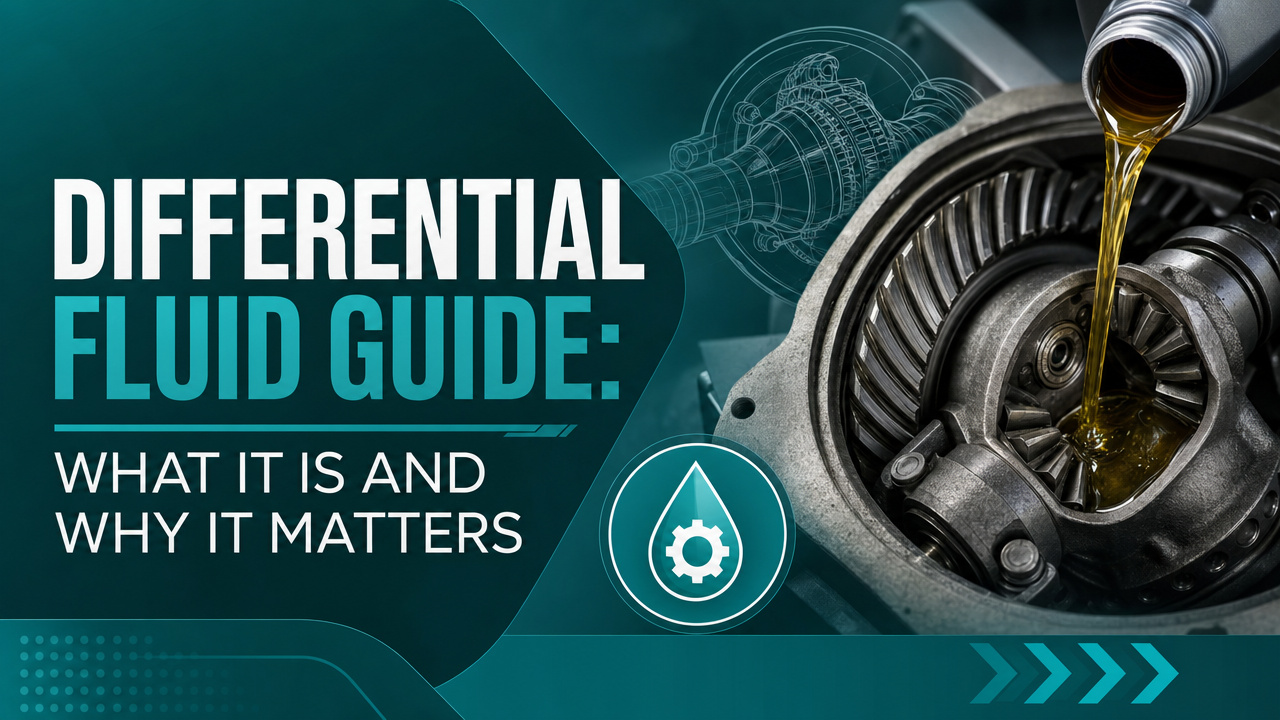
Differential fluid is a specialized gear oil formulated to lubricate the ring and pinion gears, bearings, and internal components inside the axle housing. It carries extreme pressure additives (EP additives) that protect gear teeth under high torque loads.
Unlike engine oil, differential gear oil is engineered for sliding contact between hypoid gears. This is where the differential fluid vs gear oil discussion overlaps, since automotive differential fluid falls under the hypoid gear lubricant category with GL-5 grade performance.
Modern differential lubricants come in conventional, semi synthetic, and full synthetic gear oil formulations. Premium synthetic gear lube delivers superior thermal stability, oxidation stability, and shear stability compared to conventional gear oil or mineral oil bases.
Inside the axle, differential fluid performs several critical jobs at once. It reduces friction between meshing gear teeth, dissipates heat generated under load, and forms a protective film that prevents metal to metal contact across the ring and pinion gears.
The fluid also delivers anti wear, anti rust, and anti foam properties. These additives keep the differential housing clean, protect bearings, and stop sludge and deposits from forming during long service intervals.
Key functions of a quality differential oil include:
Without proper lubrication, fluid breakdown accelerates, metal shavings accumulate, and driveline efficiency drops sharply.
Front differential fluid and rear differential fluid often share the same specification on 4x4 trucks, but not always. Front axles on independent suspension systems may require a different viscosity or additive package than a solid rear axle.
Rear differential fluid typically handles more torque, especially in heavy towing and off road differential fluid applications. This is why the best oil for rear differential is usually a high performance lubricant meeting API GL-5 with strong EP additives.
Transaxle differential fluid combines transmission and differential functions in one housing, common in front wheel drive passenger cars. The transaxle vs rear differential distinction matters because transaxle units often need GL-4 rated fluid to protect yellow metals in synchronizers.
Always match the recommended differential oil to the OEM specification stamped on the axle tag or listed in the service manual.
The API GL-4 and API GL-5 ratings define the additive load and protection level of gear oil service categories. API GL-4 gear oil suits moderate loads and manual transmissions with brass or bronze components.
API GL-5 specification doubles the extreme pressure additive concentration, making it the standard for hypoid rear axles under high load gear applications. The GL4 vs GL5 gear oil choice depends entirely on the component being serviced.
What happens if you use GL4 instead of GL5? Gears may suffer accelerated pitting and scuffing under high shock loads. Using GL-5 in a GL-4 only transmission can corrode synchronizer brass over time.
Some fluids carry dual GL-4/GL-5 ratings, engineered to protect both hypoid gears and yellow metals in modern drivelines.
Limited slip differentials use clutch packs to transfer torque between wheels. These clutches require a limited slip friction modifier to prevent chatter, shudder, and noise during cornering.
An LS additive requirement is common on performance cars, trucks, and off road vehicles. Running standard limited slip gear oil without the correct friction modifier causes clutch slip and premature wear.
The right lubricant for limited slip is either a factory-blended limited slip differential fluid or a standard gear oil combined with a bottle of LS additive. Always confirm the requirement before servicing.
Signs your LSD needs the correct additive include:
SAE gear oil grades define how the fluid flows at cold start and how it holds film strength at operating temperature. The three most common viscosity grades in automotive lubrication are SAE 75W-90, SAE 75W-140, and SAE 80W-90.
SAE 75W-90 is the mainstream synthetic gear oil 75w90 grade for passenger car and light truck rear axles. It offers strong low temperature fluid flow and solid film strength at highway speeds, improving fuel economy differential fluid performance.
SAE 75W-140 is a heavy duty gear lubricant designed for heavy towing differential fluid needs, high performance vehicles, and extreme temperature gear protection. The higher upper grade resists thinning under sustained load.
SAE 80W-90 is a conventional mineral-based option common in older vehicles, commercial fleet axles, and differential fluid for agriculture equipment. It works well where synthetic isn't specified.
75W-90 vs 75W-140 selection depends on load, ambient temperature, and OEM approval gear oil requirements.
Recognizing bad differential fluid signs early prevents expensive axle rebuilds. The most common warning is a whining noise from the differential that changes pitch with vehicle speed.
Watch for these symptoms of bad differential fluid:
Signs of low differential fluid include louder gear noise, heat buildup, and eventual seal failure. Check fluid level whenever you notice leaks around the pinion seal or diff cover.
A standard differential fluid change interval falls between 30,000 and 60,000 miles for most vehicles, shorter for severe duty, towing, and off road use. Replacing differential oil on schedule protects bevel gears, bearings, and the entire drivetrain.
Armor Lubricants gear oil delivers premium synthetic and conventional formulations built for automotive, commercial vehicle axle fluid, and industrial gear oil vs automotive applications. Choosing the right differential fluid keeps your driveline running quiet, cool, and protected for the long haul.