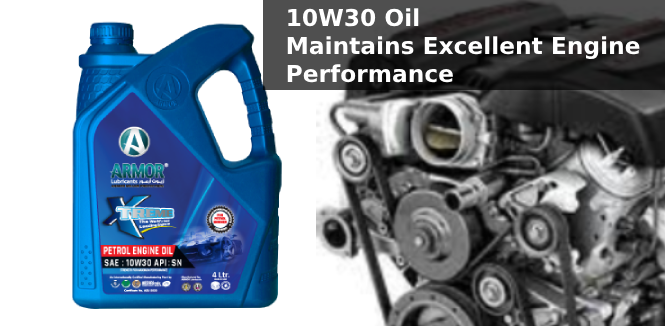
Every engine requires precise lubrication to manage friction and heat. 10W30 engine oil serves as a stable multi-grade lubricant designed for a wide range of engine operating temperatures. It maintains proper oil pressure while preventing excessive wear on critical engine parts.
Selecting the right oil involves evaluating the viscosity grade against your specific hardware requirements. This motor oil flows efficiently at startup but thickens adequately when the engine is hot. Proper oil selection prevents metal-to-metal contact during severe operating conditions.
The viscosity motor requirements dictate how well the oil protects under heavy mechanical load. Using 10w30 oil ensures a thicker oil film remains intact at higher operating speeds. This specific oil weight balances fuel economy with heavy-duty internal engine protection.
The Society of Automotive Engineers assigns specific motor oil viscosity grades based on fluid flow characteristics. The 10W represents the oil's viscosity when the engine is cold. The letter W stands for winter indicating exactly how the oil flows in cold temperatures.
The number 30 reflects the oil’s viscosity at normal operating temperature. This 30-weight oil classification means the lubricant maintains a specific resistance to flow once the engine reaches thermal equilibrium. This higher viscosity prevents the oil from thinning excessively under stress.
Oil pressure relies directly on the viscosity of the oil pumping through the internal engine blocks. When you use 10w30 the slightly thicker oil creates higher resistance in the clearances between engine components. This fluid resistance generates the necessary pressure readings.
Lower viscosity oils might struggle to maintain safe pressure in older high-mileage engines. The thicker oil film of a 10W-30 motor oil ensures the mechanical oil pump can circulate the fluid efficiently. This process maintains consistent pressure across all critical lubrication points.
During a cold morning start the motor oil flows from the oil pan directly up into the cylinder head. The 10W rating ensures the oil will flow quickly enough to prevent damaging dry starts. Fast fluid lubrication protects camshafts and bearings instantly.
Once the engine is hot the physical oil condition changes dynamically. The viscosity at operating temperatures must stay robust enough to separate fast-moving metal parts. The oil’s viscosity at normal heat levels dictates the true protective capability of the fluid.
An oil viscosity chart maps ambient temperature ranges against acceptable SAE fluid grades. You can verify if a seasonal oil like 10w30 suits your local climate by checking these manufacturer charts. They show the exact temperatures where the oil performs best.
Cross-referencing your vehicle manual with an oil viscosity chart prevents sudden lubrication failures. The chart visually demonstrates how a SAE 10 oil behaves compared to a thicker 30-weight oil. This data simplifies choosing the best 10W30 for your geographical region.
Mechanics frequently recommend 10W30 engine oil for older vehicles operating with worn engine parts. The slightly thicker oil compensates for increased metal clearances in aging high-mileage blocks. This higher viscosity reduces internal oil consumption and minimizes visible exhaust tailpipe smoke.
You should evaluate specific engine oil weights to see why older engines burn thinner fluids rapidly. The robust oil film of a 10w-30 motor oil seals piston rings highly effectively. This barrier prevents destructive blow-by gases from contaminating the crankcase.
What engine oil for snowblower applications works best during freezing temperatures? While some operators prefer 5W30 many commercial snowblowers specify 10W30 for reliable heavy winter operation. The correct oil ensures easy pull-starts while protecting the engine during sustained heavy snow-clearing loads.
For lawnmowers and compact tractors this multi-grade oil provides excellent peak summer protection. The standard tractor engine maintenance schedules often list 10W30 as the factory fill. The 30-weight high-temperature rating prevents the oil from breaking down under air-cooled operating stresses.
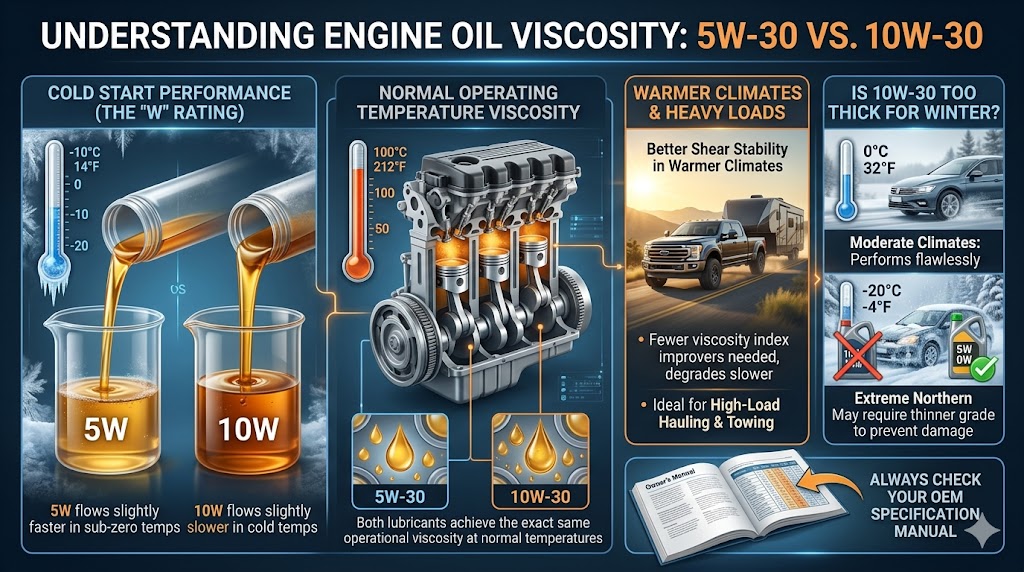
The mechanical debate between 5w-30 and 10w-30 centers entirely on freezing cold-weather performance. A 5W oil flows slightly faster at sub-zero temperatures than a standard 10W grade. However both lubricants achieve the exact same operational viscosity at normal operating temperature.
In warmer climate zones the 10w30 formulations offer vastly better shear stability. Because they require fewer chemical viscosity index improvers the oil degrades slower over time. This unique trait makes 10W30 a highly stable option for high-load hauling and heavy towing operations.
Drivers frequently ask if 10w30 is too thick for safe winter driving. In moderate climates where ambient temperatures rarely drop below zero degrees this oil performs flawlessly. The 10W cold rating guarantees the oil flows in cold conditions safely and efficiently.
However extreme northern environments might require a much thinner winter grade to prevent damage. Always check your OEM specification manual for exact cold temperature thresholds. Selecting the right oil for your engine prevents accelerated cold-start wear and sluggish starter motor performance.
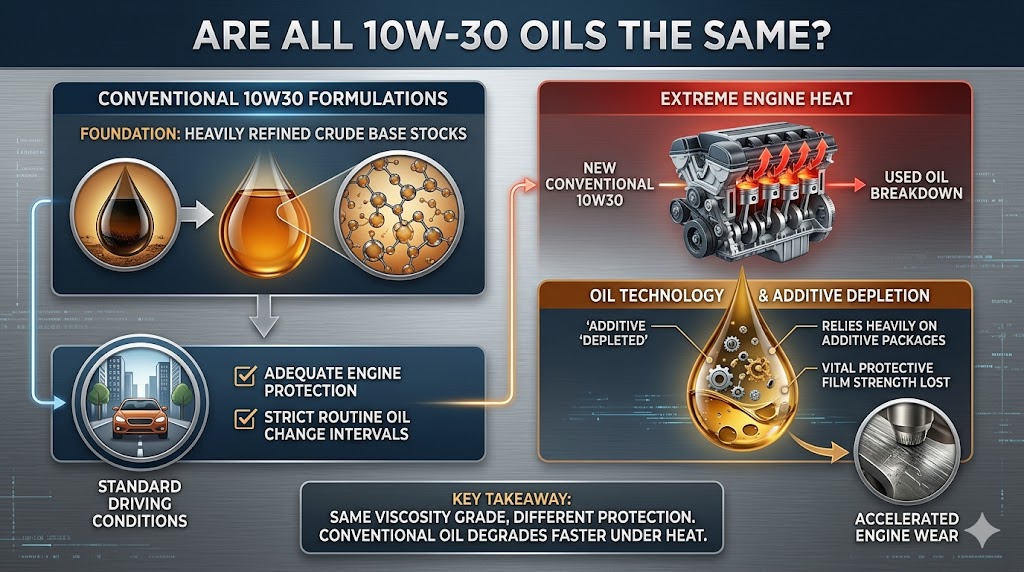
Not all motor oil is created equal despite sharing the exact same viscosity grade. Conventional oil uses heavily refined crude base stocks for its foundation. These basic oil formulations provide adequate engine protection for standard driving conditions and strict routine oil change intervals.
Conventional 10W30 breaks down much faster under extreme engine heat compared to modern alternatives. The oil technology in conventional fluids relies heavily on additive packages to maintain necessary viscosity. When these chemical additives deplete the oil loses its vital protective film strength.
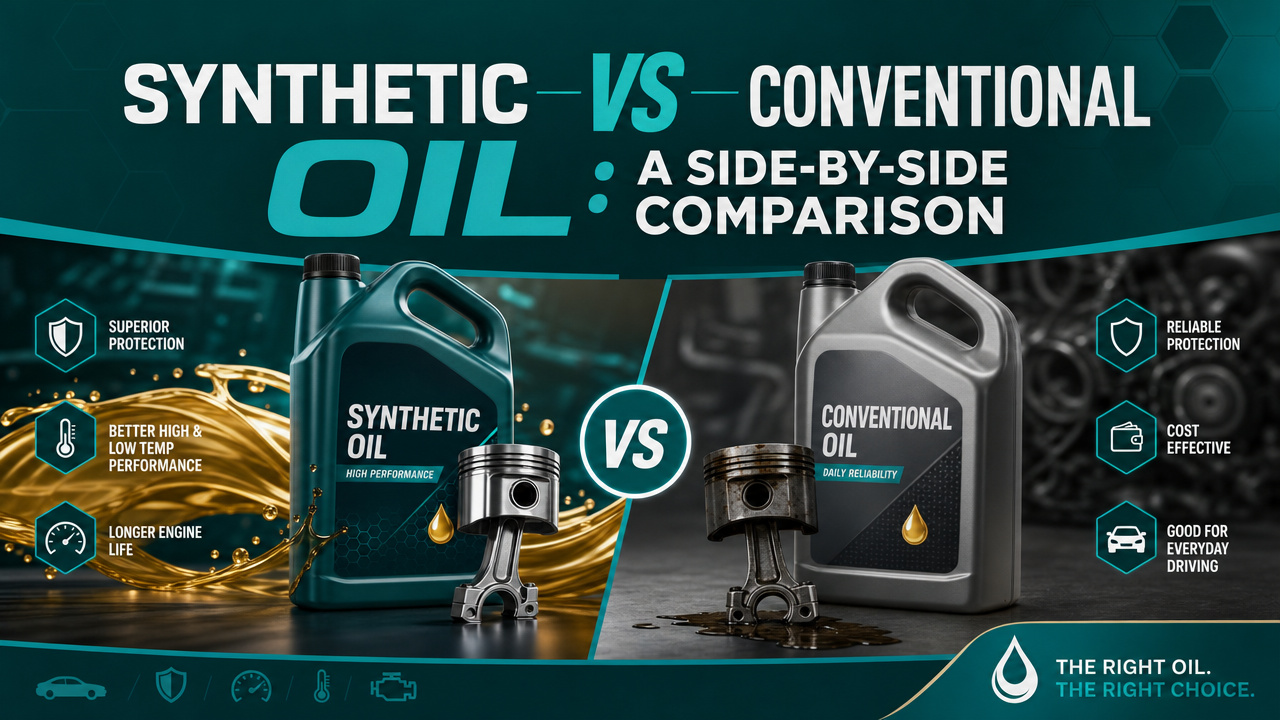
Upgrading your fluid to synthetic 10w30 drastically improves thermal stability and overall engine cleanliness. Synthetic base oils feature uniform molecular structures that naturally resist severe oxidation. Review the synthetic vs conventional oil data to see how synthetic variants reduce surface friction.
Full synthetic liquid formulations eliminate internal engine sludge and hard varnish deposits. The synthetic oil provides superior mechanical protection against viscosity shear under heavy operational loads. Choosing the best 10w30 means opting for a synthetic blend or full synthetic for maximum lifespan.
Always verify the required spec oil listed firmly on your oil filler cap or engine manual. Using the factory recommended oil ensures total chemical compatibility with your specific engine components. The right oil for your engine maintains active warranty coverage and optimal fuel economy.
Many modern heavy diesel engines require highly specific heavy-duty additive packages. For example a 10w30 diesel oil best for diesel engines contains specialized aggressive detergents to handle extreme soot. You must perfectly match the API certification rating alongside the required viscosity grade.
Maintaining the correct internal oil condition requires adhering strictly to set maintenance schedules. The best time to change engine oil depends heavily on your daily driving habits and operating environment. Severe stop-and-go city traffic accelerates liquid oil degradation very rapidly.
Frequent oil changes successfully remove metallic wear particles and harsh combustion byproducts from the crankcase. Even premium synthetic 10w30 cannot protect delicate parts indefinitely. Fresh motor oil flows better and restores the depleted viscosity index improvers back to exact factory specifications.
Viscosity index improvers are specially engineered polymers added directly to fluid base oils. These unique polymers expand physically as engine temperatures rise preventing the oil from thinning out. They allow a standard SAE 10 oil to behave precisely like a 30-weight oil when hot.
Over extended time periods mechanical shear forces chop these polymers into much smaller pieces. This action causes the motor oil to permanently lose critical viscosity. High-quality synthetic 10w30 incorporates highly shear-stable improvers to maintain proper oil pressure throughout the entire drain interval.
Commercial fleet managers deploy oil analysis programs to scientifically monitor internal engine health. An oil analysis laboratory tests the used oil for microscopic metal fragments and hidden coolant leaks. This analytical data helps professional mechanics catch engine burning oil causes solutions incredibly early.
Evaluating the exact viscosity of the oil during a drain reveals if dangerous fuel dilution occurred. Analyzing the grade of oil prevents sudden catastrophic failures in expensive heavy machinery. Professional testing guarantees your selected 10w-30 motor is providing totally adequate long-term wear defense.
Monitoring your vehicle dashboard gauges prevents sudden catastrophic internal hardware failures. If your precise oil pressure drops it indicates the engine oil viscosity has degraded or the oil level is critically low. Immediate corrective action prevents permanent scoring on sensitive engine parts.
A glowing warning light often means the 10w30 engine oil cannot maintain the necessary protective fluid film. When the engine is hot thin degraded oil bypasses bearing clearances too rapidly. Choosing the correct oil formulation restores optimal hydraulic pressure inside the metal block.
Towing heavy cargo trailers exponentially increases the mechanical stress placed on the lubricating fluids. High-torque engine applications force the oil film to withstand immense crushing pressure between metal surfaces. The 10w30 oil provides the necessary liquid buffer to absorb these extreme physical shock loads.
The better the motor oil flows under extreme pressure the less heat friction the engine generates. Selecting the best 10w30 guarantees your specific vehicle can handle sustained high-RPM driving. This balanced viscosity grade prevents the critical boundary lubrication layer from suddenly collapsing under stress.
Liquid engine oil performs a absolutely crucial cooling function alongside the primary front radiator system. The fluid physically absorbs extreme heat directly from the hot piston rings and cylinder walls. The 10w-30 motor fluid swiftly carries this intense thermal energy back down to the oil pan.
Efficient hardware heat transfer relies entirely on the proper oil viscosity at operating metrics. If the oil is too heavily thick it flows too slowly to remove dangerous heat effectively. 10W30 strikes the perfect fluid balance for rapid circulation and excellent thermal dissipation.
Extreme internal engine operating temperatures accelerate the rapid chemical oxidation of standard base stocks. Thermal breakdown physically causes the oil to thicken into destructive hard sludge deposits. Premium synthetic 10w30 resists this specific high-temperature degradation far better than conventional mineral-based lubricants.
When standard conventional oil breaks down it leaves abrasive hard carbon deposits on the intake valves. The right oil ensures the vital internal engine components remain completely spotless. A highly stable viscosity grade prevents high-heat environments from systematically destroying the vital fluid additive packages.
Not all standard 10W-30 oils suit both normal passenger cars and heavy commercial trucks. Heavy-duty 10w30 formulations contain highly aggressive detergent packages specifically engineered for severe industrial environments. You must carefully verify the API service category before pouring any oil into the open crankcase.
Standard passenger car engine oil prioritizes daily fuel economy and sensitive catalytic converter protection. Commercial diesel-rated oils prioritize massive soot suspension and harsh acid neutralization. Choosing the proper correct oil dictates exactly how long your modern emissions control systems will survive under load.
Internal fuel combustion generates microscopic abrasive soot particles that easily bypass the metal piston rings. The flowing motor oil must actively trap and safely suspend these dangerous abrasive contaminants. A high-quality 10w30 engine oil perfectly prevents soot from agglomerating into larger destructive abrasive clusters.
If the internal oil condition deteriorates soot will rapidly polish the critical cross-hatching right off the cylinder walls. The correct oil deploys advanced chemical dispersants to safely isolate these particles. This specific action allows the standard oil filter to safely extract the contaminants from the fluid loop.
Modern advanced 10w30 engine oil features highly complex chemical compounds known widely as anti-wear agents. Zinc dialkyldithiophosphate chemically creates a vital sacrificial barrier directly over bare metal surfaces. This strong barrier activates only when the engine is hot protecting the steel camshafts from intense friction.
Advanced friction modifiers help the liquid motor oil flows more efficiently actively increasing overall fuel economy. These specialized additives bond to internal engine components sharply reducing internal parasitic drag. The right oil formulation perfectly balances strict viscosity requirements with these essential friction-reducing chemical compounds.
Total engine cleanliness completely dictates the long-term operational reliability of any internal combustion platform. Active detergents in the 10w30 oil rapidly neutralize highly acidic harsh combustion byproducts. These strong basic compounds prevent corrosive sulfuric acid from severely damaging the softer metals found inside journal bearings.
Chemical dispersants work closely alongside detergents to keep the internal engine operating temperatures highly stable. By keeping thick sludge safely suspended the dispersants ensure the narrow oil galleries remain completely unobstructed. This vital process guarantees the slightly thicker oil can reach the uppermost valvetrain components instantly.
Purchasing any fluid in large bulk requires strict facility inventory management protocols. You should carefully review the guidelines for purchasing automotive lubricants to completely avoid expensive fluid contamination. Store unopened heavy containers in climate-controlled indoor areas to perfectly preserve the delicate viscosity index improvers.
Extreme weather temperature fluctuations can physically cause the essential chemical additives to separate completely from the base stocks. A highly consistent ambient room temperature totally prevents dangerous moisture condensation inside the metal storage drums. The proper oil storage setup safely guarantees maximum usable shelf life and factory performance.
Used depleted 10w-30 motor contains highly dangerous heavy metals and very toxic harsh combustion residues. Pouring dark waste oil directly into the ground causes severe long-lasting environmental contamination. Always safely transport your drained depleted fluids to certified local recycling facilities after completing your scheduled maintenance.
Modern recycling centers can efficiently re-refine used dirty motor oil into high-quality clean base stocks. This efficient circular economy successfully reduces the overall massive demand for expensive raw crude oil extraction. Professional legal disposal safely ensures the dangerous chemical compounds never illegally reach local municipal water supplies.