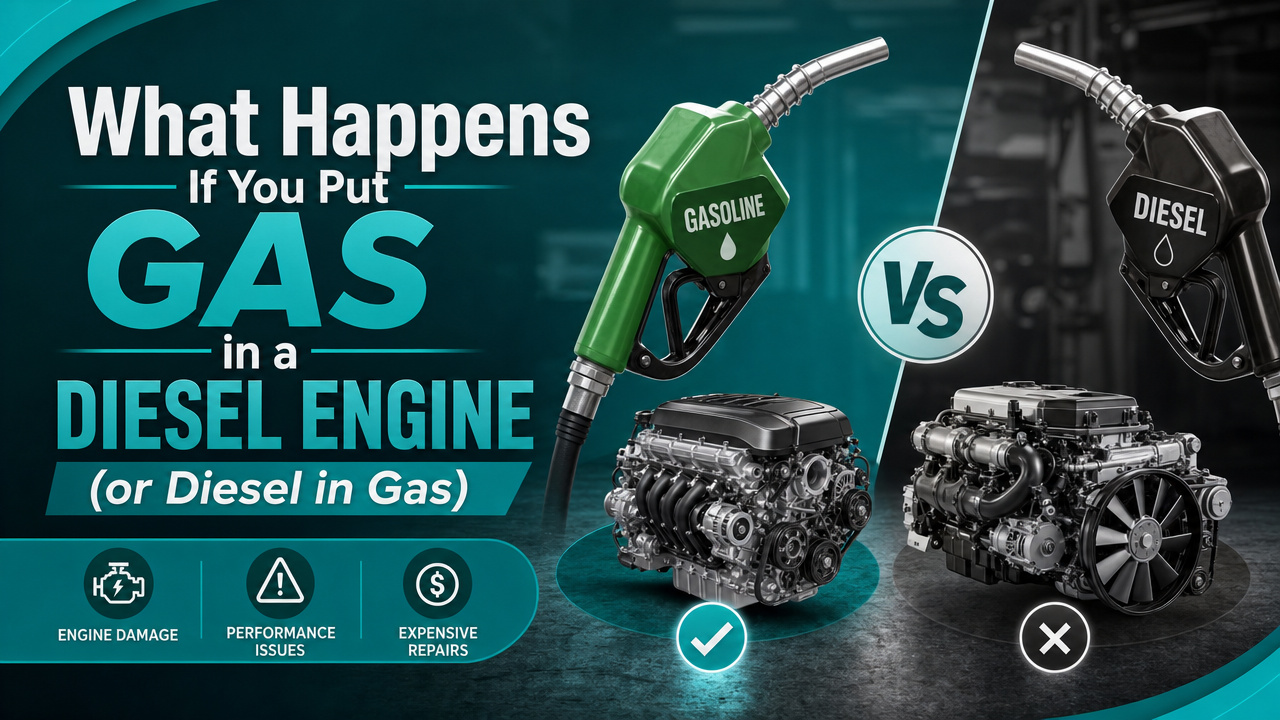
Misfueling is one of the most expensive mistakes a driver can make. Whether you accidentally filled diesel with gas or pumped diesel into a gasoline tank, the consequences range from rough running to complete engine destruction. The damage depends on how much wrong fuel entered the tank and whether the engine was started.
Diesel and gasoline engines operate on fundamentally different principles. Gasoline engines rely on spark ignition, where a spark plug ignites a compressed air-fuel mixture. Diesel engines use compression ignition, where high pressure alone ignites the fuel. This core difference makes diesel and gasoline interchangeable only in theory, never in practice.
Gasoline has a low flash point and high octane rating, designed to resist premature detonation. Diesel has a higher flash point and is rated by cetane, which measures ignition quality under compression. The gas vs diesel combustion process demands fuels with opposite chemical behaviors.
Lubricity is another critical difference. Diesel fuel provides essential fuel system lubrication for the high-pressure injection pump and injectors. Gasoline acts as a solvent in diesel systems, stripping the protective oil film and causing metal on metal friction in precision components.
Putting gas in a diesel truck triggers immediate damage to the fuel system. The diesel fuel injection pump relies on diesel for lubrication. Once gasoline enters, the loss of lubricity causes extreme friction in the fuel pump, leading to rapid wear and eventual fuel pump failure.
If the engine starts, gasoline ignites unpredictably under compression. This causes detonation and knocking, severe pressure spikes, and potential damage to pistons, connecting rods, and bearings. Diesel injector damage occurs within minutes as the fine tolerances erode without proper lubrication.
Watch for these signs of gas in a diesel engine:
Long-term consequences include diesel particulate filter DPF damage, catalytic converter contamination, and complete fuel system replacement. For commercial fleet misfueling or heavy equipment misfueling, downtime costs multiply quickly.
Putting diesel in a gas car causes different but still serious problems. Diesel is too thick and oily to atomize properly through gasoline injectors. Spark plugs cannot ignite diesel effectively because the compression ratio in a gas engine is too low for compression ignition.
The engine will misfire, sputter, and produce thick black or white smoke. Diesel coats spark plugs, clogs fuel injectors, and saturates oxygen sensors. The catalytic converter may suffer permanent damage from unburnt fuel passing through the exhaust stream.
Will gas ruin a diesel engine faster than diesel ruins a gas engine? Yes. Diesel in a gas fuel tank is generally less catastrophic because diesel will not ignite easily, often preventing the engine from running long enough to cause internal damage. Gas in diesel engines, however, lubrication-starves precision components instantly.
Accidental misfueling requires fast, deliberate action. The window between recognizing the mistake and starting the engine determines whether you face a simple drain or a full rebuild.
If you realize the wrong fuel in your car before turning the key, leave it off. Starting the engine pulls contaminated fuel through the entire system, including the high-pressure pump, injectors, and combustion chamber. An unstarted engine usually only needs the tank drained.
Even cycling the ignition to accessory mode can prime the fuel pump on modern vehicles. Keep the key out and call for assistance immediately.
Arrange to tow the misfueled vehicle to a qualified service facility. Do not attempt to drive it, even a short distance. Towing prevents fuel circulation and limits damage to the tank alone. Inform the tow operator and shop that misfueling occurred so they prepare the right equipment.
Technicians will drain the fuel tank completely, often removing it for thorough cleaning. The drain and flush fuel system procedure includes clearing fuel lines, replacing fuel filters, and inspecting injectors. If the engine ran, a full engine oil flush is also necessary to address fuel dilution in engine oil and unburnt fuel in the crankcase.
After flushing the contaminated crankcase, refill with the correct high performance diesel oil or passenger car motor oil. For diesel applications, use SAE 15W40 diesel oil meeting API CK-4 specifications. For gasoline engines, choose SAE 5W30 synthetic oil meeting API SP standards. Armor Lubricants offers premium heavy duty diesel engine oil and full synthetic options engineered for maximum engine wear protection.
The cost to fix gas in diesel varies dramatically based on whether the engine was started and how long it ran.
For heavy duty diesel engines in commercial trucks, agricultural equipment, or construction vehicles, costs climb higher due to larger components and extended downtime. Fleet vehicle fuel management programs increasingly include misfueling protection because a single incident can exceed 25,000 USD on a high-performance diesel truck.
The fluid drain and system flush cost is minor compared to premature engine failure. A complete fuel system flush, replacing contaminated fuel filter components, and a full synthetic oil change typically run under 500 USD when caught early.
Preventing misfueling at the pump comes down to attention and physical safeguards. Most diesel pump nozzles are larger than gasoline filler necks, but diesel vehicles can accept either nozzle, making them more vulnerable.
Practical prevention measures:
For commercial operators, implement strict fueling protocols. Heavy equipment misfueling at job sites often happens when multiple fuel containers sit nearby. Mark every container, tank, and dispenser with bold, weather-resistant labels.
After any misfueling incident, restore protection with the right lubricant. Armor Lubricants manufactures advanced engine oils with anti wear anti rust additives, friction modifier additives, and thermal stability that protect fuel injectors, pumps, and cylinder components. Whether you operate a heavy duty diesel fleet or a passenger gasoline vehicle, choosing the right oil rebuilds the protective film that misfueling destroys and keeps your equipment running long after the mistake is corrected.