Changing your engine oil at home saves money, extends engine life, and gives you full control over the lubricants you use. This DIY oil change guide walks you through every step, from gathering tools to resetting the oil life indicator, so you can confidently change motor oil like a pro.
Before starting your engine oil change tutorial, gather every tool and supply within arm's reach. Having everything ready prevents mid-job interruptions and ensures a clean, efficient process.
Here are the essential oil change tools and supplies you'll need for an at home oil change:
Using a premium lubricant like Armor Lubricants ensures advanced additive technology, oxidation stability, and maximum engine protection. Quality automotive lubricants reduce friction wear and prevent sludge buildup.
Engine oil capacity varies by vehicle. Most passenger cars require between 4 and 6 quarts, while larger trucks and SUVs may need 6 to 8 quarts. Always check your owner's manual for the exact figure.
Wondering how much oil for an oil change your engine needs? The answer depends on engine displacement, configuration, and whether you're using full synthetic motor oil or a synthetic blend.
Knowing how many quarts of oil for an oil change prevents overfilling, which can damage seals and increase oil pan pressure. Underfilling reduces lubrication and accelerates engine wear and tear.
Common engine oil capacity examples include:
This step by step oil change process works for nearly every gasoline engine oil and diesel engine oil application. Follow each stage carefully to change your own oil safely and effectively.
Run the engine for three to five minutes. Warm oil drains faster and carries more contaminants out with it, improving the effectiveness of your motor oil replacement.
Park on level ground, engage the parking brake, and place wheel chocks behind the rear tires. Raise the front of the vehicle with a jack and secure it on jack stands before sliding underneath.
Locate the oil pan and position your drain container directly beneath the drain bolt. Loosen the bolt with a socket wrench, then unthread it by hand while applying upward pressure to control the release.
Allow the old oil to drain completely, which usually takes 5 to 10 minutes. Inspect the drain plug, install a new crush washer, and reinstall the plug to the manufacturer's drain plug torque spec.
Catching the old motor oil in a sealed container makes proper motor oil disposal easier. Most auto parts stores accept used oil for recycling at no cost.
Position your drain pan under the oil filter, then use an oil filter wrench to loosen it counterclockwise. Expect residual oil to spill out as the filter detaches.
Before installing the new filter, lubricate the rubber filter gasket with a thin film of fresh oil. This ensures a proper seal and makes the next oil change easier.
Hand-tighten the new oil filter until snug, then turn an additional three-quarters of a turn. Avoid overtightening, which can damage the gasket and cause oil leaks.
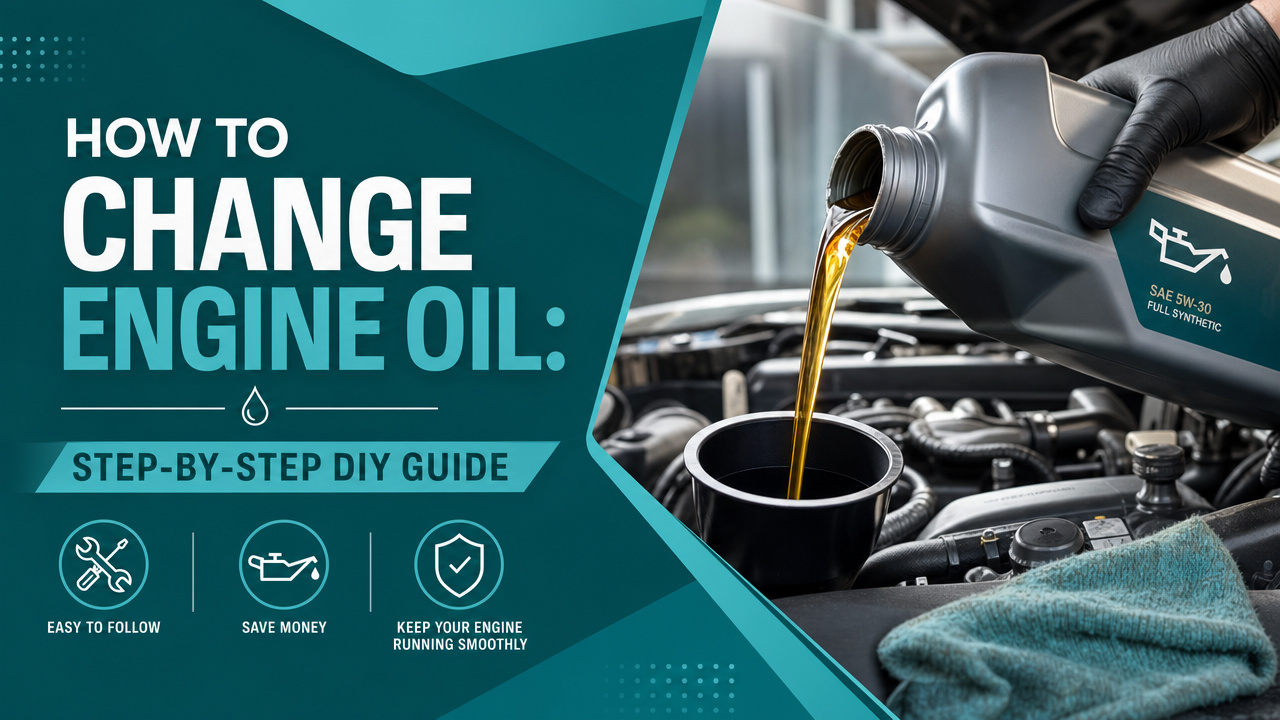
Lower the vehicle and open the hood. Remove the oil filler cap and insert a funnel. Pour in the recommended oil grade slowly, stopping just short of the full capacity.
Choose the right oil based on SAE viscosity grades like SAE 5W30, SAE 0W20, or SAE 10W40 as specified by your manufacturer. Full synthetic motor oil offers superior thermal stability, anti wear properties, and longer drain intervals.
Start the engine and let it idle for one minute, then shut it off. Wait five minutes and check the dipstick. Add small amounts as needed until the level reaches the upper mark.
Modern vehicles display an oil life percentage on the dashboard. After completing the oil change, perform a dashboard oil light reset to restart the monitoring system.
The reset procedure varies by make. Most vehicles require turning the ignition to the "on" position, pressing the accelerator three times, or navigating the trip computer menu. Consult your owner's manual for exact steps.
The oil change interval recommendation depends on driving habits, oil type, and engine design. Conventional mineral oil typically lasts 3,000 to 5,000 miles, while full synthetic oil can extend to 7,500 to 15,000 miles.
Severe driving conditions, including stop-and-go traffic, towing, dusty environments, and short trips, shorten the recommended interval. Under these conditions, synthetic oil change frequency should increase by 25 to 30 percent.
High mileage oil change schedules also depend on engine condition. Vehicles with over 75,000 miles benefit from high mileage formulations containing seal conditioners and anti rust and anti foam additives.
Modern oil life monitors calculate degradation using engine temperature, RPM, and driving patterns. Knowing what oil life percentage to change oil at helps maintain engine performance without wasting resources.
Follow these guidelines for oil life percentage:
Never wait until the indicator reaches zero. Premium passenger car motor oil PCMO loses its anti wear properties and oxidation stability once depleted, accelerating sludge buildup and friction wear.
Even experienced DIYers make errors that compromise engine protection. Avoid these common oil change mistakes to keep your engine running smoothly.
Using improper oil viscosity. Pouring in the wrong SAE grade affects cold-start lubrication and high-temperature protection. Always match the recommended engine oil specification in your manual.
Skipping the crush washer replacement. Reusing a flattened washer often causes slow drain plug leaks. Replace it every time for a reliable seal.
Overtightening the oil filter or drain bolt. Excess torque strips threads and damages gaskets. Use a torque wrench when possible to meet OEM approval standards.
Forgetting to check for oil leaks after change. Start the engine and inspect the filter and drain plug area for seepage. Address any drips immediately.
Ignoring oil recycling and disposal rules. Pouring used oil into drains or trash harms the environment. Take it to a certified recycling center.
Choosing low-quality oil. Bargain oils may lack API SP specifications, ACEA C3 standards, or Dexos approved formulations. Always pick API SN Plus or higher-rated products for proper engine protection.
Armor Lubricants specializes in manufacturing high quality engine oil for passenger cars, commercial fleet oil change applications, and heavy equipment engine oil needs. Our advanced formulations deliver improved fuel efficiency with synthetic technology, cleaning engine deposits and sludge while lowering engine operating temperatures.
Whether you need semi synthetic engine oil, high performance engine oil, or heavy duty engine oil, choosing premium Armor Lubricants ensures long drain intervals, fuel economy, and maximum engine protection mile after mile.