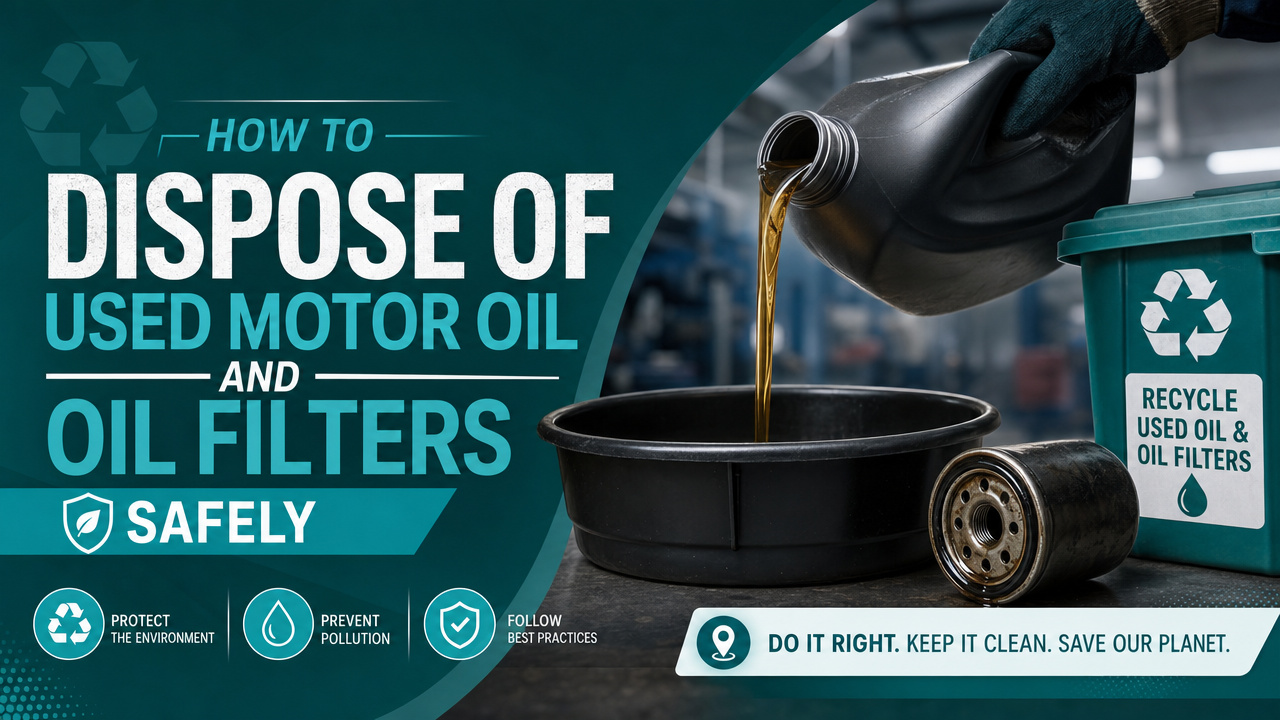
Used motor oil and filters are classified as hazardous waste under EPA regulations. Improper disposal contaminates groundwater, soil, and surface water. This guide covers the precise steps to safely dispose of engine oil, filters, rags, and absorbents from any passenger car, diesel, or fleet application.
Pouring used motor oil down the drain is illegal in most jurisdictions and environmentally destructive. A single gallon of waste oil can contaminate up to one million gallons of fresh water, making it a leading cause of groundwater contamination in residential areas.
Used engine oil contains heavy metals such as lead, cadmium, and zinc, along with combustion byproducts and toxic compounds. These pollutants resist treatment at municipal water plants and pass directly into rivers, aquifers, and soil.
Beyond water systems, soil pollution from motor oil destroys microbial activity and damages crops. Storm drains connect directly to waterways, so pouring oil onto pavement or into gutters carries the same legal and ecological consequences as dumping it inside.
Proper storage prevents leaks, contamination, and fire hazards before you transport the oil. Use a clean drain pan for oil changes, then transfer the fluid to a sealed container designed for petroleum products.
Follow these storage rules for waste oil collection:
Mixed waste oil is rejected by most recyclers. Do not combine brake fluid with used oil, and keep coolant separate. Cross-contamination forces the entire batch into expensive hazardous waste treatment rather than re-refining.
If you change synthetic, conventional, high mileage, or diesel oils, store each type separately when possible. While most recyclers accept blended used conventional and used full synthetic oil, separation improves processing yield.
Most communities offer multiple drop-off points within a short drive. Call ahead to confirm volume limits, container requirements, and accepted fluid types before transporting your oil.
National auto parts chains including AutoZone, O'Reilly, Advance Auto Parts, and NAPA accept used motor oil at no cost. Most locations take up to five gallons per visit and also collect used oil filters and transmission fluid.
Bring the oil in a sealed, leak-free container. Store associates will pour it into their bulk tank and return your empty jug. This is the fastest option for DIY oil changes on passenger cars and light trucks.
Municipal recycling centers and hazardous waste sites accept motor oil along with used gear oil, used transmission fluid, used hydraulic oil, and used grease. These facilities handle larger volumes than retail stores and often process industrial lubricants.
Check your county's hazardous waste collection event schedule for free drop-off days. These events also accept oil-soaked absorbents, used compressor oil, and disposal of used ISO VG 68 hydraulic oil from home shop equipment.
Quick-lube chains and independent service stations used oil drop off programs accept waste oil from customers, often free of charge. Jiffy Lube, Valvoline Instant Oil Change, and Firestone locations participate in established recycling networks.
Service stations typically accept up to five gallons of used SAE 5W30, 15W40, or synthetic oil. For heavy duty SAE 15W40 from commercial trucks or API CK-4 diesel oil, confirm acceptance with the location manager first.
Can you throw oil filters in the garbage? No. A used filter retains up to 10 ounces of residual oil and qualifies as hazardous waste in most states. California, Rhode Island, and several others prohibit landfill disposal entirely.
Drain the filter completely before disposal using this sequence:
Many recyclers and auto parts stores collect filters separately for crushing used oil filters for recycling. Crushed filters are processed to recover steel and remaining oil, supporting the circular economy for lubricants.
Oil-soaked rags, shop towels, cat litter for oil spills, and sawdust used for spilled motor oil are classified as petroleum-contaminated waste. They cannot go in regular trash and pose a spontaneous combustion risk if stored improperly.
Store used oil absorbents and rags in a sealed metal container with a tight lid until disposal. Keep the container outdoors, away from buildings, until you can transport it to a hazardous waste facility.
Most municipal hazardous waste programs accept oil spill absorbents during scheduled collection events. Commercial shops should contract with professional waste oil haulers who handle both bulk oil and contaminated solids on a regular pickup schedule.
For larger spills involving heavy equipment waste fluids or industrial lubricants, document the cleanup and use commercial-grade absorbents rated for petroleum. Bagged contaminated material requires manifested disposal under EPA regulations for used oil.
Recycled motor oil follows one of two main paths. The first is re-refining, where the oil is processed back into refined base oil suitable for new lubricant production. This process removes water, additives, and contaminants.
Re-refined motor oil meets the same API SP and OEM approval maintenance requirements as virgin base oil. Major manufacturers blend re-refined stock into new passenger car motor oil, heavy duty diesel oil, and premium engine oil without performance loss.
The second path converts used oil into industrial fuel. Recycled motor oil as fuel powers cement kilns, asphalt plants, and industrial boilers after filtering and dewatering. This route is common for heavily contaminated batches that cannot be re-refined economically.
Re-refining a gallon of used oil produces roughly two and a half quarts of base oil, compared to the 42 gallons of crude needed for the same yield. This efficiency drives commercial fleet used oil recycling programs and agricultural equipment oil recycling across North America.
By recycling your used motor oil and filters through proper channels, you support base oil processing, reduce demand for new crude, and prevent toxic compounds from reaching the environment. Whether you handle a single oil change or manage industrial waste oil disposal, the right disposal method protects both your community and the resources that produce tomorrow's lubricants.