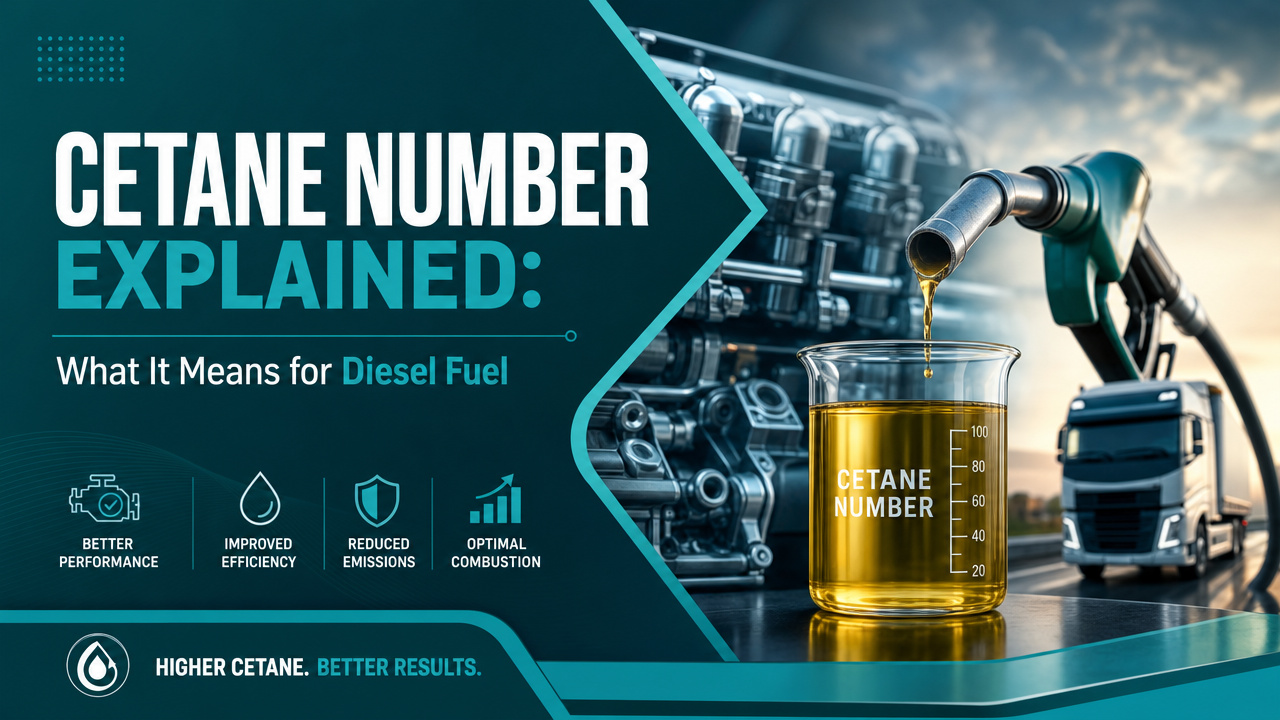
Cetane is a hydrocarbon (n-hexadecane) used as the reference standard for measuring diesel ignition quality. The cetane number indicates how quickly diesel fuel ignites after injection into a compression ignition engine. Higher values mean shorter ignition delay and smoother combustion.
The cetane meaning is straightforward. It quantifies how readily fuel auto-ignites under heat and pressure. Unlike gasoline, diesel relies on compression heat rather than a spark, making cetane in diesel fuel a critical performance metric.
When operators ask what cetane does, the answer is simple. It controls combustion timing, idle quality, and exhaust smoke. Low cetane fuel produces unburned hydrocarbons, harsh diesel knock, and increased engine deposits.
The cetane rating is determined using ASTM D613, the standard test method run on a single-cylinder CFR engine. Test fuel is compared against reference blends of cetane (rated 100) and heptamethylnonane (rated 15) to find an ignition delay match.
A faster, calculated alternative is the cetane index, derived from fuel density and distillation curves per ASTM D976 or D4737. The index estimates ignition quality but does not account for cetane improver additives blended into finished diesel.
Refiners and fleet labs rely on both methods. ASTM D613 remains the benchmark for diesel fuel ignition quality testing, while the cetane index supports routine quality control without engine testing.
Minimum cetane requirements vary by region. The differences directly affect cold start performance, emissions, and combustion efficiency across heavy duty diesel fleets, agricultural diesel equipment, and marine diesel engines.
The US vs EU diesel cetane gap exists because European emissions standards demand cleaner combustion. Premium diesel cetane levels in North America close that gap for commercial fleet diesel operators seeking better fuel economy and reduced exhaust smoke.
Cetane levels directly impact cold cranking behavior. Higher cetane shortens ignition delay, allowing the fuel to ignite reliably at lower compression temperatures. This is critical for cold start performance in winter diesel applications and standby power generation diesel engines.
During combustion, high cetane fuel burns progressively rather than detonating. This reduces diesel knock, lowers exhaust gas temperatures, and improves idle quality. The result is better combustion efficiency and fewer unburned hydrocarbons reaching the DPF.
Low cetane fuel causes the opposite. Excess ignition delay leads to fuel accumulation in the cylinder, followed by rough combustion, oil dilution, soot loading, and accelerated engine deposits on injectors and pistons.
For heavy construction equipment and agricultural diesel machinery operating in variable conditions, consistent cetane value supports stable thermal stability, cleaner DPF regeneration, and protection of high pressure fuel injection systems.
The cetane vs octane difference comes down to ignition behavior. Octane measures a gasoline fuel's resistance to auto-ignition. Cetane measures a diesel fuel's willingness to auto-ignite. They are functionally opposite ratings for opposite engine types.
A high octane gasoline resists premature detonation in spark-ignition engines. A high cetane diesel ignites quickly under compression. Using a high octane fuel in a diesel engine would cause poor combustion, while high cetane fuel in a gasoline engine would cause knock.
Both ratings exist on different scales and cannot be cross-converted. The cetane rating scale typically runs from 30 to 65 for commercial fuels, while octane ratings range from 87 to 100+ for pump gasoline.
A cetane booster additive, typically 2-ethylhexyl nitrate (2-EHN), raises ignition quality by 3 to 7 points depending on dosage and base fuel chemistry. These cetane improvers are blended at the refinery or added by end users as diesel fuel additives.
Cetane boosters deliver measurable value in specific situations:
If your fuel already meets 50+ cetane, additional boosters offer diminishing returns. Fleet maintenance budgets are better spent on quality base fuel and the right diesel engine oil rather than continuous additive dosing.
Cetane controls combustion. Lubrication controls everything else. High cetane fuel reduces soot generation, but heavy duty engine oil still carries the load for engine wear protection, friction reduction, and sludge prevention across long drain intervals.
For modern compression ignition engines, API CK-4 certified oils in SAE 15W40 deliver proven performance for commercial fleet vehicles. SAE 5W40 full synthetic diesel oil offers superior cold cranking flow for winter starts and extended drain heavy duty lubricants applications.
ACEA E9 commercial vehicle engine oil supports DPF-equipped trucks with low SAPS chemistry for soot control and emissions system protection. Choose the right oil based on OEM viscosity grade requirements, duty cycle, and fuel quality.
Armor Lubricants formulates premium high performance diesel lubricants engineered for fuel efficiency, anti-wear protection, and oxidation stability. Matching the recommended oil to your fuel's cetane value protects fuel injectors, high pressure pumps, and turbochargers across the full service interval.
Cetane number is one variable in a complete diesel performance equation. Combined with the right lubricant, proper viscosity grade, and disciplined fleet maintenance, it delivers cleaner combustion, lower emissions, and longer equipment life across every diesel application.