Synthetic motor oil is a chemically engineered lubricant produced through controlled processes rather than direct crude oil refining. Unlike conventional motor oil, synthetic engine oil consists of uniform molecules designed for specific performance targets, delivering superior engine protection across extreme temperatures and high RPM conditions.
The definition of synthetic oil extends beyond marketing claims. A true synthetic lubricant uses Group III, Group IV, or Group V base stocks combined with custom additive packages. This molecular structure provides higher viscosity index, better oxidation stability, and stronger shear stability than mineral oil.
Synthetic oil composition matters because each base stock category delivers distinct properties. Fully synthetic motor oil maintains chemical stability under thermal stress, resists sludge buildup, and supports long drain intervals. These traits make it the recommended oil for modern engines built to tighter clearances.
What is synthetic oil made from? The answer depends on the base oil group used during synthetic oil manufacturing. The API classifies base oils into five groups, with Groups III, IV, and V forming the foundation of synthetic engine oil.
The benefits of Group IV PAO include uniform molecular structure, low pour point, and resistance to oxidation. Synthetic base stock manufacturing using esters adds polarity that improves wear protection and friction reduction in high performance synthetic automotive lubricants.
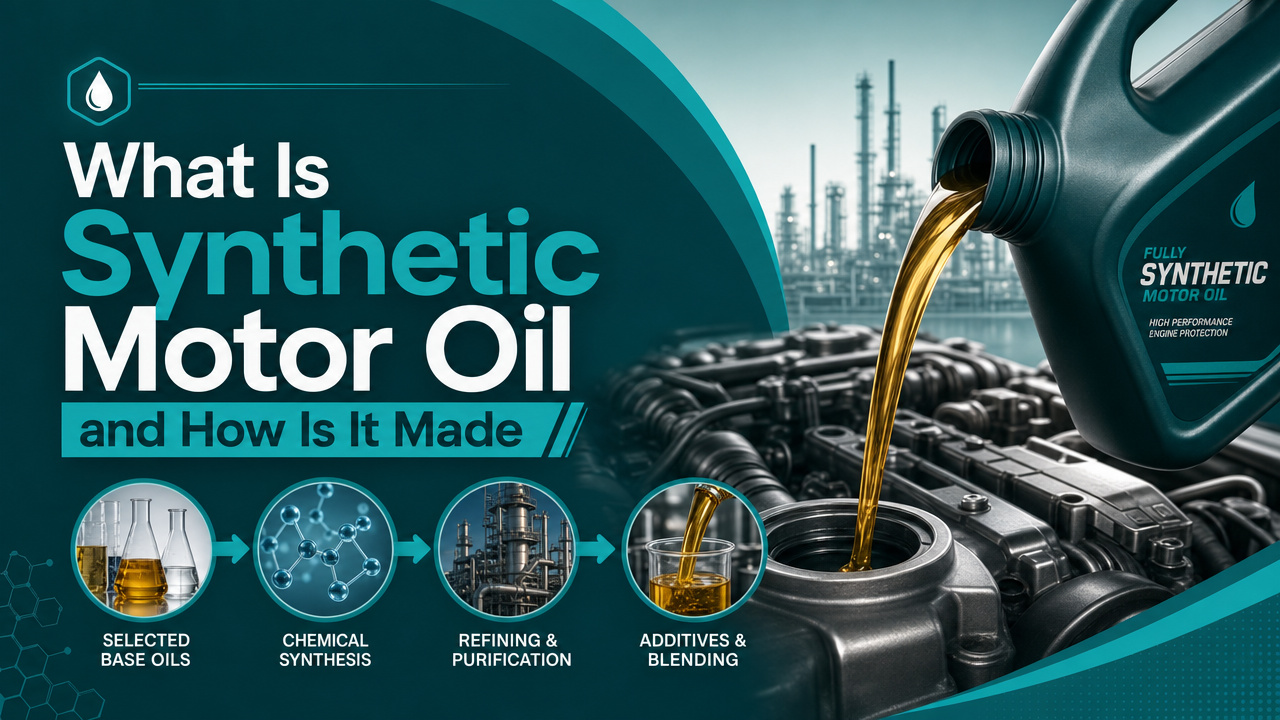
How is synthetic oil made? The synthetic oil manufacturing process combines petroleum conversion, chemical synthesis, and precision blending. Each step controls the molecular structure to eliminate impurities found in conventional motor oil and produce a predictable lubricant.
Manufacturing synthetic oil involves three core stages: base stock creation through PAO synthesis or hydroprocessing, refinement through hydrocracking and hydroisomerization, and final additive package blending. Each stage targets specific performance benchmarks like SAE viscosity grade, API SP specification, and ACEA C3 compliance.
PAO synthesis starts with ethylene gas derived from natural gas or petroleum. Ethylene is polymerized into decene, which is then oligomerized using a catalyst to form polyalphaolefin molecules of controlled chain length.
The resulting PAO fluid undergoes hydrogenation to saturate any remaining double bonds. This creates a stable, wax-free base oil with excellent extreme temperature performance, making it the preferred choice for premium synthetic formulations like full synthetic 5W40 and SAE 0W20 full synthetic grades.
Hydrocracking is a refining process where high-pressure hydrogen and catalysts break down heavy crude oil molecules. This step removes sulfur, nitrogen, and aromatic impurities while producing cleaner hydrocarbons suitable for Group III base oil.
Hydroisomerization follows hydrocracking by reshaping wax molecules into branched isoparaffins. This step lowers the pour point and raises the viscosity index, giving hydrocracked base oil group III performance close to PAO at a lower production cost.
Additive package blending is the final stage where custom additive packages combine with the base oil. These packages deliver the performance characteristics that distinguish a synthetic passenger car oil from a heavy duty diesel synthetic oil.
The blending occurs in heated, agitated vessels where temperature and shear are controlled to ensure complete additive solubility. Quality control tests verify viscosity, total base number, pour point, and flash point before packaging.
Full synthetic vs synthetic blend comes down to base oil composition. Full synthetic oil uses 100 percent Group III, IV, or V base stocks. Semi synthetic oil, also called synthetic blend, mixes synthetic base oils with Group I or Group II mineral oil.
Synthetic vs conventional oil shows even greater differences. Conventional motor oil contains natural impurities, waxes, and unstable molecules from crude oil refining. Mineral oil vs synthetic comparisons reveal lower viscosity index, faster oxidation, and shorter drain intervals for conventional products.
Synthetic vs mineral oil viscosity behavior differs sharply in cold weather. Synthetic engine oil flows at temperatures where conventional oil thickens, protecting turbochargers and bearings during cold start.
The performance benefits of synthetic oil justify its higher cost for most modern applications. Premium motor oil for passenger cars and heavy equipment lubrication share the same fundamental advantages rooted in uniform molecular structure and engineered additive systems.
Heavy duty synthetic oil meeting API CK-4 synthetic standards protects diesel engine oil applications in fleet operations. Industrial synthetic lubricants extend equipment life in gearboxes, compressors, and hydraulic systems where conventional fluids fail.
For gasoline engine oil applications, synthetic formulations support direct injection, variable valve timing, and stop-start systems. These technologies demand consistent lubrication, stable viscosity, and rapid oil flow at startup.
Is synthetic oil always the right choice? No. Despite its advantages, synthetic engine oil presents disadvantages in specific scenarios where conventional or synthetic blend products perform better or offer equal value at lower cost.
Engines with worn seals or high mileage may experience minor leaks when switched to full synthetic oil. The smaller, more uniform molecules pass through gaps that conventional oil bridged. Best oil for high mileage applications often uses high-mileage synthetic blends with seal conditioners.
Break-in periods for new or rebuilt engines typically require conventional oil. The slight abrasiveness helps piston rings seat properly against cylinder walls. Switching to fully synthetic motor oil too early can extend break-in unnecessarily.
Choosing the right lubricant requires matching SAE viscosity grade, API engine oil category, and ACEA specifications to the engine. Oil grade recommendations in the owner manual override general assumptions about synthetic superiority.
Armor Lubricants manufactures premium synthetic motor oil, synthetic transmission fluids, gear oil and greases for passenger cars, commercial vehicle oil applications, and fleet engine oil programs. As a synthetic lubricant manufacturer serving global markets, Armor delivers OEM approved formulations engineered for extreme weather synthetic engine oil performance and heavy duty diesel synthetic oil requirements.