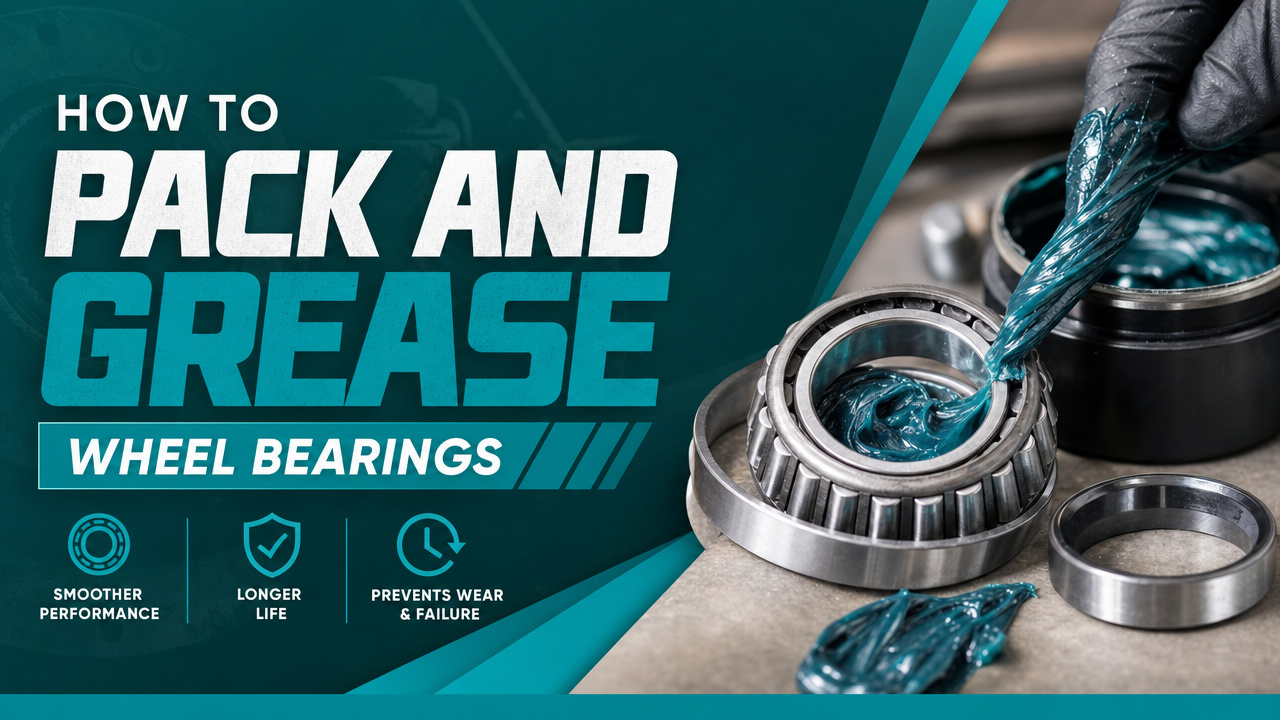
Properly packed wheel bearings reduce friction, prevent premature wear, and extend hub life across automotive, trailer, and heavy equipment applications. This guide covers the full process from inspection to torque, with direct steps for hand packing, packer use, and marine-grade trailer service.
Repack wheel bearings every 12,000 miles for automotive use, or annually for trailers that see regular road time. Boat trailer bearings need service after every salt water submersion or at minimum twice per season to prevent corrosion damage.
Watch for signs of degraded wheel bearing grease, including dark discoloration, gritty texture, milky appearance from water intrusion, or a burnt odor. These indicate contaminated grease, loss of thermal stability, or oxidation breakdown.
How to tell if wheel bearings need grease? Listen for humming, growling, or grinding noises that change with vehicle speed. Excessive hub heat after a short drive, wheel play when rocked at 12 and 6 o'clock, or visible grease seepage all signal immediate service.
Gather your tools to grease wheel bearings before lifting the vehicle. Working with the right setup prevents contamination and saves time during reassembly.
Choose the right grease for the application. NLGI 2 lithium complex grease with a GC-LB specification handles most automotive and trailer service. For boat trailers, select waterproof marine grease formulated with corrosion inhibitors and high water washout resistance.
Synthetic wheel bearing grease benefits include better oxidation stability, wider operating range, and longer bearing life under extreme pressure conditions. Compare synthetic vs mineral grease based on load, speed, and temperature exposure.
Chock the opposite wheels, loosen lug nuts, and lift the axle onto jack stands. Remove the wheel to expose the hub assembly.
Pry off the dust cap with channel locks or a flat blade. Straighten and pull the cotter pin, then remove the spindle nut and washer. Slide the hub outward slightly to release the outer bearing, then catch it as it slips off the spindle.
Pull the hub fully off the spindle. Flip it over and pry out the rear grease seal to access the inner bearing. Inspect each bearing cage, rollers, and races for pitting, bluing, or spalling. Replace any component showing damage, since worn parts cause bearing failure under load.
Cleaning wheel bearings before packing is critical. Fresh grease cannot perform if it sits on contaminated grease, abrasive particles, or moisture.
Soak bearings in a parts cleaner or degreaser solvent. Rotate each bearing gently while submerged to flush grease from between the rollers and cage. Never spin a dry bearing with compressed air, since this can score the rollers and cause instant failure.
Wipe the bearing races inside the hub with a clean rag. Inspect for scoring, heat marks, or pitting. Dry bearings thoroughly with low-pressure air or pat with a lint-free cloth. Lay them on a clean surface before applying fresh grease.
Mixing different types of base grease causes thickener incompatibility, which can break down consistency and cause bearing failure. Always remove every trace of old product before switching brands or formulations.
Hand packing wheel bearings gives you direct feedback on coverage and is the standard method when no packer tool is available. Place a golf-ball sized scoop of grease in your palm.
Press the wide end of the bearing into the grease pile at a 45 degree angle. Push firmly so grease forces through the rollers and exits the top of the cage. Rotate the bearing slightly and repeat until grease emerges from every roller gap.
Coat the outer surface of the bearing and cage with a light film. How much grease to pack in a wheel bearing depends on the cavity, but the bearing itself must be fully saturated from the inside out. Fill roughly one third to one half of the hub cavity, not the entire space, since excess grease causes churning, heat buildup, and seal damage.
A wheel bearing packer tool forces grease through the rollers under pressure and produces consistent coverage with less mess. Load the packer base with fresh grease, place the bearing on the cone, and clamp the top cover.
Connect a grease gun to the packer fitting and pump until grease pushes up through every roller. Continue a few extra strokes to flush any trapped air or residual contamination from the cage.
Packing bearings by hand vs packer comes down to preference and volume. Packers work faster for fleet service and trailer shops, while hand packing offers tactile confirmation that grease has fully penetrated the bearing cage.
Apply a thin layer of grease to the spindle for proper spindle lubrication. Install a new grease seal by tapping it evenly into the hub bore until flush. Slide the hub onto the spindle and seat the inner bearing.
Drop the outer bearing into place, followed by the washer and spindle nut. Tighten the nut while spinning the hub to seat the bearings against the races.
For unitized or sealed hub assemblies, follow OEM torque specs for front wheel bearings, which often range from 150 to 250 ft-lbs depending on the platform. Reinstall the wheel and torque lug nuts in a star pattern.
Boat trailer bearings face constant exposure to water, salt, and rapid temperature shifts when hot hubs hit cold lake or sea water. Use marine grease with proven water washout resistance, high drop point, and active corrosion inhibitors to protect bearings from salt water intrusion.
Marine grease vs regular grease is not interchangeable for submerged service. Standard automotive wheel bearing grease lacks the anti corrosion additives and water resistance needed for boat trailer hubs. Always select grease specifically rated for marine use.
Bearing Buddy or similar spring-loaded caps maintain positive internal pressure that blocks water entry. Pump fresh grease into the fitting until the piston moves out, never overfill, since excess pressure blows out rear seals.
Utility trailer wheel bearings on enclosed cargo, equipment haulers, and agricultural machinery wheel bearings need annual inspection at minimum. Heavy load cycles, high speeds, and dust exposure accelerate grease degradation. A utility trailer bearing maintenance schedule should align with annual mileage and operating environment.
Before any long haul, spin each hub by hand and check temperature after the first 20 miles. A hub that runs noticeably hotter than its mate signals improper preload, contaminated grease, or early bearing failure. Catching these signs early prevents roadside breakdowns and protects your axle, brakes, and cargo.
Armor Lubricants manufactures heavy duty bearing grease, premium extreme pressure formulations, and marine wheel bearing grease engineered for automotive, commercial fleet, and trailer applications. Choosing OEM approved bearing grease with the right NLGI grade, base oil viscosity, and additive package delivers long life bearing grease performance across every operating condition.