

Managing heavy machinery requires precise fluid selection to maintain optimal efficiency. Operators often face confusion when choosing between STOU and UTTO fluids for their equipment. Selecting the incorrect product causes severe damage to critical internal mechanisms.
Agricultural machinery relies on robust hydraulic fluids to operate heavy attachments. Both UTTO and STOU oils provide reliable protection for complex transmission systems. However, their specific application parameters differ significantly based on the tractor design.
Choosing the right oil ensures your farm vehicle operates smoothly under extreme pressure. We will explore the exact property differences between these two universal tractor fluids. Proper lubrication extends the overall lifespan of your expensive agricultural investments.
STOU and UTTO represent the two main categories of multifunctional agricultural lubricants. Manufacturers design these fluids to simplify maintenance across a wide range of machinery. Using one product for multiple systems heavily reduces inventory costs on the farm.
These specialized tractor fluids streamline daily servicing routines for busy fleet managers. You no longer need to purchase gear oil and hydraulic fluid separately. This unified approach eliminates the dangerous risk of mechanics mixing incompatible fluid types.
Both fluids contain a highly specialized additive package tailored for heavy-duty work. They protect against intense friction while maintaining a stable fluid film under heavy loads. Proper application directly improves the durability of modern agricultural and commercial equipment.
What does STOU mean in oil terminology? STOU stands for Super Tractor Oil Universal. This lubricant acts as a single oil for several different mechanical compartments. It successfully lubricates the main engine alongside the transmission and hydraulic setups.
STOU oils contain specific detergents required for internal combustion engines. These additives actively manage combustion byproducts and prevent harmful engine sludge. Because it is used in engines, STOU carries strict API motor oil ratings for proper engine protection.
This true universal fluid provides maximum versatility for older agricultural machinery. Farmers appreciate the simplicity of pouring one liquid into every fill port. Finding the right engine oil can save thousands of dirhams in engine repair bills.
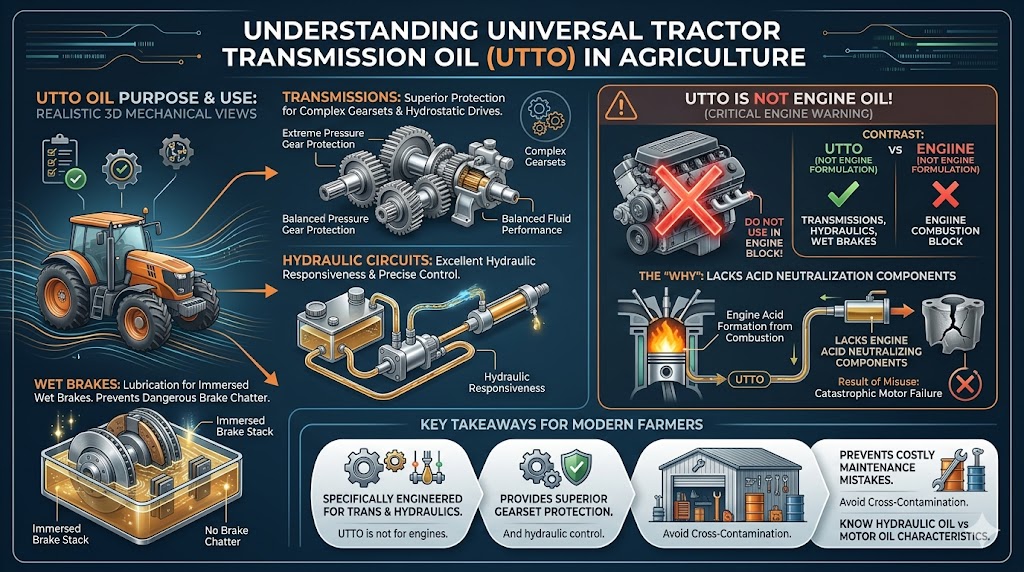
What is UTTO oil used for across modern farm equipment? UTTO means Universal Tractor Transmission Oil. This fluid focuses exclusively on the transmission and hydraulic circuits. It also precisely lubricates immersed wet brakes without causing dangerous brake chatter.
Unlike STOU, a universal tractor transmission oil cannot operate inside the engine block. UTTO entirely lacks the necessary chemical formulation to neutralize harsh combustion acids. Using this fluid in an engine will quickly lead to catastrophic motor failure.
UTTO delivers superior protection for complex gearsets and hydrostatic drives. The specialized formulation perfectly balances hydraulic responsiveness with extreme pressure gear protection. Knowing hydraulic oil vs motor oil characteristics prevents costly cross-contamination mistakes in your maintenance shop.
What is the difference between UTTO and STOU oil formulations? The fundamental difference lies entirely in engine oil capabilities. STOU safely lubricates the motor, while UTTO is strictly for the back end and heavy transmission systems.
STOU's formulation includes robust dispersants to handle heavy diesel soot. UTTO focuses its additive chemistry strictly on gear wear and precise hydraulic control. Mixing up these specific fluid categories guarantees rapid mechanical degradation and severe operational downtime.
Many modern tractor manufacturers now prefer the separated UTTO approach. Advanced low-emission engines require highly specific motor oil grades that STOU cannot meet. Therefore, mechanics utilize UTTO for the transmission and a dedicated motor oil separately.
Motor oil must survive extreme heat generated by internal combustion. STOU incorporates high-temperature antioxidants to remain stable under these harsh engine conditions. This specialized chemistry prevents the lubricant from breaking down and forming hard carbon deposits.
UTTO prioritizes sheer stability to protect gears from violent mechanical forces. The transmission fluid must not thin out when crushed between heavy steel gear teeth. Choosing the right tractor transmission fluid ensures your gearbox transfers power efficiently.
Operating parameters dictate the exact chemical requirements of each lubricant category. An engine oil deals with soot, while a hydraulic fluid manages immense pressure. Recognizing these differing physical demands clarifies why modern tractors often split these fluids.
UTTO and STOU oils feature drastically different friction modifiers. UTTO provides the exact friction coefficient needed for modern wet brakes and clutches. STOU balances these needs with the entirely different frictional requirements of engine bearings and internal seals.
The additive package inside UTTO strongly prevents foaming in hydraulic lines. Foaming causes spongy implement controls and severe cavitation inside hydraulic pumps. STOU also contains anti-foaming agents, but UTTO delivers superior targeted hydraulic performance for extreme lifting tasks.
Selecting the proper chemical blend protects sensitive internal seals and gaskets. Incompatible additives can cause these rubber seals to shrink, harden, or leak severely. Reviewing the stou utto specifications on the drum ensures complete chemical compatibility.
Choosing the right oil requires matching the fluid directly to OEM specifications. Every major agricultural equipment manufacturer publishes specific fluid standards for their machines. Never guess which fluid type your expensive tractor requires for safe daily operation.
Always consult the primary service manual before purchasing bulk tractor fluids. The manual clearly dictates whether the vehicle needs STOU or UTTO fluids. Strict adherence to these published guidelines keeps your factory warranty fully intact and operational.
Operating conditions also heavily influence your final lubricant selection. Tractors working in freezing environments require a lower SAE viscosity grade. Using a comprehensive motor oil guide helps fleet managers navigate varying seasonal temperature requirements accurately.
Poor quality tractor oil breaks down rapidly and generates harmful sludge. This thick sludge completely clogs hydraulic filters and severely restricts fluid flow. Restricted oil flow starves the main pump and causes rapid mechanical destruction inside the system.
Using a premium STOU and UTTO fluid heavily combats deposit formation. High-quality base oils combined with strong detergents keep the internal systems perfectly clean. Clean metal surfaces directly ensure maximum efficiency and significantly lower daily operating temperatures.
Establishing strict routine maintenance intervals prevents sludge from ever forming. Mechanics must change the hydraulic fluid and replace filters exactly on schedule. Following solid steps to maintaining internal combustion engines dramatically extends equipment lifespan and overall reliability.
A reliable hydraulic system demands a fluid that resists severe oxidation. Oxidation thickens the lubricant and aggressively attacks internal yellow metal components. Choosing highly stable hydraulic fluids prevents this dangerous chemical reaction entirely during heavy farming operations.
Heavy agricultural attachments require consistent and immense hydraulic pressure to function. The fluid must accurately transfer mechanical force without compressing under the load. Inferior fluids compress slightly, resulting in sluggish and incredibly imprecise heavy implement movements.
Finding the optimal fluid viscosity ensures immediate system responsiveness. Thick oil causes pump cavitation during cold morning startups in the winter. Reading about choosing suitable hydraulic oil helps operators maintain smooth and powerful lifting capabilities year-round.
Operators frequently ask if they can mix STOU and UTTO oils safely. You should never deliberately mix these two distinct fluid categories inside a machine. Blending them ruins the carefully balanced chemical properties of both specific products immediately.
Mixing fluids leads to severe additive clash and unpredictable performance drops. The engine detergents in STOU can negatively react with the friction modifiers in UTTO. This chemical conflict directly causes erratic wet brake engagement and constant transmission slippage.
If accidental mixing occurs, you must drain the entire system immediately. Flush the contaminated reservoir completely before refilling it with the correct specified fluid. Understanding mixing hydraulic oils safety guide protocols prevents catastrophic equipment failures on the farm.
Each fluid type serves a highly specific mechanical purpose within the tractor. STOU protects the motor, while UTTO focuses heavily on gears and hydraulics. Applying the wrong fluid instantly compromises the long-term durability of these critical internal components.
Operating a modern tractor with compromised fluid accelerates internal metal wear drastically. The protective oil film breaks down, allowing gear teeth to grind directly together. This severe metal-to-metal contact generates intense heat and ruins expensive hardware very quickly.
Consistent use of pure, unmixed fluids guarantees optimal performance in the field. Fleet managers must implement strict fluid handling protocols to avoid any cross-contamination. Proper handling lubricants and oils training keeps your machinery running reliably without sudden breakdowns.
Every reputable tractor fluid displays specific OEM approval codes on the label. Look for industry-standard spec numbers like John Deere J20C or Ford M1135. These exact codes prove the fluid meets the strict operational demands of the manufacturer.
Major brands like New Holland establish incredibly tough baseline testing parameters. A fluid must successfully pass rigorous extreme-pressure bench tests to earn these approvals. Choosing certified products guarantees your tractor will operate at its absolute maximum efficiency level.
Utilizing non-approved lubricants instantly voids your expensive factory equipment warranties. If a gearbox fails, the dealership will test the fluid for proper chemical composition. Learning about oem approved lubricants supplier benefits protects your valuable agricultural assets from rejected claims.
Wet brakes sit fully submerged inside the common rear axle fluid reservoir. The tractor oil must cool the brake discs while providing enough physical grip. Balancing this delicate friction requirement remains the primary function of premium UTTO products.
If the fluid lacks proper friction modifiers, the brakes will chatter violently. This loud grinding noise clearly indicates the brake material is slipping and wearing rapidly. A high-quality fluid ensures the vehicle stops smoothly and quietly every single time.
Hydraulic systems share this exact same fluid to lift heavy implements consistently. The oil must travel from the rear reservoir to the front loader seamlessly. Reviewing the top 5 causes of hydraulic system failure highlights why excellent fluid quality matters.
Brakes and clutches generate massive amounts of internal heat during engagement. The universal fluid circulates rapidly to absorb and dissipate this destructive thermal energy. Cooler operating temperatures directly prevent the clutch plates from warping or cracking under severe pressure.
The fluid formulation creates a protective sacrificial layer over the friction material. This microscopic barrier prevents the harsh glazing effect that ruins wet brake performance. Choosing the right product heavily extends the service life of these critical internal components.
Properly formulated fluids maintain their frictional properties over thousands of operating hours. As the oil ages, inferior products lose their ability to grip the clutches. Knowing how brake lubricant enhances performance ensures you maintain completely safe stopping power always.
What hydraulic oil is compatible with Kubota machinery? Kubota requires specialized fluids that meet their incredibly strict internal performance standards. Many premium UTTO products proudly list Kubota UDT or Super UDT2 compatibility directly on their detailed specification sheets.
These compatible fluids provide the exact hydraulic responsiveness required by Kubota hydrostatic transmissions. They prevent sluggish performance during extreme cold morning starts in winter conditions. The fluid must maintain stable pressure to ensure perfectly smooth tractor operation and control.
Using a high-quality aftermarket fluid saves money without sacrificing critical equipment protection. Always verify the Kubota specification is clearly printed directly on the product label. Implementing a reliable lubricant quality control process guarantees you use appropriate fluids safely and effectively.
Managing farm machinery requires a highly organized and disciplined lubrication strategy. Consolidating your fluid inventory with STOU or UTTO greatly simplifies the maintenance process. This approach saves valuable time when servicing multiple machines during peak planting and harvesting seasons.
Fleet managers must clearly label storage drums to prevent accidental fluid mix-ups. Applying STOU to an advanced low-emission engine can instantly ruin the exhaust aftertreatment system. Precision and accuracy in fluid application prevent catastrophic mechanical failures in the field.
Proper storage techniques keep dirt and moisture from contaminating your bulk lubricants. Always store drums horizontally to prevent water from pooling on the top lids. Following professional machinery lubricants storage tips protects the chemical integrity of your valuable bulk oils.
Modern agricultural operations utilize an incredibly wide range of highly specialized machinery. From combine harvesters to small utility tractors, each machine requires precise lubrication. STOU and UTTO oils provide the massive versatility needed to manage diverse fleets effectively.
Consolidating your lubricants heavily reduces the chance of applying the incorrect product. When mechanics only have one or two universal fluids, operational mistakes plummet drastically. This simplified maintenance approach directly improves the overall reliability of the entire farming operation.
Selecting versatile products lowers your overall operational overhead and regular purchasing costs. Buying universal fluids in bulk quantities provides significant financial discounts from lubricant suppliers. Reading guidelines for purchasing lubricant oil ensures you maximize your maintenance budget efficiently.
The ultimate goal of any maintenance program is extending the equipment lifespan. Using the correctly specified tractor oil acts as an impenetrable shield against severe wear. It protects the gearbox from shearing forces and the motor from acidic corrosion.
Routine fluid analysis helps operators clearly monitor the internal health of their machines. By checking the oil, you can quickly detect microscopic metal shavings from failing gears. Catching these early warning signs prevents sudden and incredibly expensive catastrophic machinery breakdowns.
Consistently applying premium lubricants remains the most cost-effective machinery insurance available. Spending slightly more on high-quality STOU or UTTO prevents massive future repair bills. Proper machinery lubrication practices absolutely guarantee your agricultural equipment works harder and lasts much longer.