
Choosing the correct grade of oil dictates engine longevity and overall powertrain performance. The primary distinction between 10w-30 vs 15w-40 lies in their specific viscosity rating. Both are multigrade engine oils designed meticulously for fluctuating daily operating conditions.
The first number indicates the oil viscosity during a cold start. The "W" stands for winter. A 10w formulation flows significantly faster in colder temperatures than a heavier 15w, reaching critical valvetrain components swiftly.
The second number represents the precise viscosity rating at standard operating temperature. A 40 weight oil maintains a consistently thicker film strength than a 30 weight oil when the engine runs incredibly hot under mechanical stress.
Many newer engines specify thinner oils to maximize long-term fuel economy. Conversely, older heavy-duty diesel engines frequently require a thicker oil to ensure excellent protection under heavy loads and extreme internal cylinder pressure.
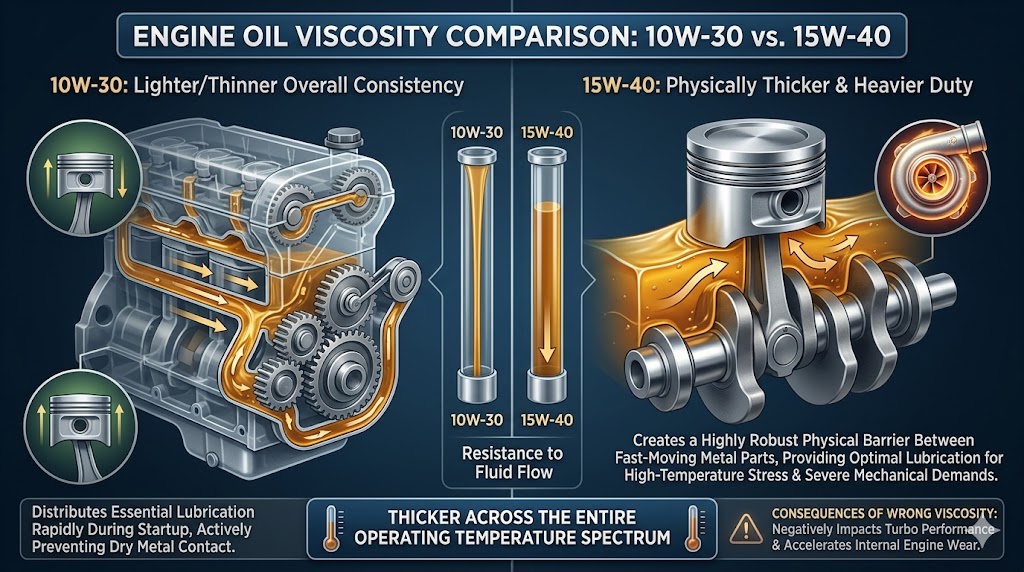
A 15w40 oil is physically thicker than a 10w30 oil across the entire operating temperature spectrum. The higher numbers in the 15w-40 specification clearly indicate a significantly greater resistance to fluid flow and mechanical shear.
This thicker formulation consistently creates a highly robust physical barrier between fast-moving internal metal parts. It effectively provides optimal lubrication for crucial components subjected to high-temperature stress, heavy friction, and severe mechanical demands daily.
Conversely, 10w30 is widely considered a much lighter oil. This thinner overall consistency allows the mechanical oil pump to distribute essential lubrication much more rapidly during the initial engine startup, actively preventing dry metal contact.
Choosing the wrong thickness can negatively impact turbo performance and accelerate internal engine wear. To dive deeper into these specific grades, review this detailed comparison on 15w40 vs 10w30 oil for diesel engines.
Cold climates demand highly specific lubrication strategies to prevent damaging cylinder scuffing and premature bearing wear. In freezing winter conditions, a 10w-30 diesel oil drastically outperforms a 15w-40 due to its much lower cold-cranking viscosity limit.
When you turn the ignition key in winter, the oil pump must immediately push fluid through incredibly tight engine clearances. The thinner 10w30 consistently reaches the upper valvetrain much faster than a thick, sluggish 15w-40 formulation.
Delayed internal lubrication directly causes premature wear on critical engine components over time. Using a lighter oil actively mitigates this severe mechanical risk and ensures much smoother engine operation during frigid morning cold starts.
For heavy-duty operators working in northern climates, this cold-weather pumping capability is absolutely vital. Discovering the right viscosity balance prevents costly downtime. Learn how to choose the best oil for cold weather.
Many professional fleet operators consistently report sluggish starting and noticeably increased engine noise when running 15w-40 below 32 degrees Fahrenheit. The thicker oil aggressively resists flowing through the primary pickup tube efficiently.
Some proactive truck owners install a reliable block heater to effectively mitigate this specific temperature issue. Plugging the truck in overnight keeps the oil warm enough to flow properly, even with a heavier 15w-40 grade.
However, if your commercial truck sits outside without a functional block plug, switching to a 10w-30 or a 5w-40 synthetic is highly recommended by most major manufacturers for surviving harsh winter months safely.
Upgrading your seasonal maintenance routine actively prevents these severe cold temperature flow issues. Consider learning more about the best time to change engine oil before harsh winter weather finally arrives.
Substituting 15w40 for 10w30 depends entirely on your specific diesel engine design and typical daily operating environment. Always consult your official owner's manual before altering the recommended engine oil grade or specific chemical formulation.
Modern diesel engines designed specifically for 10w-30 frequently rely on exceptionally tight internal bearing clearances. Forcing a thicker 15w-40 into these narrow spaces can aggressively restrict oil flow, elevate engine temperatures, and trigger dashboard warnings.
However, if your detailed manual lists 15w-40 as an officially acceptable alternative for high-temperature towing applications, it is perfectly safe to make the switch without risking sudden mechanical damage or voiding your powertrain warranty.
Finding the correct fluid specification ensures your expensive powertrain remains thoroughly protected. Read more on choosing suitable hydraulic oil and compatible engine lubricants for managing mixed commercial vehicle fleets.
Many confused owners actively ask if they are fine running 15w-40 all year round despite manual warnings for colder climates. The factual answer depends strictly on your local geographic climate extremes and daily driving habits.
If your local winters rarely drop below freezing temperatures, a premium quality 15w-40 provides excellent physical protection year-round. It consistently maintains strong film strength for hauling heavy loads during scorching hot summer months.
If you regularly experience harsh freezing winters, sticking with a single thick grade all year risks severe cold start damage. In such demanding cases, switching your oil viscosity seasonally remains the most optimal mechanical approach.
Managing seasonal vehicle oil changes is a critical staple of proper commercial fleet maintenance. Review this comprehensive technical guide on engine lubrication for fleet owners vehicles to optimize your service intervals.
Heavy-duty commercial diesel engines naturally generate immense rotational torque and extreme internal heat. Hauling heavy payload weights up steep highway grades rapidly pushes conventional engine oil right to its absolute thermal breakdown limits.
In these exceptionally severe daily operating conditions, 15w-40 remains the undisputed global industry standard. Its higher viscosity rating firmly ensures the protective oil film does not shear down rapidly under extreme mechanical stress.
Smart fleet managers heavily prioritize maximum engine longevity and reliable daily performance over marginal fuel economy gains. A robust 15w-40 chemical formulation reliably delivers the consistent physical protection absolutely necessary for rigorous commercial applications.
Ensuring your expensive equipment utilizes the precise protective fluids is crucial for profitability. Learn more about selecting optimal heavy-duty oils specifically designed for surviving intense industrial working environments.
When a heavy diesel engine runs incredibly hot under a massive payload load, oil viscosity drops naturally. A lighter 10w-30 might thin out too much, severely compromising the vital protective fluid barrier between spinning metal parts.
A robust 15w-40 oil consistently retains its protective thickness far better at elevated operating temperatures. This crucial high-temperature stability prevents destructive metal-to-metal contact, heavily reducing internal friction and successfully preventing catastrophic engine failure on the highway.
For busy commercial fleets operating constantly in scorching desert climates, this extra margin of mechanical safety is absolutely non-negotiable. It reliably keeps working trucks on the road and safely out of the expensive repair shop.
Film strength directly refers to the oil's physical ability to resist being forcefully squeezed out from between rapidly moving engine parts. Thicker oils inherently possess significantly greater film strength than comparable thinner oils.
For commercial transport trucks accumulating hundreds of thousands of highway miles, maximizing fluid film strength translates directly to extended engine longevity. It aggressively minimizes abrasive physical wear on the critical camshaft, main bearings, and cylinder walls.
Investing proactively in high-film strength synthetic lubricants safely protects vital internal engine components. Explore the best armor diesel oil for high performance competition engines for demanding high-stress hardware applications.
Ford Powerstroke diesel engines, particularly the highly reliable 7.3 liter models produced from 99-03, possess highly unique internal lubrication requirements. These complex HEUI systems use highly pressurized engine oil to physically fire the fuel injectors.
The mechanical high-pressure oil pump pressurizes the engine oil to actuate the fuel delivery directly. Therefore, actual oil viscosity immediately impacts overall engine performance, daily idle quality, and long-term highway fuel economy.
Many dedicated 7.3 Powerstroke owners swear completely by a high quality synthetic 5w40 or a robust conventional 15w-40. The physically thicker 15w-40 actively helps seal worn fuel injectors effectively in older, high-mileage engine blocks.
Understanding the complex mechanical intricacies of these HEUI systems helps owners make drastically better routine maintenance decisions. Find out more detailed technical information about how engine oil works complete guide.
Upgrading your truck to a premium full synthetic oil provides significant daily operational benefits for a Powerstroke diesel. Synthetic base oils heavily resist mechanical shearing and severe thermal breakdown far better than traditional conventional oils.
Popular products like Rotella T6 consistently offer excellent component protection and drastically improve freezing cold weather starting. The advanced synthetic formulation flows much easier when frozen but accurately protects exactly like a heavier oil when hot.
While conventional 15w-40 remains highly cost-effective for frequent changes, a full synthetic essentially provides a significantly wider safe temperature operating range. Check out the pros and cons of semi-synthetic oil for a sensible middle-ground solution.
Older 7.3 and 6.0 Powerstroke engines frequently suffer from steadily increased daily oil consumption. Switching immediately from a thinner 10w-30 to a heavier 15-40 can sometimes dramatically slow down oil burning in these high-mileage blocks.
When the diesel engine runs significantly hotter due to heavy trailer towing or aftermarket performance modifications, the heavier oil reliably maintains essential oil pressure. This crucial fluid stability actively prevents the sensitive HEUI system from underperforming.
If you ever notice excessive exhaust smoke or rapidly dropping dipstick fluid levels, investigate the mechanical symptoms immediately. Read thoroughly about engine burning oil causes and solutions to accurately diagnose potential mechanical issues.
Australia consistently presents a uniquely harsh real-world operating environment for heavy-duty commercial diesel engines. The remarkably vast driving distances and extreme ambient heat make precise oil selection highly critical for working truck and fleet operators.
In the remarkably punishing physical conditions of the Australian Outback, 15w-40 is widely considered the undisputed top diesel oil choice. The extreme high ambient temperatures strictly necessitate an oil that will never thin out excessively.
While 10w-30 is slowly gaining minor traction in modern passenger vehicles for marginal fuel efficiency, the heavily proven durability of 15w-40 keeps it firmly placed at the absolute forefront of the Australian heavy-duty transport market.
Carefully navigating specific regional hardware requirements firmly ensures you constantly utilize the best available maintenance products. Discover significantly more about middle east lubricants market trends for drawing highly similar global climate comparisons.
Are there any red tractor owners out there with agricultural diesels from the 60s, 70s, and 80s using straight 30 weight? This specific inquiry remains a highly common question on vintage agricultural equipment forums.
While a straight 30 weight formulation was the historical manufacturer standard for decades, a modern 15w-40 multigrade oil actively provides vastly superior overall mechanical protection. It flows far better cold and protects equally well when hot.
For preserving older farm tractors and vintage agricultural field equipment, successfully upgrading to a robust modern 15w-40 is an excellent preventative maintenance decision. Learn more about executing comprehensive tractor engine maintenance.
Accurately identifying the top rated diesel oil heavily depends on your specific vehicle hardware application, total mileage, and typical operating conditions. However, several premium global brands consistently dominate online forum discussions and expert mechanic recommendations.
Brands producing Rotella, Delo, and Delvac are highly regarded internationally for protecting heavy-duty diesel engines. They consistently offer highly robust chemical additive packages that successfully neutralize harmful acids and suspend destructive engine soot effectively.
Choosing the absolute right brand involves carefully matching the exact manufacturer specification with your rigorous personal performance goals. Thoroughly review the comprehensive car engine oil brand choice technical guide for more actionable professional insights.
Rotella T-6 is a premium full synthetic 5w-40 engine oil highly renowned for exceptional cold-weather fluid flow and extreme high-temperature hardware protection. It is heavily favored by passionate Powerstroke enthusiasts and heavy-duty commercial truck owners.
Rotella T5 is a high-quality synthetic blend formulation, frequently available in versatile 10w-30 or 15w-40 viscosity grades. It reliably offers a measured balance of improved daily performance over standard conventional oil at a much more accessible price point.
Both commercial products actively provide excellent protection against mechanical wear, but the T6 synthetic remains totally optimal for surviving extreme regional climates and securely safely extending your scheduled oil change service intervals.
Many highly anxious new truck owners constantly ask, are people actually using 5w-40 even if the vehicle is still under an active factory warranty? Yes, provided the specific 5w-40 oil strictly meets the vehicle manufacturer's API specifications.
Always physically verify that the exact oil grade and chemical certification are explicitly approved in your printed owner's manual. Using a completely unapproved viscosity rating can potentially void your highly expensive powertrain warranty claims completely.
Most modern diesel truck manufacturers, including Ford and Toyota, officially approve a 5w-40 full synthetic for extreme severe duty applications or freezing cold weather climates. Explore understanding 5w-40 synthetic oil for detailed industry formulation specifications.
Determining which specific oil is conclusively better between 15w40 versus 10w30 actively requires critically evaluating your highly specific daily operational needs. There is absolutely no single magically superior oil for every single diesel engine on the road.
For achieving maximum possible highway fuel economy and ensuring highly reliable cold climate operation, a high-quality 10w-30 synthetic diesel oil is the definite clear winner. It noticeably reduces parasitic mechanical drag within the heavy engine block.
Conversely, for consistently hauling heavy payload loads, safely navigating scorching hot climates, and actively protecting older high-mileage engines, 15w-40 consistently provides the thick protective film absolutely necessary for mechanical survival. It remains the undisputed heavy-duty champion.
Making a highly informed maintenance choice effectively prevents unexpected highway breakdowns and massively expensive internal engine repairs. Read our extensive 10w30 diesel oil best for diesel engines technical guide for further operational clarity.
Modern diesel engines are meticulously built from the factory to incredibly tight internal metal tolerances. Vehicle manufacturers explicitly recommend lighter oils like 10w-30 to actively decrease internal operating friction and significantly improve overall fleet fuel economy.
A lighter oil physically allows the engine's internal rotating components to spin much more freely with significantly less fluid resistance. Over hundreds of thousands of highway miles, this slight reduction in resistance translates to massively measurable financial fuel savings for fleet operators.
Thoroughly understanding the complex mathematical relationship between oil viscosity and engine efficiency is vital for long-term commercial profitability. Read more about exactly how engine oil effect on emissions and fuel plays a massive role in modern transport fleet management.
Selecting the mathematically correct grade of oil carefully during your very next scheduled oil change is absolutely vital for ensuring long-term longevity. Carefully analyze your specific local climate, typical daily payload weight, and the rigid manufacturer recommendations listed in your manual.
Continuously monitor your physical engine runs, dashboard oil pressure gauges, and peak operating temperature readouts. If your daily environmental conditions change drastically, be fully prepared to intelligently adapt your engine oil viscosity to maintain optimal internal lubrication and strict hardware protection.
Ensure you are always actively using a verified premium quality product to completely prevent highly premature internal component wear. Familiarize yourself deeply with how to identify fake engine oil to comprehensively protect your highly valuable vehicular investment from counterfeit products.